
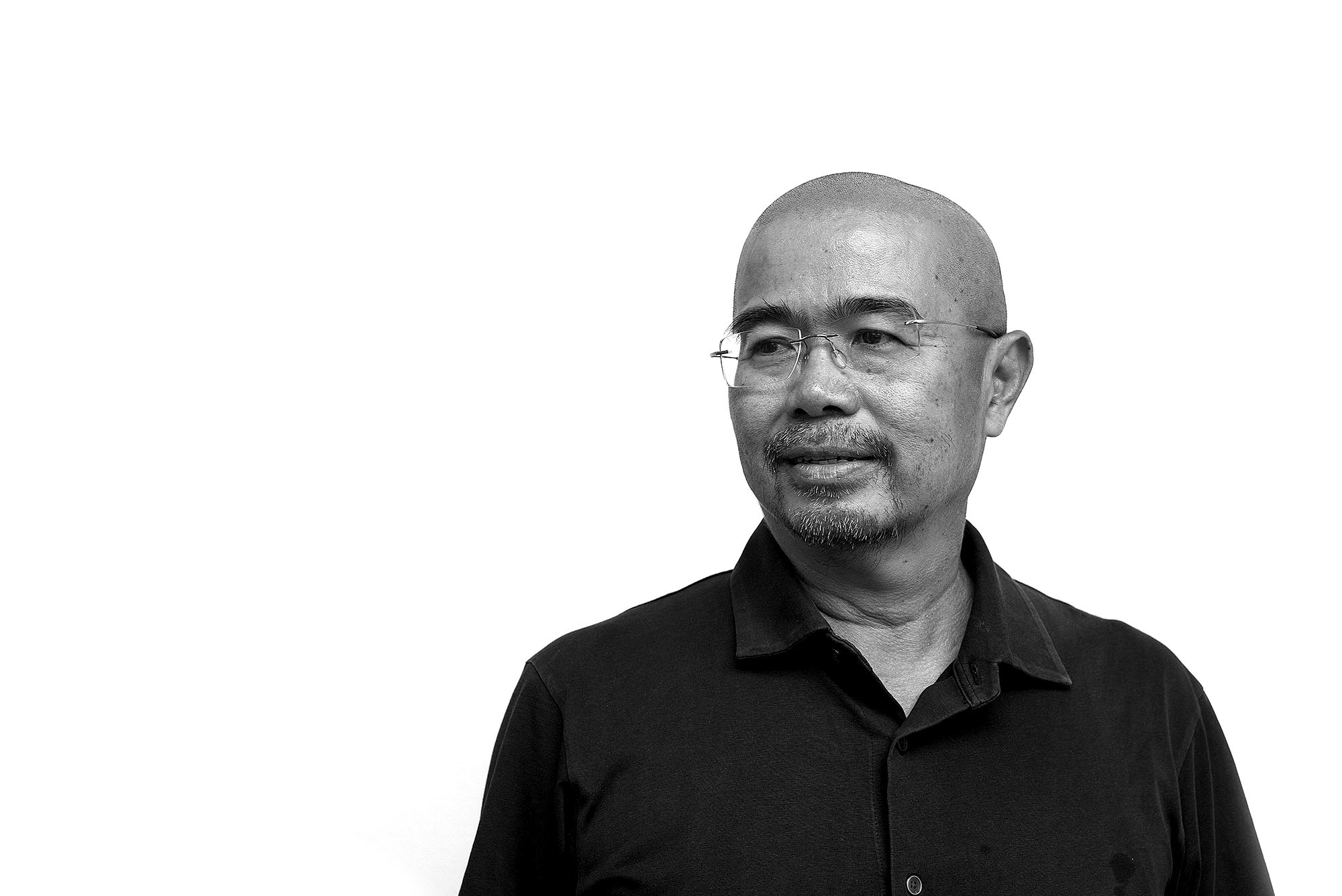
As a teenager, Zainal SAPARI told a bursary interviewer that he aspired to be a politician without knowing what that entailed. Nearly 30 years later, he became a Member of Parliament with the People’s Action Party, after a long career in education. He believes that those who can serve should do so when asked.
Let’s start by talking about your childhood.
I cannot remember much about the first few years of my childhood except that we lived in the Tanjong Rhu area until I was about five or six.
I stayed at 30 Malcolm Road from six years old until I was 14.
My father was a gardener and my mother a live-in maid for expatriate families.
So, this was the employer’s house?
The families my parents worked for provided quarters for my family. The employers lived in the main bungalow.
Who were the employers?
They were all expatriates.
I don’t remember too much about them.
Were your parents working for several families simultaneously?
No, just one family at a time. When one expatriate family left, another family would take over and they would continue with our services.
On average, each expatriate family would have three maids but only my family was given quarters to stay.

The rest did not stay in?
That’s correct. They came in the morning and left by sundown.
What else do you remember?
Every Christmas, they bought gifts for every member of my family.
During the festive period, my parents’ employers received many hampers and they would distribute the goodies to all the helpers.
I always looked forward to having such treats.
My father also had other jobs apart from being a gardener. In the morning, he worked as a street cleaner for PWD (Public Works Department), only returning to tend to the garden in the afternoon.

So your family was well taken care of.
Life was good because our utilities were all paid for by the expatriate families. The radio was on 24/7. We were well provided for.
Overall you had good memories of that period?
I had a very good childhood because the workers’ quarters were next to a kampong. I mixed with all the kampong boys, flew kites and played traditional games like marbles, gasing (spinning top) and rubber bands.
It was fun.
"I didn’t think that we were rich but I didn’t feel my family belonged to the low income group. There was always food on the table."
Maybe you grew up thinking your family was financially sound?
I didn’t think that we were rich but I didn’t feel my family belonged to the low income group. There was always food on the table.
When did you realise that your family was in the lower income group?
Surprisingly, only when I started working.
That late? Not in school?
Not in school. I don’t feel that I had a deprived childhood. It was the simple things in life that I enjoyed the most.
When I was young, I was very embarrassed to tell people my address was 30 Malcolm Road because the address was too short.
I was always envious of my friends’ addresses because they were staying in HDB (Housing and Development Board) estates like Ang Kio Kio.
So you wondered why your address did not include a block member?
That’s correct. I didn’t understand why my address had no block member and no unit number. So, I was a bit embarrassed.
I thought my friends who were staying in HDB were a bit more atas (high class).
It was only later in life that I realised the shorter the address, the ‘better’ it is.
"I didn’t understand why my address had no block member and no unit number. So, I was a bit embarrassed."
Which primary school did you go to?
I was in Whitley Primary School, next to the old Police Academy, until primary 3, when the school closed down. We were then transferred to MacRitchie Primary School (the school closed in 1997) in Toa Payoh.
Your family moved out of the quarters eventually?
When I was about 14, we moved from Malcolm Road to our own flat in Blk 116, Bedok North.


Because your parents’ services were no longer required?
There was an incident that happened with the third family that my parents were working for.
I think when they were overseas, my eldest brother went to the house and played with their hi-fi system.
A friend of theirs came over, saw it, didn’t like it, and complained to our employers.
The employers weren’t happy and asked my family to leave.
That must have been on very short notice.
Fortunately, my father had already bought a HDB flat.
That was the first home that was truly owned by my parents.
I remember when I first stepped into the flat, I went “wow”.
"I remember when I first stepped into the flat, I went “wow”."
And now you have a ‘longer’ address.
Haha, yes.
Three rooms, four rooms?
It was a three-room flat.
Was your mom a good cook?
She was the best. She didn’t just cook. She had to do everything for the employers when she worked for the expatriate families.
One of the families had very young children, maybe younger than 7-years-old. Whenever the parents went overseas, they asked my mom to stay over in their house.
So she was also like an amah?
Correct. I used to accompany my mom to sleep over at the big bungalow.
You must have interacted a lot with the expat kids. Did you have an angmoh girlfriend when you were young?
Didn’t have lah. (laugh)
What did your parents do after moving to Bedok?
Growing up, I seldom saw my father because he had three jobs. He would leave the house before 6am and return around 11pm.
My father was still holding on to his job with PWD. He also worked as a garbage collector in the Tekka area.
He would come home for lunch, take a quick nap and at around 3pm, he would rush to Kallang Leisure Drome (known as Kallang Leisure Park in 2004) where he worked as a security guard.
You must be very grateful and proud of him.
I could never be angry with him for not spending more time with me because I know he had to work hard to feed us. I was realistic.
When I was 14, I realised that he was fulfilling his responsibility as a father.
Then I asked myself, “What is my responsibility?”
The answer was simple — to make sure that I make the best use of my time to study hard.
"When I was 14, I realised that he was fulfilling his responsibility as a father. Then I asked myself, “What is my responsibility?”"
That awakening happened when you were in secondary 2?
Correct. Prior to that, my attitude was what you would term cukup makan (literally enough to eat).
I would just do enough to get promoted. Not more.
You went to St. Andrew’s, a very good school. You must be quite smart.
Not true. It was not my first choice.
The school that I wanted to go to was Swiss Cottage Secondary School which was very close to where I lived.
When I was growing up, Swiss Cottage was one of our playgrounds. We played in the densely forested area near the school. So Swiss Cottage was my top choice.
But academically not a better school?
I’m not sure. Frankly speaking, that didn’t cross my mind. I wanted to play more than study.
It was also a practical consideration — it was near home.
Did you try to appeal?
I went over with my mother. The principal told me the school didn’t have any vacancies.
Then we tried Anderson Secondary School, which was around the corner, at Stevens Road.
My sister, who is one year older, was studying there then.
The principal at Anderson asked me this question which made me feel very stupid.
He said, “Why would you want to come here? I think St. Andrew’s is a much better school.”
So I resigned myself to the fact and went to St. Andrew’s reluctantly.
You did well in St. Andrew’s?
Only after secondary two.
Was it because you were still struggling with why you were in that school?
At that time, I just didn’t pay too much attention to my studies.
What changed in secondary two?
Like I told you, one of the triggers was seeing my father work very hard. We had moved to Bedok North by then.
Before that, when we were living in Malcolm Road, it was just play and play. Studies didn’t come into the picture.
You did well for GCE ‘O’ levels?
I did okay. I studied hard but not because I was hoping to go to a junior college. I just wanted good ‘O’ level results to get a good job.
Most of my siblings stopped at secondary four.
My sister stopped after secondary four and one of my older brothers went to VITB (formerly Vocational and Industrial Training Board, now Institute of Technical Education or ITE) after secondary four.
So I didn’t know what was supposed to happen after ‘O’ levels.
I was that ignorant.
"So when I studied, as I said, it was really just to make sure that I could get good results to get a good job."
Are you the youngest?
No, I am the fourth in the family. There are five of us. I have a younger brother.
So when I studied, as I said, it was really just to make sure that I could get good results to get a good job.
When the results were out, I was not even sure whether I did well.
I was surprised to learn later that I did sufficiently well to meet the cut-off to go to National Junior College (NJC).
Did you go to NJC?
I remember that morning when I was about to go to NJC, I received a call from my cousin. He was my only cousin who went to university.
I suspected that my father had asked him to advise me.
At that time, there weren’t many junior colleges. NJC was considered a great choice.
My cousin advised me against it. He said, “Zainal, if you go to National, you will be spending a lot of time travelling. Why don’t you go to Temasek Junior College (TJC)?”
Although TJC was near my home, I had not heard about the school.
I followed his advice and went to TJC instead.
How old was your cousin?
He’s much older than me. Maybe 15 years older. By the time I went to JC, he was already working.
So he must be one of the early role models.
I wouldn’t say he was my role model.
But I do listen to people when they advise me.
You ended up being the first in the family to go to university?
I’m the first and the only one.

Your younger brother didn’t go?
He didn’t.
Let me tell you something else.
When we moved to Bedok, my mother was working as a hospital attendant and worked shifts. Even after coming back from a long shift, she still had to do housework.
I was very concerned for her health.
When I qualified to go to university, I told my mother that if she didn’t stop working, I would start working instead of going to university.
"When I qualified to go to university, I told my mother that if she didn't stop working, I would start working instead of going to university."
She listened to you?
Ya, she stopped.
Was the family not worried that there would be a loss of one income?
No, because my sister and two older brothers were already working.
I really felt that there wasn’t any reason for her to work.
They really wanted you to go to university?
Of course.
They must be very proud of you.
I think so.
What was your ECA (now CCA)?
When I was in St. Andrew’s, I wanted to join NPCC (National Police Cadet Corps) but there was a huge demand and I didn’t get selected.
St. John Brigade was one of the less popular ECAs. So I joined St. John. No regrets.
When I became a father, I also encouraged my children to join any uniformed group.
I think it helps build your soft skills and discipline. I also feel it is useful in terms of building leadership skills.
Am I right to say that your siblings all had blue-collar jobs?
Yup. My eldest brother, Kamisan, took a course in vehicle repairs. He started at SBS (Singapore Bus Services, now ComfortDelgro) before moving to PUB (Public Utilities Board). He stayed in PUB until he retired.
Which is rare these days.
Of course.
What about your other siblings?
My second brother, Abdul Wahab, worked as a driver. He could drive all classes of vehicles by the age of 23.
My only sister, Zawiyah, worked as an administrator.
My youngest brother, Zailani, is a technician. My father stayed with him till he passed away.
So when your siblings started working, your parents’ financial burden must have lessened?
I think so.
How was your university education paid for?
As a Malay, I didn’t have to pay any university tuition fees. The fees were completely subsidised by the government but I did apply for bursaries. I was awarded a PSC (Public Service Commission) Special Malay Bursary.
What is the Special Malay Bursary?
The Constitution establishes that Malays are entitled to free education.
The Special Malay Bursary is the same as the Local Merit Bursary. Except that if you are a Malay, they call it the Special Malay Bursary.
Did it irritate you that it is called Special Malay Bursary?
It didn’t matter to me. Money was money. The amount was the same.
I was bonded for three years.
What did you study in NUS (National University of Singapore)?
I was in the arts faculty and I did geography, economics and Malay studies.
I did sufficiently well in geography to be offered honours.
Which you did?
My honours was in geography.
I also did equally well for economics but I couldn’t do honours in economics because I didn’t study statistics.
I don’t remember my grade for Malay studies.
I almost forgot to ask about NS (National Service).
In BMT (Basic Military Training), all I wanted was to do a good job in whatever tasks assigned to me.
I wanted to do them well and be friends with my army mates. Most importantly, “don’t sabotage others”.
However, I noticed that some of my JC friends changed during BMT.
Part of the reason, I believe, was maybe they really wanted to go to OCS (Officer Cadet School).
So they were afraid of making mistakes and were very kiasu.
My attitude at that time was simple — if they thought I was good enough for OCS, then I would go. It was not something that I strived for.
I always believe that when you do your best, people will recognise you for who you are.
I heard from a friend how you and a few course mates lobbied for another cadet and prevented him from being kicked out of OCS.
The guy was charged and sent to detention barracks for losing the spare barrel of the GPMG (General Purpose Machine Gun) in an overseas exercise. To us he had already been punished. Booting him out of the course would have been double jeopardy and we thought it was too severe.

You stayed behind in OCS after commissioning as an officer?
Yes, I became a mentor in OCS.
Were you a good mentor?
When I was posted as a mentor, I was a bit disappointed. I didn’t want to stay as an OCS mentor. I wanted to be a platoon commander (PC) in a unit.
When I was a cadet, I was under mentors who gave us a hard time.
But I felt that it built my resilience and prepared me to face anything thrown at me.
I had the same mindset and believed that when I pushed the cadets, it built toughness. Well, that was the way that I was trained.
I believe that I was a very good instructor. Maybe the way I treated the cadets was an area that could have been improved. I gave them a hard time.
I was charged and fined as an officer for kicking a cadet during one training exercise and then posted to 2nd PDF (People’s Defence Force). It was a valuable lesson and I learned to control my temper.

"This may make some people cringe but education has helped me level up. And I wanted to give back and help others."
How did you become a teacher?
When I was in my second year in NUS, I was deciding between the police force and the teaching service while applying for the PSC bursary.
Some of my friends who did their national service with the police force kind of discouraged me.
This may make some people cringe but education has helped me level up. And I wanted to give back and help others.
As a teacher, I think I did make an impact on some of my students.
Can you remember some of the schools you taught at?
When I did my two-months teaching practicum, it was in TJC. I taught geography and economics.
I remember I clashed with the principal.
What happened?
I told him that I found it very strange that the students had to stand up to greet the teacher in the lecture theatre. I didn’t recall doing that when I was studying at TJC.
I felt that these were teenagers, young adults, and we should treat them like young adults.
But the principal disagreed with me. I wasn’t posted to TJC after my teaching practicum.
You have always been outspoken?
I would say yes.
Where did you go for your first real teaching job?
I was in Tampines Secondary School for about 10 years and out of the 10 years, I was the discipline master for six years.
After Tampines Secondary, I became vice-principal (VP) of a school in the east.
I didn’t enjoy my stint there and it was one of the lowest points in my career.

Something went wrong?
My boss was a very experienced principal. Unfortunately, he wanted things done his way and I felt that I didn’t have enough room to really do a good job as a VP.
How long were you there?
I was only there for slightly over a year.
After that, I was sent to do my Leaders in Education Programme (LEP).
Immediately after that, I was posted to Mayflower Primary School, first as VP, and then I took over as the principal shortly after.

How long were you principal at Mayflower?
Six years.
And then I was posted back to HQ MOE (Ministry of Education) as a Cluster Superintendent.
That came as a surprise and I was given very short notice.
Did you see it as a promotion?
In all fairness, I think most of the principals I know would prefer to remain in school. We don’t want to go to HQ to be a superintendent.
How is that so?
Because school is where the action is, not in MOE.
But you got to play a different role.
Yes, my role was different.
As a superintendent, my role was to empower the principals. I believe the principals are there because they are capable.
I didn’t micro-manage. My main role was to support them and give them some broad parameters so they could do their job well.
"As a superintendent, my role was to empower the principals. I believe the principals are there because they are capable."
So hierarchy-wise, superintendents are one level up from school principals?
Theoretically, yes. There was a group of about 12 or 13 principals reporting to me.
One of the principals who was under me was Esther Lai, the first principal of Meridian Junior College.
In terms of grade, she was more senior than me. And frankly speaking, every time that I spoke to her, I learned more from her than the other way.
At some stage, you went to do your master’s?
I did my master’s in education management at NTU (Nanyang Technological University) when I was principal of Mayflower and that was fairly late in my career.
How were you recruited by the PAP (People’s Action Party)?
I think it all started after then-Prime Minister Lee Hsien Loong visited Mayflower in 2007.
Shortly after his visit to my school, the PAP called me up for tea sessions.
What were those sessions like?
When I attended those tea sessions, my mindset was still the same. I was honest in my views. I didn’t want to put on a different personality just because I was being courted.
My thinking was “If you think I am suitable, if you want me to go into politics, I will consider.”
More importantly, we were already parents of six children. So it was also a decision for my immediate family to make, not just me.
Did they assign a mentor to you? Did you understudy someone?
After I resigned from MOE, the party posted me to Pasir Ris East, where Ahmad Magad, my predecessor, showed me the ropes.
Prior to that, I also spoke to Masagos Zulkifli, who was then SPS (Senior Parliamentary Secretary) in MOE. He shared with me what to expect in life as an MP.
He told me what I needed to be mentally prepared for and that I would be under public scrutiny.
You had to quit your job?
Yes, because I was in senior management in MOE, I had to quit to enter politics.
What made you agree to stand for election?
Let me share another strange episode.
I remembered when I was still in JC, I went for a bursary interview with LBKM (Lembaga Biasiswa Kenangan Maulud, a non-governmental organisation that does charity work).
During the interview, an interviewer asked, “What is it that you aspire to be?”
Alamak, I had not thought of that question.
At that point, only one thing came to my mind and I just blurted out “I want to be a politician.”
Oh my God. Who was the interviewer?
I cannot remember. I just anyhow hantam (literally to hit, in this case to say something without thinking) lah.
I didn’t even know what a politician does.
Maybe the PAP started following you from then. (laugh)
No lah.
When I went home, I told my mother about my response.
She said, “If God has destined you to be a politician, okay lah, then you will be a politician.”

She was very wise.
Yes she was.
I never thought about it at all until I was invited to the tea sessions.
Then I thought, maybe this has been predestined for me to enter politics.
I wish she had been around to see me become an MP but she passed away in 2007, when I was the principal at Mayflower.
You must have had some hesitations about joining the PAP. What would be your reasons for not joining?
Back then, I was never against the PAP per se. After all, my mother was a very strong PAP supporter.
Objectively speaking, PAP is a good government.
I think my hesitation had nothing to do with the party, but about me going into the unknown. Politics was a new area.
Today, politics is more challenging because of social media. If politics back then was where it is now, I probably would have turned down the opportunity.
Some your friends must have said, “Zainal, you’re so outspoken, so radical and rebellious. How can you join the PAP?”.
I’m not rebellious.
Am I rebellious? I’m not sure.
Some people would say you don’t mince your words.
I don’t sugarcoat whatever I want to say.
Let me give you another example.
When I was in Tampines Secondary, I was appalled that the English HOD (Head of Department) assigned himself to mark only oral comprehension, which was all multiple choice questions and very easy.
At the same time, my very good friend who was a relief teacher, was tasked to mark the written English paper, which was much harder to grade.
During our staff meeting, I raised it with the principal. He looked into it and the HOD was assigned to mark written essays as well.
"Am I rebellious? I'm not sure."
So one of your conditions for joining was — I must be able to be my own man?
I did not set any conditions, not even for myself.
I just wanted to be able to speak up honestly.
So coming back, why did you say yes?
You know, in Islam, there is this story about one of the Prophet’s companions, Sayyidina Umar (RadiyAllah Anhu). He was asked to be the khalifa (caliph)* but he was hesitant.
In the end, he took it up.
He said that he was even more afraid that if he didn’t take it up, it might cause more harm to Islam. He believed that avoiding leadership when one is capable can itself be sinful.
So that was your thinking?
Yes. I fear Allah and love my country.
When I discussed with some of my good friends, they said, “Zainal, if people think that you are suitable, just go for it.”
What did your wife say?
My wife has always been supportive of whatever I do.
How did you meet her?
Oh, I met Sazurah (Mahmood) when we were in NUS.
At that time, she was this tudung-wearing conservative undergraduate.
I made a silly remark to a friend that “whoever gets to marry her would be a very lucky man”.
That friend told her that I liked her.
After that, whenever I bumped into her, I felt very uncomfortable.
And what year was that in university?
It was in my third year.
Eventually, I told her, “Okay lah, let’s have a chat lah.”
Our first meeting was in the business school. We met there because the chances of running into friends from our faculty were slimmer.
After that, we decided, “Okay lah, let’s give it a try lah.”
How long did you date?
We married after two years.
It was after I completed my one-year teacher training at NIE and started working.
I was 27.

What did Sazurah study?
She did English and English Literature. She was also a teacher.
And now?
She retired long ago.
She taught for a few years but when she was pregnant with our first child, she found teaching very stressful. I told her that if she wanted to quit, I would support her decision.
When I did my financial planning about buying a flat, I didn’t take into account her financial contribution.
Basically, it was all based on my income. So she had that freedom to quit.
What was the first home for the two of you?
It was an HDB executive flat in Pasir Ris.
I remember when we bought it, my father-in-law was very concerned because it was an executive flat.
He was a bit traditional and felt that we should start off with maybe a 4-room flat, then upgrade to a 5-room flat. But I thought differently.
At that time, the flat was relatively cheap lah.
I get the sense that you were closer to Mom than to Dad.
Isn’t everyone closer to their mom?
Don’t get me wrong, I love both of them.
My father passed away early this year. He was 94.
One year after my mom passed away, he remarried.
It took me a long time to accept that but in the end, I understood that he needed a companion. I am glad someone took care of him after Mom was gone.
Most people have one child or two children. Sazurah and you have six.
My wife was pregnant with our first child within two months of our marriage.
Our first one was a boy, and we wanted to stop at three, to tell you the truth.
Eventually when we had our daughter, the third one, we thought perhaps we could try for another girl. Instead we got three more boys.
So the order is son, son, daughter, son, son, son.
When the doctor told us our fourth child was a boy, my wife wanted to cry. She was really hoping for a girl.
How old are your children?
The first one was born in 1993, so he would be 32. Our other children were born about three years apart. Our youngest is 18.
Ismail, our eldest, is a policy officer at MOM (Ministry of Manpower). His wife, Azira, works for MCCY (Ministry of Culture, Community and Youth).
Our second son, Isa, works as a business consultant. All his colleagues have master’s degrees but he just has a business degree. He is married to Amira, a former SIA stewardess.
Our only daughter, Sarah, is a property executive at Cushman & Wakefield.
Our fourth son, Ahmad Fitri, is an undergraduate in NUS Business School.
Abdullah, number five, is in National Service. He has secured a scholarship with A-Star to study overseas.
Our youngest son, Azman, is doing his diploma in Temasek Polytechnic.

"The one thing that I am most proud of as a parent is that my children are very close to one another."
You must be a proud father.
The one thing that I am most proud of as a parent is that my children are very close to one another.
They have their own WhatsApp group to gossip about their parents.

Are you a grandfather yet?
We have a granddaughter from Isa and his wife, Amira.
Our granddaughter, Arya, is at our home now.
We help with the childcare every Tuesday and Thursday.
So they don’t live with you?
Ismail and Azira live in a resale flat not far from us.
Isa and his wife also have their own place.
The unmarried ones live with us.
Hopefully Sarah will get married next year.
Are you still living in the same flat in Pasir Ris?
No, we moved to a condo in Simei.
After seven years in the Pasir Ris flat, I had paid for the flat in full.
Then I told my wife, “I need to get a mortgage. Otherwise I have no incentive to work.”
Very typical Singaporean.
When we sold the flat in Pasir Ris, we wanted to move to another Pasir Ris flat and cash out.
Everybody was asking for above valuation but we sold our flat below the valuation price.
One Saturday afternoon, I was flipping through the newspaper and I saw an advertisement on Modena condo in Simei.
I went to the showroom with my wife with no intention of buying.
I remember it was soon after the terror attacks on September 11th and people were worried and not buying properties.
At the show flat, a saleswoman approached us and she noticed the hesitation in me. I was very frank and told her, “I’m not sure I can afford it.”
Then she asked me, “Okay, Mr. Zainal, maybe you tell me how much you earn?” At that time, I was earning about $5,000.
Then she flipped her book to show me people who bought the flat — many were earning much less than me.
That was the tipping point.
We viewed the show flat on a Saturday and signed the papers the next day.
Your father-in-law must have been really upset.
No, my father-in-law was not this time. I think we have proven that we could manage our finances.
"I have always been conscious that should I enter politics, I must champion a worthy cause."
I know that you’ve done a lot for low-wage workers. Can I assume that it has to do with your parents?
It was an area which I was very familiar with.
I have always been conscious that should I enter politics, I must champion a worthy cause.
When I joined the National Trades Union Congress (NTUC), one of my first postings was to the Building, Construction and Timber Employees’ Union (BATU). (It was renamed the Built Environment and Urban Trades Employees’ Union in 2024).
Was this after you became an MP or before?
Before I was elected, but after I left MOE.
The majority of BATU members were cleaners. They were low-wage workers.

I mean, it’s quite stereotypical, but was there pressure that you must speak up for the Malay community?
No pressure but I was quite realistic. I think that when you are a Malay MP, you are expected to represent the Malay community as well.
So I did not see it as an additional job. I saw myself as MP+ — an elected MP who was also a voice for the Malay community.
This would be the advice I would give to new Malay/Muslim MPs. They must see themselves as MP+.
You stayed only two terms. Is it considered short?
I think we have to let the PM or party leader decide what’s best.
At the end of my two terms, I prayed to God. I asked him to decide what was good for me and my family.
If continuing for a third term was something that would be good for my family, my religion, let me continue. If it was not good, let the outcome be so.
So I was quite open to whatever decision that was going to be made.
When then-PM Lee Hsien Loong told me that he was not fielding me in the 2020 GE, I understood it was his prerogative to field the best team. And I had only one request. I wanted a selfie with him. My meeting with the PM lasted only five minutes.
That was it.

Is it convenient to ask what was the reason for not fielding you?
I didn’t ask.
To me, if I were to ask him for an explanation, it would be my ego taking over. I didn’t need the answer.
I saw you campaigning for the PAP in the last General Elections. You are still very loyal to the party.
When Janil (Puthucheary) asked me to speak, I believed my role was to warm up the crowd. The focus would not be on me.
Unfortunately, my speech “Look left, look right” went viral online.
"If there is one thing that I can fault my party, it's the way some issues are being handled. Sometimes it still feels top-down. But I think things are changing."
Many people have said Singapore has a unique brand of politics. Do you agree?
I think we have to define what sort of politics works for us. What works for other countries might not work for Singapore.
In some countries like the United States, freedom of speech is a big deal to them. But I say, “Yes, I believe in freedom of speech, but there must be OB markers. We are a different society.”
If there is one thing that I can fault my party, it’s the way some issues are being handled. Sometimes it still feels top-down. But I think things are changing.
But we must also understand that there will be trade-offs.
So in your opinion, things have changed?
I would say that we should judge our society by the outcome it produces.
I’ll be very frank with you. When I was growing up, there was always this feeling that certain positions were not open to Malays.
You would hear this quite often — Malays were not in the air force, we were not in the commandos.
But things are slowly opening up.
Are you happy with the progress or do you think it can be faster?
Growing up, I have never felt that I was discriminated against.
If there was any discrimination, it was not institutional. It was more at the individual, person-to-person level.
In government, in the civil service, there are Malays in senior management.
I mean, we are everywhere. And I think no one is denying any Singaporean Malay from moving up.
That’s quite different from the countries in our region?
Of course.
"The possibility of a woman becoming prime minister is there."
Assuming we live to 95, can you see in our lifetime, a woman prime minister in Singapore or a minority prime minister?
How old are we? 60? So we have about 35 more years.
The possibility of a woman becoming prime minister is there.
The PAP works on meritocracy. But it’s a layered meritocracy. There are other factors that come into the picture.
But if you ask me, “Will I ever see a time when a minority can become prime minister?”, I think we missed that boat with President Tharman Shanmugaratnam.
I’d like you to make a prediction about Singapore when we turn 65, in five years’ time.
In five years’ time, I think the PAP will still be the ruling party.
In the worst-case scenario, we might lose another GRC (Group Representation Constituency).
Is it because Singaporeans are taking the PAP government for granted?
No, I don’t think so.
Is it because the opposition is getting stronger?
I think the opposition is getting better candidates and voters want a good opposition in Parliament. We could see the trend in the last election when fielding someone who we consider strong did not necessarily mean an easy fight.
We fielded Deputy Prime Minister Gan Kim Yong in Punggol. He was a very strong candidate.
But we had to work hard to retain Punggol. It was very risky. It was a big risk.
It is important that every MP, regardless of whether you are an office holder or not, you must work the ground. You must build relationships with your constituents.
I believe sometimes people vote for you not so much because of the party, but because of that personal touch. That personal touch comes in the form of our Meet-the-People sessions, our house visits, our market walks. The basic duties.
So I always believe that every time you come into contact with your constituents, make sure you leave a good impression.
"I believe sometimes people vote for you not so much because of the party, but because of that personal touch."
I know you had a little bit of a spat with MENDAKI in 2017 about the definition of who is a Malay.
No, I didn’t have a spat with MENDAKI.
You were trying to define who is a Malay?
No, I didn’t want to redefine. I think what happened was that at that time, Halimah Yacob put herself up as a presidential candidate.
Some people said she was not Malay enough.
That’s right. I argued that you are considered a Malay as long as for your whole life, you have lived in the culture, lifestyle of the Malay community.
Are you Malay enough?
I think so.
My dad’s mother was adopted from a Chinese family. My dad had Chinese blood.
It is not really important to me.
I am proud that the younger generation don’t define themselves along racial lines. We are more colour-blind now.
Do you attach significance to the fact that you were born in the same year as Singapore?
I am always amazed at the progress that we have made. I just had this conversation with my wife.
When I watch YouTube videos of old Singapore and look at photos of what Singapore was like in the 1960s, I don’t think we could have envisaged back then the kind of changes that we have made.
All in a positive way?
Yes, all in a positive way. And I think what is important is that things must get better for every community.
All the baggage that we carry as a community, it must get lighter.
"All the baggage that we carry as a community, it must get lighter."
You turned 60 just two days ago. How did you celebrate?
My family wanted to go out for a nice dinner but with so many of us, it is always hard to find the right place. I ended up cooking pho for everyone.
I told them that I did not want a big celebration. Instead, I asked them to cheer for me when I run the Stanchart Marathon on 7 December.
Wow, will this be your first marathon?
No, I have done a few. Some half-marathons too. I raised more than $20,000 for NTUC U Care Fund a few years ago.
So have you been training for 7 December?
Not as much as I would have liked.
What timing are you aiming for?
At my age, I just hope to complete the run.


If you are away from Singapore for a long time, what is the Singapore dish that you will miss?
Well, there are many.
Every time I travel, when I come back, I will ask my wife to cook fishhead asam pedas.
Do you have a retirement plan?
I’m still planning my retirement but I’m on flexible work arrangement now. I work only three days a week.
I went to see my boss Ng Chee Meng, the NTUC Secretary-General, with my resignation letter in late 2023 but he asked me to consider working fewer days a week. Since that was an option, I decided to take up his offer.
Why did you want to resign from your job?
My wife was diagnosed with cancer two years ago. I want to be able to accompany her to all her medical appointments. I want to take care of her.
Is she better now?
Yes. Thank you.
Coming back to retirement, how would you spend your time?
My plan is to spend more time with my wife, with my family.
I was busy with my career for so long and they supported me. Now it is time for me to give back to them.
I am also working hard to prepare myself for the next stage in my spiritual life.
Spiritual life? Can you elaborate?
Be closer to my religion.
"I want to be a better Muslim. In the past, I couldn't read the Quran well, but now I'm able to do it."
So religion has always been an important part of your life?
Of course.
I want to be a better Muslim. In the past, I couldn’t read the Quran well, but now I’m able to do it.
I want to give back to the community. But I have not decided how or in which areas.
Since you were from the education sector, would education be the easiest way?
Yeah, definitely.
How would you like to be remembered?
This is a question I’ve thought about.
As a father, I want my children to remember me as a father who took care of the family. I want to be a good role model to my sons.
And also be a responsible husband. That’s how I want to be remembered — a good father and a good husband.
Professionally?
As a teacher, I want my students to remember me as someone who tried to help them and change them for the better.
As a politician?
As a politician, I’d like to be remembered as an MP who went all out to help people.
At the same time, I did what was right.
"As a father, I want my children to remember me as a father who took care of the family. I want to be a good role model to my sons."
As a friend?
As a friend, I want to be remembered as somebody you can rely on and one who doesn’t backstab you.
How would your detractors describe you?
You know, when I was an MP, there was one incident which led to me getting a lot of negative comments. It was a panel interview with The Straits Times.
I think the interview came about because the Workers’ Party was calling for an expansion of the progressive wage model.
During the panel interview, I was asked, “Why doesn’t the government expand the progressive wage model to more sectors?”
At that time, four sectors were already covered.
I gave a cheeky response and said, “It’s not within my pay grade to decide.” I did elaborate that personally, I would like to see it being expanded to cover more sectors, but some readers were fixated only with the cheeky comment.
The commentary by an alternative media on the interview and its headline gave the wrong impression that I had said it is not my job to help low-wage workers. I was hit left, right, centre.
Many union leaders were upset with the negative publicity that I was receiving. But at that time, I felt and I knew, “This is not true. This is not me.”
What I’m trying to drive at is that I cannot control people’s perceptions of me. And I don’t think it is realistic to expect everyone to think positively of you.
What is more important is to ask yourself whether you have done the right thing.
Because at the end of the day, as a politician, as a leader, I’m answerable to Allah. I’m not answerable to just the people.
I want to make sure that if I have to answer for anything in the afterlife, I can give a true and honest answer.
"Because at the end of the day, as a politician, as a leader, I'm answerable to Allah. I'm not answerable to just the people."
Maybe Singaporeans should complain less?
I don’t necessarily see complaining as a bad thing.
If the perception is that the PAP doesn’t listen to the people, whether it is true or not doesn’t matter. It is a perception that the party needs to manage.
In what way can the government do better?
If I were to highlight one or two topics, it would be really nitpicking. If I really have to pick an area, I think we need to be more inclusive, that we must leave no one behind.
In the big scheme of things, tremendous support is being given to our vulnerable groups.
I should know, because it was an area I worked in. These are people on the fringe. I am referring to low-wage workers, the non-mainstream sector of our society.
I can think of no other country that provides so much support to its citizens and businesses.
Do you think you are a proud Singaporean?
I don’t need to think. Yes, 100%.


