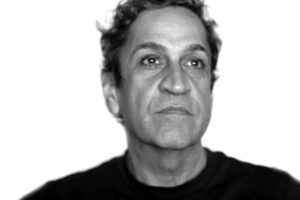

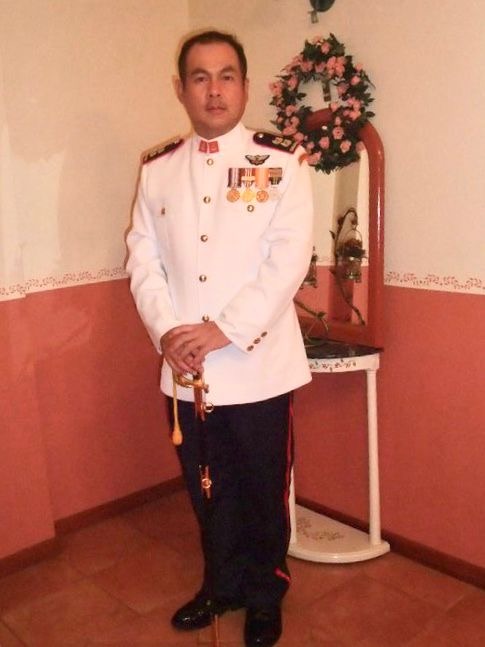
CHOO Teck Chuan’s formative years were spent in Geylang, which in the early years of modern Singapore, was considered an unsafe neighbourhood where gang-related and vice activities were rife. He realised early in life that academic studies were not his cup of tea and studied at a vocational institute after his ‘O’ levels. Most people assumed then that he would have a ‘tough’ life but he found his calling in the Singapore Armed Forces. He served illustriously for more than three decades and retired in 2015 as a lieutenant-colonel.
Let’s talk about your parents. How did they meet?
Dad was a chauffeur while mom worked in a shoe factory. Today, we would probably be categorised as low-income family and entitled to many government grants.
When we were young, we stayed with my maternal grandmother, an uncle and two aunties in a rented terrace house in Geylang Lorong 27. We occupied the second floor and the landlord had the ground floor.
In the beginning, my parents, my older brother, my younger sister and I were squeezed into one tiny room.
My father was a heavy drinker and indulged in mahjong at a neighbour’s house. My dad used to spend his salary on these vices and didn’t contribute much to the household.
Because of him, I learnt how to play mahjong when I was 10.
Tensions increased over time, and to avoid quarrelling with my mom and grandma, he stayed away from us for a few years.
However, he visited us over weekends and I became closest to him. He talked more to me than to my brother and my sister.
So this grandmother is on your dad’s or your mom’s side?
Mom’s side. We grew up closer to my mom’s side of the family.
In fact, the Choo side of my family, that means my dad’s side, is quite well-to-do. My father had two brothers and they were considerably successful businessmen.
You say your dad drank and gambled. Did he also have a second family?
No he didn’t. I suppose he could not afford to.
He loved to drink and gamble, and didn’t like to be told to stop.
So, I would say that my mom took care of us singlehandedly.
What did she do to support the family?
With her small salary at the shoe factory, we could not afford much. Mom was thrifty and would only spend on us. I believe my grandmother and aunties also supported us financially when we were living under one roof.
"Dad was a chauffeur while mom worked in a shoe factory. Today, we would probably be categorised as low-income family and entitled to many government grants."
Were you angry with your father?
I think more importantly, despite everything else, my father loved us a lot.
Your parents didn’t get a divorce?
No, no.
His lifestyle made it hard for things to work out with my mom, so she would rather he just went away.
My father came back after two, three years and my mom accepted that. This time, the family felt a little closer.
I think my mom decided to just forgive him for our sake.
Your family lived in the small room in Geylang all this while?
When my uncle got married and moved out, we took over his room. Then my auntie got married and we had even more space.
Eventually all the relatives left, except us. We took all three rooms. When I was 15, my grandma passed away.
Is your father still around?
No, he passed away in 2004. Heart attack.
My family has a history of heart attacks.
Even after I got married and moved out, my father chose to stay in the Geylang house by himself. Subsequently, he shifted to a two-room HDB flat.
Your mom is 91? Is she healthy?
My mom is 91. She was in good health until she suffered a second stroke in March this year.
Her first stroke was very serious but she worked hard until she recovered 99% of her cognitive skills.
When was the first stroke?
In 2011.
She came back strong and she actually developed a reading habit. She was very updated on things happening in Singapore.
She has this resilience to survive because she had a hard life.
Up till last year, she still played mahjong. Her memory was still that good.
This second stroke was a bit jialat (serious) and her throat was most affected.
Now she only takes liquid food but she still plays with her iPad to keep herself occupied.
What was it like growing up in Geylang?
Before I talk about that, I want to talk about myself first.
I feel that compared to my two siblings, I was the most neglected one.
My brother was the first grandson in the family. My sister is the only daughter.
"I feel that compared to my two siblings, I was the most neglected one."
You’re the middle one?
I’m the middle one.
When we were in school, my brother got everybody’s attention even though I did quite well when I was in primary school and kindergarten. Second or first in class.
I was often not at home after school because I was out catching spiders and having fun. My brother would study and I would be playing.
My family did not even notice when my academic results were bad.
But whenever I tried to study, my grandmother or aunties would order me to run their errands.
Did you tell them how you felt?
When I grew up, I told my mom, “If you had paid more attention to me, maybe I would have done better for myself.”
But things worked out for you eventually right?
Now, in retrospect, the experience made me stronger and independent.
I became more street smart.
My brother was scholarly. I was the opposite.
Now back to Geylang please.
Our neighbourhood was quite messy.
I was living in Lorong 27, slightly better than Lorong 29, where you were living.
The drug and gang problems were on your side of the street.
Do you know that my street produced at least four military officers including me?
Your brother Teck Leng passed away recently. What happened?
Teck Leng had a very smooth sailing youth.
But he had always felt inferior because he was rather short.
Both of us were quite vain, so we always made sure we were well-groomed. But he could not do anything about his height.
He was awarded a Local Training Award in the SAF after he became an officer, but he continued to feel inferior.
I believe he “lost” his childhood to studying.
Quite the opposite of you.
When he finally had money, he started to party.
And then he became very different.
He was making up for what he didn’t do when he was young.
Yes. He played so hard that he neglected his career. He was on MC a lot.
He didn’t make captain in the army although as a graduate, it should have been “automatic” for him.
He said he had failed, so he left the SAF.
His two marriages ended in divorce.
What did he die of?
His health deteriorated to the point that he could not even sign a cheque.
He died of heart failure. It was very sudden.
The only comfort was he didn’t suffer too much.
Did he have any children?
No.
Okay, let’s come back to you.
I got married quite young at 24. I had the chance to apply for the SAF housing priority scheme. I got an executive apartment in Tampines although my pay as a lieutenant then was just slightly above $2000.
Were you married by then?
Not yet.
When I got the keys to the flat, I had not met my wife-to-be’s family.
So it was like, ”I have a house now, so must get married.”
How did you meet your wife?
When I was in Tanjong Katong Technical Secondary School, I was in the only class with no girls.
When I went to ITE, I hardly mixed with girls.
It was not until I started working in my first job in McDonald’s when I was about 18 that I started meeting young women.
When I went into the army, I found myself in a pretty much all-male environment.
Teck Leng used to take me to dance parties in NUS so that I could meet women. But given I had only an ITE certificate, I felt inferior because most of the women at those parties were undergrads.
"(My brother) used to take me to dance parties in NUS so that I could meet women. But given I had only an ITE certificate, I felt inferior because most of the women at those parties were undergrads."
I can imagine how you felt.
So how to find a match?
So one day, someone I used to work with in McDonald’s said she wanted me to meet her best friend Jenny.
It was love at first sight, 一见钟情.
Remember I told you I already had a flat? Things just fell into place.
I’m glad I married her. It is the best thing that has happened to me.
If you are not strong academically, what are your strong points? What are your secrets?
Many people often remark, “You look at Choo Teck Chuan, EQ 冇得頂 mou dak ting (beyond comparison).”
My EQ is God’s gift.
I can make things happen because of my ability to connect with people.
In my SAF days, I was involved in at least six National Day Parades (NDPs) and I dealt with many civilians including sponsors.
I soon realised that people were not talking to me just because I was a major or a lieutenant-colonel.
I connected with them and people started to take notice of me.
There was a regular sponsor who only kept my phone numbers. When I finally left the army and needed help, I called him.
We still meet up frequently.
When I was mentoring some military officers who were retiring, they asked me, “How did you succeed?”
I told them, “It is all about building relationships. About communications. I have a very strong network.”
To me, there are two types of networking. One is transactional. My networking goes beyond the transactional.
I have reached a stage where people who need not be friends with me want to be close to me.
When I was the COO at Koufu, I started to work closely with Singapore Food Agency (SFA) and the people at SFA are known to go ‘by the book’.
Although I am no longer in Koufu, we are still in close contact. We eat durians together, and we meet for dinner.
Today, if I were to ask for a favour or help, they will find ways, within legal means, to support me.
"To me, there are two types of networking. One is transactional. My networking goes beyond the transactional."
And now that you are at NTUC Club, do those relationships continue?
I can still pick up the phone and call many of them.
A lot of people will say that you have a very blessed life or career. Do you get annoyed when they ask how an Institute of Technical Education (ITE) graduate ended up being a lieutenant-colonel in the army and chief operating officer (COO) of a big company?
Actually I am quite proud.
I tell people that I am very blessed, and this is God’s gift to me, despite not being academically inclined.
When I had a chance in my military career to pursue an MBA, I declined it. Instead, I chose to focus on the more hands-on type of leadership and groomed my staff in my own way.
And you have a very happy marriage.
So far so good lah.
On my Facebook, I posted something on our wedding anniversary recently, when I spoke about the phases of my life from the time I met my wife.
Did Jenny work?
When our daughter Vanessa was born, I told her to focus on bringing up our kid. So Jenny has not worked since.
"The early days were tough because we only had one income. We are very comfortable now. When I retire, we will be okay financially."
You are financially okay?
The early days were tough because we only had one income.
We are very comfortable now. When I retire, we will be okay financially.
We are happy to continue living in our HDB flat in MacPherson.
If I were to ask Jenny, “What is your biggest complaint about Teck Chuan?”, what would she say?
Uh, self-love.
It means 自恋 or narcissistic.
She will probably tell you, “He is always posting on Facebook, and singing in public, etc etc.”
Is she comfortable that you have this very public life?
She always complains to her friends that I am very loud lah.
She knows my personality and always reminds me to be careful. She also worries that some women may mistake my friendliness for something more.
I remember a pastor once said, “If the husband and wife have the same character, it’s very hard for the marriage to last long.”
So I believe that our contrasting characters is the reason our marriage has lasted so long.
I know you recently became a father-in-law. Did you give your son-in-law a tough time before you approve of the match?
Oh, no, no, no.
It’s the new era, I didn’t do that.
I think what’s important is that my daughter is happy.
My daughter can be hard to get along with because she has a domineering personality. So I’m glad that she has found somebody who can tolerate and love her.
"She always complains to her friends that I am very loud lah."
So you and your wife are hoping to be grandparents soon?
Of course. I always tell people that.
But you’re not going to pressure them right?
I won’t lah.
When we were young, you always said 人有两种? Do you still believe there are only two types of people?
Hahahaha, it was more of a fun thing to say then.
I think there are more than two types of people after meeting so many people from different walks of life.
Anyway, I have a new favourite line now — “几点了?”. In Hokkien, it is gui diam liao? It means ‘what time is it now?’
Please explain what that means.
I can be a bit impatient. So when people talk too much and don’t get to the point, I will ask them, “几点了?”
Basically what I am trying to say is, “Can you stop wasting time?”
"I can be a bit impatient. So when people talk too much and don’t get to the point, I will ask them, “几点了?”"
You mention God a lot. Is the Christian faith very important in your life?
Yes. When things happen and I have a chance to reflect, I realise it is not my mind or my strength, but that of God.
He has made my life and that of my family very better.
You became a Christian when you were very young but did not attend church regularly until much later?
I think it was in 2002 and my daughter was in primary six. She was then a mediocre student and struggling in her studies.
There were a lot of other challenges in my life during that period.
A friend from the army took me to church and I saw the revelation.
So we sought God’s help.
Eventually my daughter became better at her studies and went to university.
My wife was also feeling lost around the same time. Things changed when she became a Christian. I had the chance to witness firsthand her journey, which was not smooth sailing.
Apart from God, who else was a big influence in your life?
There were a lot of people. I met a lot of 贵人 (people who are of great help in your life) in my SAF career.
I was inspired by some senior officers.
One of them passed away not long ago. He was a good man who was there at a turning point of my life.
You were going through a tough time?
The darkest period of my career happened just 10 days after I became Officer Commanding (OC) in a Guards unit. One of my men died in a 10-km run.
Although the investigation did not find any fault with how the run was conducted, I was given a warning letter. It was quite a serious thing because the letter stayed in my personal file.
It also meant that I was barred from promotion for at least three years.
>Because of that, I also did not receive a commendation medal.
I had just been promoted to the rank of captain and I wanted to leave the SAF.
But my friend Quek Chin Chew, who was then the director of manpower in the Guards formation, stood up for me.

How did he help you?
He went to my big boss, my division commander, and asked, “Despite being given the warning letter, has Choo Teck Chuan failed the formation? When given a task to organise certain things, did he do a good job?”
So he fought for you?
I thought that my career was going to end after my stint as an OC.
But when a S3 (principal staff officer responsible for all matters concerning training, operations and plans) post became available, he convinced the bosses to let me have a go at it.
The dark period lasted three years and as soon as the bar was lifted, I was promoted to the rank of major. In essence, I did not lose out on anything.
As an ITE graduate, I did not have the luxury of automatic promotion. Normally, officers with university degrees would automatically become captain but it took me a long time to become one. In fact, it took me almost eight years.
In my 30 over years in the army, the only thing I wasn’t really able to do was to be a staff officer. Because of my education background, they told me that my lack of writing ability was a concern.
Most of my appointments were in the field, involving physical activities.
I became a lieutenant-colonel five years after becoming a major. Given my lack of education, that was considered very fast. Within two years, I was on the Superscale.
However, I stayed a lieutenant-colonel for the next 12 years, until my retirement.
All these happened after I got to know God again in 2002.
"As an ITE graduate, I did not have the luxury of automatic promotion. Normally, officers with university degrees would automatically become captain but it took me a long time to become one. In fact, it took me almost eight years."
So you think there is a correlation?
Of course, nobody gets triple promotions. Definitely not a farmer (a common term in the military community to describe someone who is not highly educated).
You spoke about the lowest point in your life. What about the highest?
When I first enlisted, I had a lot of aspirations. My older brother, Teck Leng, was an officer and he told me he would be very happy if I became one as well.
I assumed that I didn’t stand a chance given that I only had an ITE certificate.
My family members, including my uncles and aunties, were all very worried about my future. They were concerned about what I could do after my National Service (NS). They assumed that my life would be very difficult.
In ITE, there was no NAPFA (National Physical Fitness Award) test. After ITE, I worked in a McDonald’s restaurant and I did not exercise at all. So I was not ready for NS.
But I did quite okay in Basic Military Training (BMT).
My chin-up went from four to 20. The first time I ran the 2.4km, I clocked 16 minutes. When I completed BMT three months later, I clocked 9 mins 30 secs and I was supposedly the most improved recruit.
I was then posted to SAFINCOS (SAF Infantry Non-Commissioned Officers’ School, now known as Specialist Cadet School) where I was offered a chance to be a sniper and a guards section leader.
And then I was offered a place in OCS (Officer Cadet School).
Eventually I did all three — became an officer, a guardsman and a sniper.
As a young commissioned officer, I met this very garang-looking (garang means bold and fearless) commanding officer (CO) at SIW (School of Infantry Weapons) and I thought to myself, “Maybe one day I will become the CO at SIW”.
And I did. My dream really came true.
I have more than one highest point in life.
So SAF was very good to you?
It was a really good stepping stone and I learned a lot. Although my command of English isn’t great, SAF trained me to write good papers. My former and current bosses and colleagues in ComfortDelgro and NTUC Club seemed impressed with my papers in terms of clarity and conciseness.
I learned to think outside the box and solve problems at work. I never say no and I am also not ashamed to ask for help.
"When I left the SAF, I had 13 job offers. Many offers came from former senior colleagues whom I had worked with."
‘Never say no’ is one of your strengths.
Yes, I am a problem solver.
Recently a good friend who went to Japan forgot that he needed an International Driving Permit (IDP) to drive there. I went to the Automobile Association, got the IDP for him, and emailed the soft copy to him. But the car rental companies accept only hardcopy.
Most people would just give up but I drove to the airport and looked for passengers checking into flights to Osaka.
Finally a couple agreed to take the IDP to my friend who went to the airport to meet them.
Problem solved.
What’s one thing that you believe Singapore can do better in?
The cost of living is one of my concerns. We are in a different era and I worry if the younger generation can cope.
How would you like to be remembered?
When I meet someone for the first time, I wonder if I should present myself as someone who’s very Christian. But deep inside, I know I just want to be myself. I am fun-loving and I like to make people happy. I have a classic book of jokes and I am quite a legend in the guards family. Although many people have told me they have heard my stories and jokes more than once, it does not bother me.
Some people will say you have the perfect personality to go into politics.
I think I am not cut out for it. When I was helping a former colleague who was an MP in his constituency, I realised that I am better at serving grassroot volunteers. Serving the residents is a different thing and my heart is not really there.
Recently you helped a good friend, colleague and PAP candidate in a very tight race in GE 2025. What was the biggest lesson you learned from that?
Election results are no longer so easy to predict.
What I saw on the ground versus the actual results were quite different.
If you look at the results on the national level, the ruling party got 60-something percent which is very good.
I was based in Taiwan for quite a long period and I followed the elections closely. When one party won by 2%, they would say “big win” because the races were always very close.
In Singapore, when the ruling party wins 65% of the vote, it means out of 10 people, six like you, four don’t.
But during our house visits, those who opened their doors seemed very welcoming of the PAP and our candidate. So we were all quite shocked at how narrow the winning margin was.
We also have to recognise that the opposition branding has become very strong.
But what’s the biggest lesson you learned?
Social media is a very crucial thing in this era.
This is where people get influenced, or get their information.
Tell me more about your relationship.
He is like a brother to me. I really want him to succeed.
He has a different public persona. I believe he wants to serve sincerely and to give back to society.
In my opinion, with his talent, he can easily secure a very high post in the commercial space, and there is no need for him to be subjected to unkind criticisms. The criticisms, I believe, will somehow affect his family.
Besides his wife, I am one of the few people who dare to be honest with him.
So you will hope that you can help people see the good side?
The real side of him, yes.
He must really trust you.
I believe so. We have been friends since 1999. So I am not shy to say that I know him very well.
I cannot help but notice that ex-military people often have friendships that are very close and long-lasting.
In a way, yes, because we embrace the core military values. We have a common mission and purpose.
I know you play golf a lot. Is this for exercise or is it for networking?
Even if I want to do more vigorous sports to keep myself fit and trim, age will catch up with me.
So golf is a bit of a balance. It’s quite a relaxed game.
Before I started playing golf, I thought it was a waste of time. But then you get very addicted because golf tests every aspect of you. Every day is different, you can play the same hole, but the score will be different.
"Before I started playing golf, I thought it was a waste of time. But then you get very addicted because golf tests every aspect of you."
Given your brother’s heart failure, are you worried about your health?
This is a genetic thing.
As early as 20 years ago, I was downgraded in the army because of high blood pressure, high cholesterol and high triglyceride levels.
I take four tablets in the morning. My doctor just added a drug to counter my hypo thyroid hormone abnormalities.
What else are you doing? Are you slowing down?
The fact of the matter is I love to eat lah.
I know that if I just eat and don’t exercise, something bad will happen.
You need discipline to control diet and to exercise.
I don’t want to look so fat, so I cycle, play golf and work out at the gym.
So sorry to ask you about your bald patch. What are you stressed about? Or is it genetics?
I think genetics. My dad also had a bald patch.
I have a dentist friend who’s very close to me.
Apart from my teeth, he knows about my knee problem and hair problem. Then I got a heart problem.
He asked me, ”Which is your first priority to solve?”
I told him, “Hair”.
So no stress?
I don’t know.
I think if I slow down or retire, I will die faster.
I am so used to working at a fast pace, I cannot slow down suddenly.
But when will you retire?
I think maybe 63 to 65. But I don’t mind working beyond 65 if I can still contribute to my organisation.
I would like to continue with my voluntary work. But it’s not easy climbing 23 floors every other day on block visits.
So maybe you will switch from golf to mahjong?
Of course, mahjong is my favourite.
But I also have a new hobby.
After the election, I was given a chance to thank residents and volunteers in public and I said, “I just want to share with everybody, while my previous hobbies were golf and mahjong, now my favorite is block visits.”
But seriously, I enjoy engaging residents and finding out how we can help.
I have had people screamed at me and slammed doors on me. Like I said, out of 100%, maybe 40% are angry with me.
"I have had people screamed at me and slammed doors on me. Like I said, out of 100%, maybe 40% are angry with me."
I know because of your years in Taiwan that you’re quite famous and popular, especially in the south. So can I tell people I know 朱总 (Chairman Choo) or 朱指挥官 (Commander Choo) if I get into trouble there?
I think generally in a place like Taiwan, if you know the people, you will find that they are very hospitable.
Back then I was holding an important position in the Singapore army, so people started to engage with me. Now it may be different.
Do you still visit your friends in Taiwan?
Oh, yes.
We maintain a few chat groups where they are always talking about me.
You even fly there to attend weddings?
Yeah. The best part is every time I am in Kaohsiung, my friend there will arrange a car for me to drive.
Recently it was a Porsche. He just sent a photo of the latest electric car and told me it is waiting for me.
We were all born in 1965. Do you attach any significance to that?
Of course. I feel that each time our country celebrates its birthday, it is also celebrating our birthday. Next year is the 60th and it will be a big celebration for the country.
I tell people that my mother must be quite smart. She waited and assessed the situation first before giving birth to me.
"I take great pride in being a Singaporean. I’m willing, especially in a foreign country, to declare loudly that I am from Singapore."
What kind of Singaporean are you?
What kind of Singaporean? How should I put it?
I take great pride in being a Singaporean. I’m willing, especially in a foreign country, to declare loudly that I am from Singapore.
I am happy to share how we have come so far as a country.
So in other words, a proud Singaporean?
Very proud. I’m very proud to show others that we are good people.
In the course of my work, I have travelled a lot to neighbouring countries and that made me realise that we are in a very different position.
We are safe and stable and there is meritocracy. Many people have told me that one has to be academically good to progress but I am proof that it is not so.
My military career prepared me for my transition to the private sector.
When I left the SAF, I had 13 job offers. Many offers came from former senior colleagues whom I had worked with.