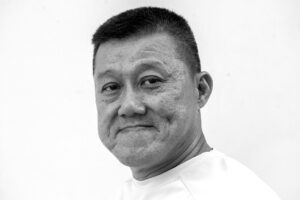
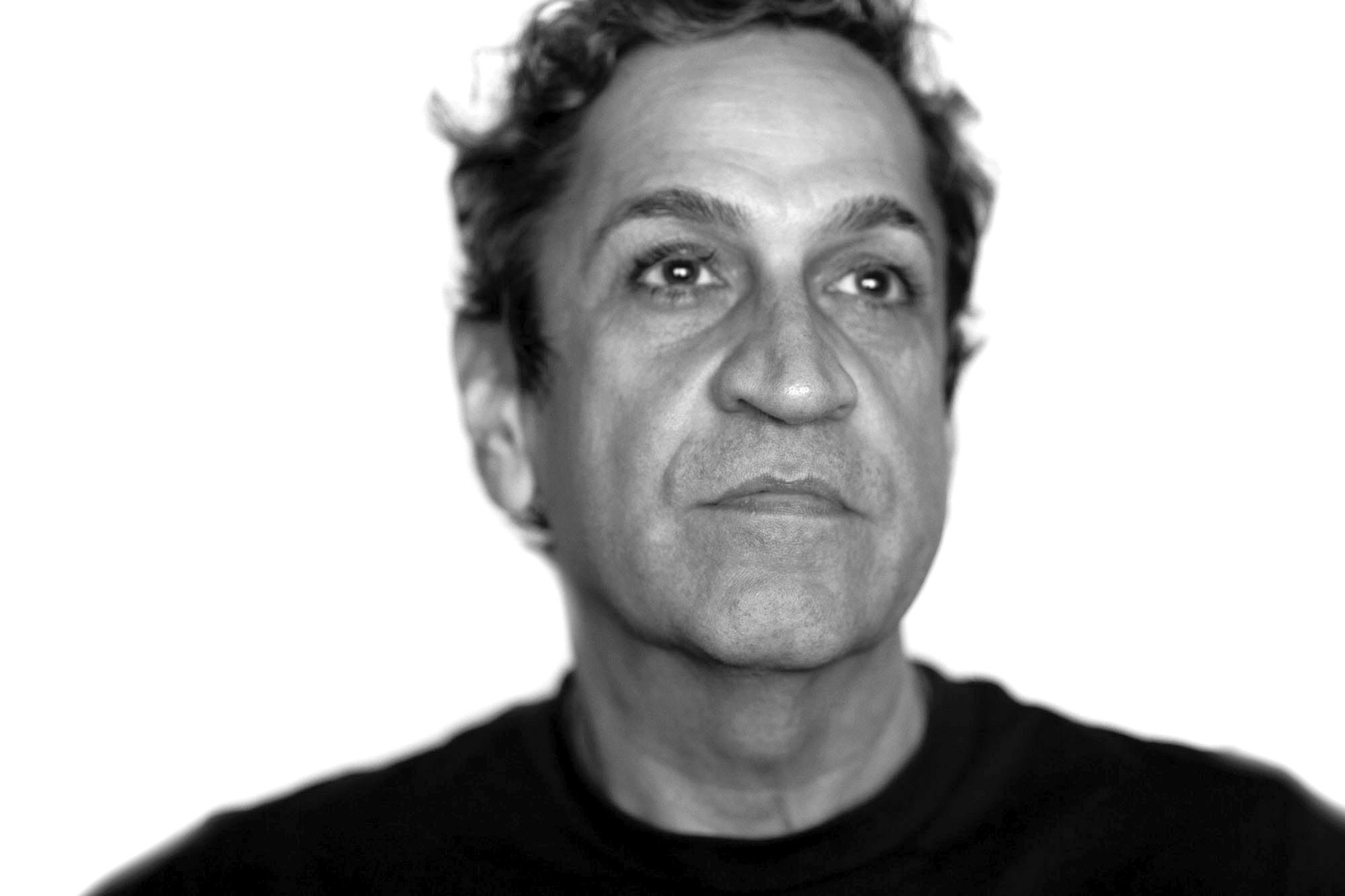
Haresh SHARMA, the resident playwright with The Necessary Stage since 1990, has written more than 130 plays in an illustrious career that has spanned more than three decades. A 2015 recipient of the Cultural Medallion, the highest arts honour for Singapore artists, his plays have been staged from Melbourne to London. Haresh is best known for ‘socially conscious’ plays that raise probing questions about societal issues.
Just to double check, your birthday is 18 January?
Yes. Is that info available online?
It is available online, but you know, a lot of things online are inaccurate. Your Wikipedia entry stated wrongly that you had to go through a process of naturalisation to become a Singaporean.
What does that mean?
That you have to go and sumpah (in Malay: to swear an oath) and say that you want to become a Singaporean.
Huh? But I was born in Singapore in 1965.
I know. So because of that, I did some fact checking. Under the Constitution, those who were born in Singapore before we became independent in 1965 were automatically granted citizenship.
Which is the case for me.
Singapore Citizenship Laws
Individuals born in Singapore before August 9, 1965, are generally recognized as automatic Singapore citizens, provided their birth records were established under the State of Singapore Constitution or the Citizenship Ordinance of 1957. The Constitution of Singapore stipulates that those who were citizens prior to independence automatically continue to be citizens.
https://law.nus.edu.sg/sjls/wp-content/uploads/sites/14/2024/07/605-1970-12-mal-jul-160.pdf
Okay, where were you born exactly?
In Singapore. KK(Kandang Kerbau Women’s and Children’s Hospital).
Like most of us. So let’s start with your parents. Who are they?
My mom and dad were actually living in Hyderabad, Sindh, in Pakistan.
They were neighbours and so they kind of knew each other.
And then my dad’s father left their hometown to come to Singapore to work. Eventually he ended up in Japan. He had a textile business in Japan.
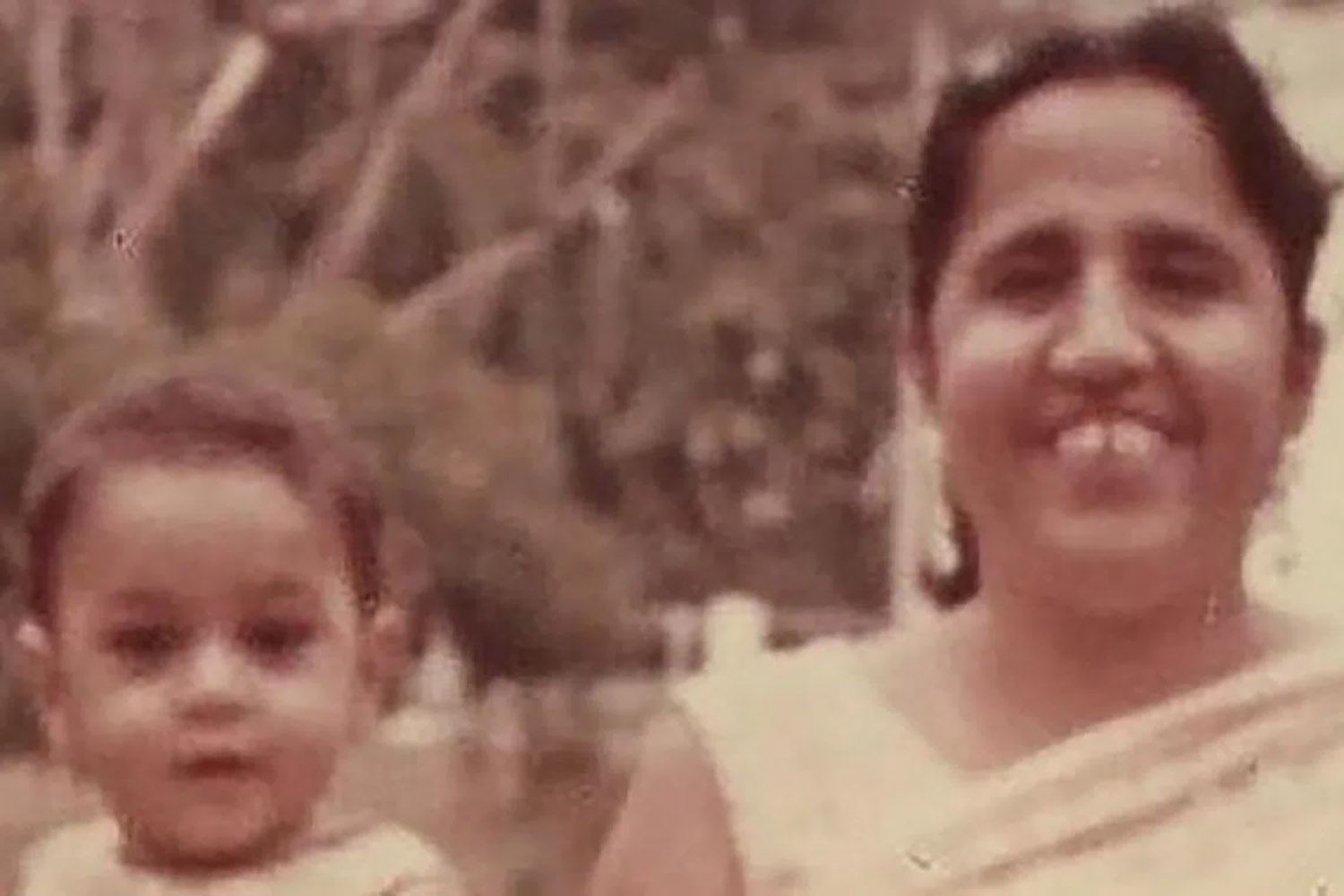
"My mom and dad were actually living in Hyderabad, Sindh, in Pakistan. They were neighbours and so they kind of knew each other."
And this was in …
If I remember correctly, in the 1930s, 40s, 50s.
My dad told me that because of that, he also wanted to work overseas.
How long was your dad separated from his father?
You know how it is when you ask your parents questions, the answers change from time to time. So I can’t be 100% sure. But I know that he was away for long stretches of time.
He would go back to Japan and then spend some time at home here. He sent parcels of very nice clothes and textiles from Japan.
The big change happened in 1947 when there was a partition of India.
Can you elaborate?
The British colonial rulers decided to divide India into two independent states – Hindu-majority India and Muslim-majority Pakistan.
My dad’s family and my mom’s family were in the Pakistan part.
The partition led to a mass exodus of refugees as Muslims fled toward Pakistan and Hindus fled toward India. About 15 million people were displaced.
There was widespread violence and more than a million people were killed.
Where did your parents end up?
My parents went to Bombay(now Mumbai). Their entire family was uprooted.
It wasn’t just a one-day affair. It went on for weeks.
Again, this one is a bit iffy in the sense of I’m not sure how long they stayed in Bombay or how long they were refugees or how they got their houses.
I don’t have those details.
So you are Indian by race?
Yes.
Religion-wise?
Hindu.
Religion-wise?
Yes.
So when did your father come to Singapore?
In the early 50s.
Was he married by then?
He was not married yet but he was planning to. He came to Singapore to see whether he could get a job, whether he was going to be okay.
After a few years, and this is what he told me, he thought he could manage. So he told his boss, “I’m going to go back, get married, and bring my wife here”.
So that woman he was marrying was your mom?
Yes, they had been dating.
Again, sometimes Indian families don’t talk about stuff like that. So I don’t know what kind of courtship they had. But I know they were from the same village or town.
What is the age difference between mom and dad?
Seven years.

And what did dad do when he came to Singapore?
Like my grandfather, dad was also in the textile business. Selling stuff in the High Street area. Back in the 50s and 60s, there were a lot of businesses run by Indians in that area. Well, I guess there still are.
By the time they settled here properly, I would say it would be like in the mid-50s.
Is your father still around?
Yes. He’s 99 this year.
"Like my grandfather, dad was also in the textile business. Selling stuff in the High Street area."
Wow. Ripe old age. Is he healthy?
Touch wood, yes.
He lives in Singapore?
Yah, still living in the home that I grew up in.
Do you know when he became a Singaporean?
I have no idea.
And your mom, is she around?
No. She passed away about 30 years ago.
What did she die of?
She had problems with her liver.
Are you an only child?
I am one of four children.
And you’re number what?
I’m number four.
And the older ones?
I have three older brothers. All boys in the family.
Did your parents wish there was a girl?
I’m sure they did. But you know, if you look at Asian families, when you have a boy, it’s always cause for celebration.
How old are your siblings?
The one just above me is 64. Then 65 and 66.
Are you close to your siblings?
Not really.
I assume you’ve lived in the east your whole life.
Yes. Even now.
"My primary school — Telok Kurau East — was just around the corner. It no longer exists but the structure is still there."
Tell me about your growing up.
I was born in KK. At that time, the family was living near Jalan Besar but I have no recollection of that. When we moved to the east, I was five or six years old. We moved to a terrace house in the Telok Kurau and Joo Chiat area.
My primary school — Telok Kurau East — was just around the corner. It no longer exists but the structure is still there.
Other things have taken over. They have a cafe and I think, education institutions.
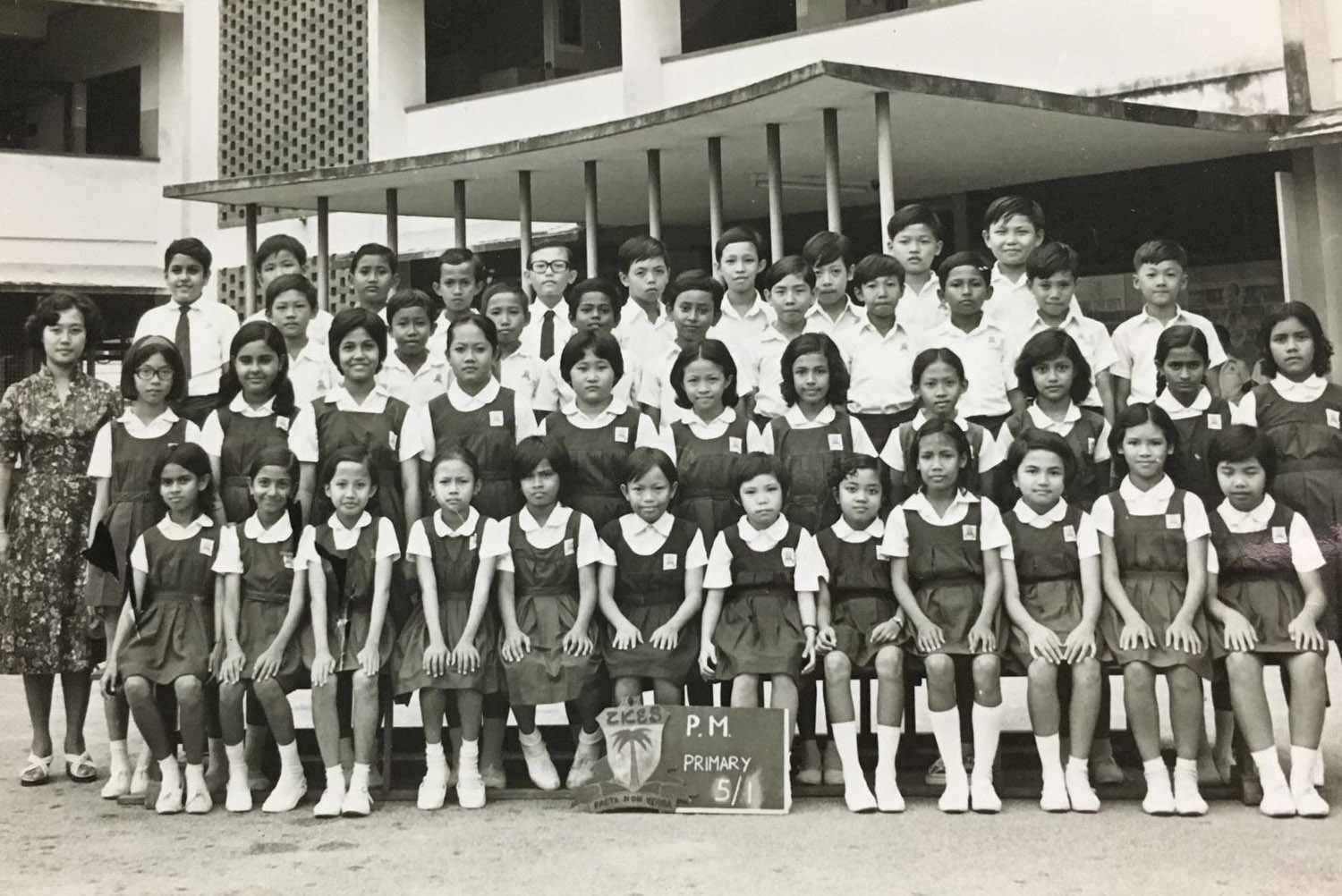
This is the Telok Kurau Studios?
Yah. So there used to be three schools there. Telok Kurau East, Telok Kurau West School and Telok Kurau Malay Girls’ School.
In 1985, they were all merged into Telok Kurau Primary. So if you look for my school Telok Kurau East, it doesn’t exist anymore.
Is that something that irritates you?
No, I think that it’s a very Singaporean thing. When things are destroyed or recycled or upcycled, don’t get nostalgic. That’s what we are told.
We are told that, but how do you feel?
I think that when you grow up with a very Singaporean consciousness, you go to a Singaporean school, you are taught in a very Singaporean way, your mindset starts to adapt to that Singaporean way.
I remember once I was in New York and someone was very upset because they were going to change the tiles in the subway.
And I was like, “Why is this guy so upset? It’s just tiles.”
And then you start thinking that not everybody has the same kind of mindset.
There’s no point being sentimental about buildings and things in Singapore because we have very little power to affect change.
"There's no point being sentimental about buildings and things in Singapore because we have very little power to affect change."
A lot of people I have interviewed seem to be resigned to the fact that we should not stand in the way of progress.
Yah, but I don’t even think that is progress.
I think it’s just, like you said, an inevitability.
What kind of student were you?
I was a good student. I would say I was quite on the ball. I liked doing well and I did well. I was rewarded for doing well. If I came top in class, my parents would buy me presents.
So I could say that in primary school, I was like a student leader as well, a prefect.
I was kind of dependable.
It was not that I was special. I think it was just that back then, there were very mixed-ability kids.
So you were one of the more mature kids?
I think I was one of the more mature kids. Maybe because I was the youngest of four, I was already a bit more precocious. I would read my older brothers’ books, for example.
Usually it’s the opposite — the younger ones tend to be spoiled.
Unfortunately, it wasn’t the case in my family.
Were your parents active parents? Or they left you to grow up on your own?
I would say home life was a certain way and school life was a certain way.
Things were clear at home.
Father was the strict father, went to work, came back at a certain time. Mother was the housewife, who made sure things were done. And children had to be obedient children who followed the rules.
"Father was the strict father, went to work, came back at a certain time. Mother was the housewife, who made sure things were done. And children had to be obedient children who followed the rules."
Why did you choose TK Tech(Tanjong Katong Secondary Technical School)?
I remember this clearly. I was doing very well in primary school and the teachers said, “Why don’t you apply to RI(Raffles Institution)?”
And I was kind of keen because a couple of my classmates were thinking of applying for RI.
At that time, RI was in Grange Road and my mom was a bit concerned because she said it was very far from our home in the east.
In secondary one, I would be in the afternoon session. She was concerned that by the time I finished at 6.30pm, I would get home only at 7.30pm.
Then what happened?
We had a neighbour who said that TK Tech is a good school in the eastern part of Singapore.
That got my mom thinking that it could be a good choice.
Back then, we were only given two choices. If you didn’t get your first choice school, you would be posted to the second choice school. I had to be careful about my first choice.
"Back then, we were only given two choices. If you didn't get your first choice school, you would be posted to the second choice school. I had to be careful about my first choice."
But you were a good student.
RI was the top school, and the most competitive. While my results were good, there was also a concern I might not make the cut for RI. You could never be 100% sure in exams.
Was TK Tech also your choice?
Frankly, I wanted to go to St. Pat’s(St. Patrick’s School) because that was the school nearest to our house, literally walking distance from my place. It was nearer than TK Tech.
I would think you’re more a St. Pat’s boy.
I think so.
How did someone like you end up in a technical school?
Technical just happened to be in the name of the school that I had to live with. For the longest time, my parents were pushing me towards science.
We all grew up in an age where the science stream was preferred, arts meant useless.
Yes. But technical was something that everybody had to do in those days. So I think everybody did some kind of woodwork or metalwork.
Even St. Pat’s boys would come to TK Tech for their technical classes.
I think in the early days of Singapore, the approach to education was very practical — we needed technical skills.
Whether a student who attended a technical school ended up being a technical person wasn’t really an issue.
Which is why TK Tech changed its name subsequently to Tanjong Katong Secondary School. And it produced a Singapore Prime Minister.
Yes.
What was secondary school like? Were you active in ECA(now CCA)?
I think I kind of disappeared into the crowd. This is my version of what I think happened. Maybe somebody else who knew me at that time might see it in a different way.
I think I disappeared into the crowd because I felt that in primary school, I was challenged, I was stimulated academically, in terms of leadership. Whereas in secondary school, I kind of retreated and just got by.
You changed or the environment changed?
I think the environment changed. I had some good friends and I just didn’t come out of that shell.
Were they friends from primary school?
No, they were mostly friends I met in secondary school.
Could it be that you didn’t like what you were studying?
Yah, I guess I can say it. I didn’t enjoy my four years in secondary school because I didn’t feel like I was growing or being motivated to learn.
"I didn't enjoy my four years in secondary school because I didn't feel like I was growing or being motivated to learn."
Did you like the subjects that you were taking?
I liked literature but I didn’t feel that it was taught in a way that was very exciting.
I did French for two years. I was lucky enough to be offered a third language in secondary one and two.
You had to be good in both languages to be offered the third language, and you had to take a test right?
Yah, I think it was based on your PSLE results. I did French for two years at Maju Secondary.
But I was asked to drop French because I was told that I had too many subjects. There’s always a bit of bitterness when I think about that. I feel that I could have continued taking French.
You could have dropped something else instead of French.
I could have. Looking back, I feel that I was asked to drop it because the school wanted our scores to be perfect.
That bureaucratic style didn’t suit me.
I didn’t feel that I was really free to discover the world of arts and sciences as a teenager.
What about ECA?
I just kind of did the barest minimum. For the first couple of years, I was in the band.
TK Tech had a very good band.
It was a very good band, which I enjoyed.
But I decided to quit the band because ECA hours clashed with my French classes.
Then you had to drop French.
Yes, that’s correct.
Which instrument did you play?
Initially, I didn’t play an instrument. Eventually they offered E-flat horn. I was really not into it.
Were you in any sports?
I didn’t join any sports. I think I joined the school magazine, I can’t even remember.
Not LDDS(Literary, Drama, and Debate Society)?
I don’t know. Was there even an LDDS? I have no recollection of being in LDDS.
So why Temasek JC?
It was the closest junior college. No other choice. Victoria JC was not set up then.
You didn’t consider going a little bit further because you didn’t get to go to RI?
No. By then, I was an average student.
You didn’t do well in the O-levels?
I did well enough to get into Temasek. By the time I left TK Tech, I was lacklustre in terms of my academics. I wasn’t as into it.
That must have been quite a shock to your parents because you were doing well in primary school.
Yah, but I think they also kind of managed their expectations in the sense that it was different being in a neighbourhood primary school versus being in a branded school.
"... I'm glad that I didn't do well enough to go to the science stream. If I had done well enough, my parents would have insisted that I go to science."
It must be heavenly for you to go to Temasek and to do arts.
Yah. So in that sense, I’m glad that I didn’t do well enough to go to the science stream. If I had done well enough, my parents would have insisted that I go to science.
You probably would have struggled.
I would have struggled, definitely. For my parents, it would be ideal for me to become a doctor or a lawyer.
These are always the top two choices for Asian parents.
Especially for me because I was the child who did well. Anyway, I was a happy arts student in Temasek.
What did you do? Geography? History?
I wanted to do history but I was in a geography class. So it was geography, economics and literature.
You did well in the A-levels?
I didn’t do well.
I was such a terrible student in the first year for literature because I was taught so badly. So I had a lot of catching up to do.
Luckily, I became friends with a group of KC(Katong Convent) girls who helped me. They would tell me, “That is an alliteration. That is an allusion.”
I didn’t know how to write analytical essays in literature because in secondary school, I was just told to mimic things.
And it’s like, that did not make any sense at all because you were not supposed to just point out what things were. You were supposed to write about what they meant and why the writer used these literary devices. So for one year, I had to learn all of those things from my classmates.
"I was such a terrible student in the first year for literature because I was taught so badly. So I had a lot of catching up to do. "
So those classmates were helpful.
They were helpful. And I enjoyed Temasek because I had more freedom to hang out with friends and go home later.
In secondary school, you finished at a certain time and you were expected to go home immediately.
In JC, I was involved in things, I was in the student council. I was in the band for one year. I also took part in school magazine stuff. Yah, I kept myself busy.
The TJ you went to was quite special. The school produced people like Ivan Heng and Clifton Turner.
Clifton was my junior, Ivan was my senior. Bertha Henson was my senior. It was fun times.
I was improving in my studies. By year two, I was getting better. The only big problem was that I failed economics in the A-level exam.
So I had to repeat.
Did you retake your A-levels as a private candidate?
No, I decided to stay back in TJ.
I think that when you are a repeat student, you tend to hide from the crowd a little bit.
I didn’t hide. I made a new set of friends.
And the second time you took the A-levels, you did okay?
Yah, I did okay. I passed all my subjects. And I applied to NUS to read English and literature.
For my parents, it was a bit of a rollercoaster ride. I was a top student in primary school, and they had hoped that I was going to be a doctor or a lawyer.
Were they still thinking that you might still go into law?
They were still hoping but I didn’t want to go into law. I wanted to study literature.
By then, you had already decided what you wanted to do with your life?
No, I had only decided that I wanted to do literature.
But the literature track is mostly for teachers, right?
Yah, but I was kind of open about things because at 18, I didn’t know which path I was going to take.
What I meant to say was in a more practical sense, a degree in literature was not very useful.
I could be a teacher, a researcher. Or become an academic. Or go to graduate school. Or mass comm.
I was already interested in writing. But I didn’t think I was going to be a full-time writer.
You had always been interested in creative writing?
I was interested since secondary school. But I didn’t think of it seriously.
"Besides those silly ones like being a pilot, I didn't really have a childhood ambition."
What was your childhood ambition?
Besides those silly ones like being a pilot, I didn’t really have a childhood ambition.
I think it was only in my first year in NUS that I started having a better idea of what I wanted to do.
Before we go there, let’s talk about NS(National Service) first. What did you do? I read that you went for a theatre audition during NS because you had a 8-to-5 job.
The first few months of NS were a bit trying. BMT(Basic Military Training) was a problem.
Because of your fitness?
Because of my fitness and because I was just not used to that kind of world.
I felt that we were being punished because they wanted to kind of brainwash you, to make everybody the same.
I am the kind who takes responsibilities seriously. So if they said to clean something, I would try and make sure I cleaned it really well.
But at the end of the day, it wasn’t about how well I’d cleaned it. They would always find fault with something. The point was to beat you down.
You know, the meaningless idea of having to run, touch the wall and run back.
At that time, I couldn’t understand because I was trying so hard.
So that was something that kind of dehumanized me and I didn’t respond well.
But I just went with it.
No choice.
Yah, no choice.
Where did you go after BMT?
I was sent to section leader training and I had some ankle injuries.
Were you downgraded?
I wasn’t downgraded. I did not complete the 12-week course although I had actually attended most of the training.
Section leader training was not fun. But I learned something about myself — that I’m very resilient.
For things like the 24km marches, I would be there until the very end.
"Section leader training was not fun. But I learned something about myself — that I’m very resilient."
So your fitness did improve?
My fitness improved. I think my perseverance was strong. But not necessarily my body strength. I couldn’t do pull-ups or SOC(Standard Obstacle Course).
Eventually, they were supposed to put me back in the section leader training course. Re-course.
But my CO(Commanding Officer) at that time said that I was just not suitable for it. He suggested that I go to a medic course.
You became a medic?
I became a medic and he was right, I was much more suited to be a medic.
Why were you more suited?
Because I was doing something that I could manage. I was not cut out to be a section leader, to train other men and all that.
Maybe as a medic you were healing people.
I was healing people and working with specific tasks.
Eventually I was posted to a medical centre. Not a combat unit, but a reservist unit.
That worked out.
That helped. I had an 8-to-5 job, as opposed to some of my friends from the medic course who were posted to units and had to stay in like everybody else, and go to field camp.
And that was why you were able to go for your first theatre audition.
Yes.
Do you remember the play?
This was 1986. I saw a newspaper article about an audition for a drama and it was held in some secondary school.
Which group was behind it?
It wasn’t a theatre group. I realised much later that the play was commissioned by the Singapore Arts Festival. It was called Dragon’s Teeth Gate, written by Stella Kon and directed by Lim Siauw Chong.
He was the guy from Talentime?
Yah. At that time, I was new to the community, I didn’t know anybody. But I realised later that it was a big deal.
I went to the audition by myself, I had no acting experience.
Why did you do it?
Just out of, you know, sheer boredom. And again, like I said, I was the kind of person who wanted to do things.
I assume you’re a reader, were you using the book out time to read?
Yah, I was using it to read, but I also liked doing things. I liked activities.
What were you reading at that age?
I really can’t remember. Maybe something frivolous.
So that small role in the ensemble sparked an interest in theatre?
It sparked an interest and also I got to meet people.
In the theatre world?
Yah. I met a few people. After that, I also found out about other auditions in a group called Third Stage, which I also went.
Who was behind Third Stage?
Third Stage was started by Chng Suan Tze and Wong Souk Yee, who were eventually detained for two years in the so-called Marxist conspiracy and accused of trying to bring down the government.
That was a dark chapter.
Yes. And then came NUS(National University of Singapore).
Were you ‘swimming’ happily in NUS?
I was very, very happy because of what I was studying.
And then somebody introduced me to Alvin Tan, who was just starting a theatre group.
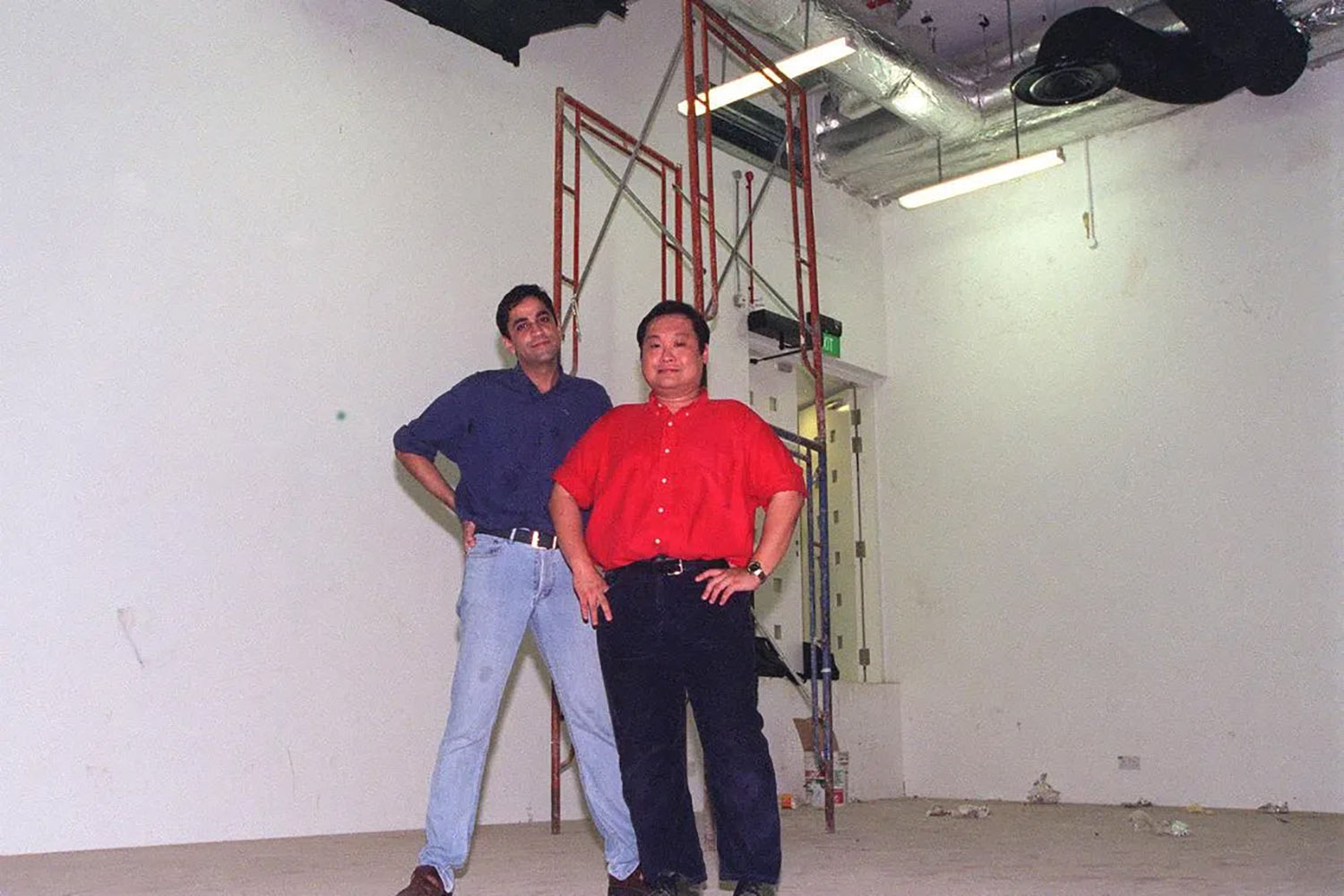
He’s one year or two years your senior?
Two years. When he started his third year at NUS, I started my first.
So that was in 1987. He had just started The Necessary Stage (TNS).
Back then, TNS was very much an arts faculty kind of theatre. The people were all from the arts faculty.
I have always been a little bit curious — who came up with the name The Necessary Stage?
One of Alvin’s friends.
I like it very much because it means something that you can’t do without.
Yah.
So you were not there during the formation of TNS?
No, I just joined.
At that time, it was a very free and easy group and we just showed up.
We would do a play at Shell Theatre for a drama festival. Or we would do a lunchtime play at NUS. I just wanted to help.
Did you start working backstage?
I was backstage, I sold tickets. I helped in whatever way I was needed because I was still relatively new.
But your role eventually evolved into the front end.
Yah, I did a few things. I did sound. I did acting.
And then, in 1989, I said, “I don’t mind trying writing.”
That was how I wrote my first play with TNS. I submitted a short play to a competition.
The TNS involvement was helping your studies or was distracting you from your studies?
Both.
There was no pressure to think about what you were going to do after graduation?
Back then, we only had one exam period, which was in March. So the rest of the year was quite free. Okay, maybe I had to write an essay here and there, or attend tutorials. And they were just the bare minimum.
Fortunately, a lot of my tutors and lecturers were very supportive. So even if I had to write an essay, I could choose to write about Singapore theatre, and my teachers would say, “Great”.
They would be like, “Oh, do you know about this journal that was published in the 1970s?” They would sometimes give me journals, lend me things, or share things with me.
Sometimes when I missed a tutorial, the teachers would ask, “Did you have a long night with rehearsal?” and when I said, “Yah, I’m so sorry”, they would say, “No, it’s okay.”
It’s very rare. They treated you respectfully.
They didn’t look at me as someone who skipped class.
Were your teachers also in theatre?
No, they were poets and all that.
They were people like Lee Tzu Pheng, and Koh Tai Ann, who still remembers me and talks to me every time I run into her.
She would always tell others, “This is Haresh, my student.”
And there was Max Le Blond, who has since moved to Australia.
According to a National Library entry, your literary influences are mainly cartoonists and screenwriters. The names that were cited were David E. Kelly and Gary Larson.
I think I was interviewed in the 90s, and at that time I was watching a lot of David E. Kelly shows like The Practice, Picket Fences, Chicago Hope and Ally McBeal.
I really liked the way that Kelly looked at characters and situations in the interpersonal realm as well as in the socio-political realm.
A lot of playwrights will not admit to liking screenwriters and cartoonists.
Am I influenced by other more literary figures? Yes, of course.
But at that time, just based on that interview, I didn’t go with the highfalutin type of names.
I thought that was very honest.
I used to read a lot of comics. When I was in school, I subscribed to Mad Magazine. And then after, I started reading Calvin & Hobbes(Bill Watterson) and The Far Side(Gary Larson).
In primary school, I read a lot of Beano and The Dandy.
Do you read now?
I do. I go to the library to borrow books.
Would it be okay to call you an artist? Or is it a label that’s too restrictive?
I think it’s okay. Some people say, “no, no, I’m not an artist. I’m a playwright.” Well, a playwright is, I guess, a subset of an artist. I mean, artist is a more general term.
Did you want to be involved in the creative world after that first audition?
Not really, no. I auditioned just for fun. So even in NUS, when I started doing theatre, it was still for fun.
"TNS was for fun. I thought that at some point, I would graduate and get a proper job."
TNS was also for fun?
TNS was for fun. I thought that at some point, I would graduate and get a proper job.
During those three years at NUS, they launched a pilot programme called Mass Communication. Those who signed up for it had to go for Mass Communication classes outside school hours. That meant during my holidays.
For three years, during holidays, I would attend lectures on mass communication, PR, journalism, broadcast journalism and advertising.
And then, in the second year, we had our training. Most of us selected broadcast so we went to TCS(Television Corporation of Singapore, subsequently renamed Mediacorp). We were trained to film things.
For quite a long period of time?
I think for a couple of weeks or something like that.
So a practicum.
It was a practicum. And then in the last year, we could choose an internship.
Because I had already done broadcast journalism, I decided to intern at a public relations firm.
Do you remember which one?
It was called YTJ-Kent Total Communications. The office was in Chinatown. It was my first time in a proper job.
You dressed up to go to work.
Yah, dressed up.
I was attached to this woman who was in charge of PR. I would go to events and prepare things.
One day, one of the bosses asked if I could proofread something. He told me, “It has already been proofread but I just want another pair of eyes.”
I spotted so many mistakes. He was so shocked and angry with the full-timer who missed them.
And then a colleague called and said, “The client wants copy for this ad. They’re not happy with what they saw. Is anyone in the office?”
I replied, “No, there’s no one. It’s just me.”
He said, “Can you do copywriting as well?”. I told him I could.
The next day, the advertising chief told me, “The client was really happy with your copy. Can you help me do more copy?”
Suddenly I’m learning advertising, copyediting and copywriting.
But it was fun. It was enjoyable.
And I thought that I would probably stay with this company after graduating.
They actually offered me a job.
How long was the internship?
It was the whole of the holiday period.
So you could have been an advertising man instead of being a playwright.
I would say that it was something I was interested in.
You never had a conversation with your parents about your career?
No. You see, since I started serving NS, I stopped taking money from them.
I was giving tuition. It gave me independence. When I was in NUS, I taught WISE(Worker Improvement Through Secondary Education) classes. I would go to Daimaru twice a week and teach the sales staff conversational and written English.
What was your first play?
My first play with TNS was Lanterns Never Go Out.
When did you decide to go full-time with TNS?
By the time I finished my year exam I was so exhausted. I had not attended any career talks. So I had no idea what I was going to do.
But I was approached by Practice Performing Arts.
We are talking about Kuo Pao Kun’s Theatre Practice right?
The Theatre Practice is part of Practice Performing Arts Centre Limited.
Who got in touch with you?
Tan Beng Luan, their manager, got in touch and asked if I wanted to work with them. I said, “Oh Yah, but maybe part-time, just to figure out what I want to do.”
What was the job?
Arts Administrator. They wanted me because they were starting an independent arts centre called The Substation at Armenian Street. They needed administrators. They said, “For now, you’re going to be working at Waterloo Street. But when the thing opens in September, your office will move there.”
Wow, Substation is an important institution.
I was very, very fortunate in the sense that I got to work in the same office as Pao Kun. I would go for site visits to The Substation when they were still building it.
About two months later, they told me they needed me full-time. That was when I told Alvin, “This is make or break”. If I had gone to work full-time with The Substation, then I could not be involved in TNS.
You chose to go full-time with TNS in the end?
When Alvin graduated in 1988, TNS was still too young and he couldn’t do it full-time. So he started teaching.
When I graduated, we already had some years under our belt and we had a bit of savings.
In 1990, the ministry started a theatre in residence programme. Arts groups could get free rental if they did local plays and we were ready.
We got invited to the arts festival that June. We were booking theatres. We were going to do new plays. Things were happening.
So we decided that I should just go full-time with TNS. But I was getting more like half-month pay because we couldn’t afford to pay more.
The money came from savings?
Yes.
Were you also getting sponsorship?
We started getting sponsorships and grants, and we were still making small profits because we spent very little. I was also supplementing my income by teaching and stuff like that.
Did you have to go and explain to Pao Kun himself?
No, not to Pao Kun. But Beng Luan.
What does Pao Kun mean to you?
He was obviously a very big person in the theatre world.
I’ve not met anybody with anything negative to say about him. Were you influenced by him?
Yah, I was influenced by him.
I had a different type of relationship with him because I wasn’t so much deferring. There wasn’t so much of a deference in the sense that sometimes we could just chat. I call him Pao Kun instead of Mr Kuo or teacher.
Was he ever your teacher?
He wasn’t. After I completed my Master in Playwriting, he suggested that I teach at Practice. Once, he also proposed we teach something together.
So there was always that kind of respect that I learned from him. But he also saw me as a very serious person.
But at the same time, he was also very humble to the younger generation.
Yah, I would say so.
"Every time we create theatre, when I say we, I'm talking about The Necessary Stage, we create theatre with a social conscience."
I believe it was Hannah Pandian, former arts writer at The Straits Times, who described you as someone who creates ‘socially conscious plays’. It’s quite a big label to live up to.
I think we do call ourselves that as well. Every time we create theatre, when I say we, I’m talking about The Necessary Stage, we create theatre with a social conscience.
We’re trying to be more aware of what’s happening in society and to bring light to things that are happening.
But that seems to be the hallmark of the better theatre groups in Singapore. You don’t do comedy entertainment. So your plays are always a little bit risky, if I may use the word.
Yah, and we’ve been doing that from day one.
And I think that’s what distinguished us from the start. Our work is always Singaporean. That wasn’t something that was common back in the day.
In fact, the reason we’re called Necessary Stage was we thought it was a necessary time in Singapore’s history to put the focus on Singapore writing, on Singapore plays.
I’m just thinking why do theatre groups and playwrights often get into trouble? Is it because you ask inconvenient questions?
I don’t know why we get into trouble. Do we get into trouble?
Or do you irritate people?
I’m not an irritating person.
Yah, but other people get irritated.
I don’t know. I mean, it’s difficult to say. Are we talking about censorship, are we talking about the government, or are we talking about IMDA(Infocomm Media Development Authority)?
I am talking in general, like if you revisit certain episodes in the past and give your own interpretation that is not the official narrative, you are told, “Oh, you can’t say that.”
Who is the person who said, “You can’t say that?”
I think the people who criticize you or the people who decide whether you get to do certain things or not.
In Singapore, it’s very clear. If I write a play, the play has to go through IMDA.
If I apply for a grant, the grant is through National Arts Council. So things are in place.
Sometimes you write something and then the licensing people come back and say, “We would like you to change this”. Or sometimes they say, “If you’re keeping it as it is, it has to be R-rated.”
So it’s a system that is somewhat transparent. But also at the same time, they don’t explain certain decisions?
They explain, it’s very, very specific. And also, it’s very vague, in the sense that they tell you, “This is the decision, we’re giving you a R-rating.”
“But if you want to change your text or your script to be less whatever, then you can get an advisory.”
Is it an arrangement that you learn to navigate?
I don’t navigate. I write whatever I want to write. I don’t need to be my own censor. There’s already a censor out there.
The only thing I sometimes ask myself is — Do I want to reach out to more people and therefore rewrite it to get an advisory? Or do I want to just leave it, which means those who are 15 and 16 years old cannot watch.
"I don't navigate. I write whatever I want to write. I don't need to be my own censor. There's already a censor out there."
Have you been surprised by those decisions, whether in a negative way or a positive way?
Sometimes I’m surprised by what they find sensitive.
There was a time when sexuality was very sensitive, but now it’s not so.
Then sometimes the “official narrative” becomes very sensitive.
If you talk about Singapore’s history or you talk about communism or the 1950s, they can get very sensitive.
But at this moment, I think they’re sensitive about things related to Palestine and stuff like that.
So LGBT is now not as sensitive.
But having said that, Mitchell Fang’s play Homepar was banned or didn’t get a license because it was LGBT but they said that it glorified drug use.
So the glorification is always the part that gets writers into trouble.
That is their perception of it.
You can argue “That’s not my intention”, but they can say that is what comes across.
If the message is something like ‘It’s bad to do drugs and all’, then maybe it’s slightly okay.
Or you take drugs, you die. Or if you’re gay and you take drugs and you die. Even better.
Or you get AIDS and then you die.
Yah.
"I'm not the kind of person who likes to glorify any kind of hardship or censorship that I face."
You’ve been celebrated, you got the Young Artist Award, you received the Culture Medallion. But at the same time, you are often slapped on your wrist. I’m referring to the case where your course at NUS was withdrawn. How does it feel?
I think I have reached a point where it is just another day. Because I’m not the kind of person who likes to glorify any kind of hardship or censorship that I face. I know there are people who love that kind of attention.
There’s also no time to waste, right? I mean, you have to move on.
I’ve got plays to write, I’ve got classes to teach, I have young theatre people to mentor. You just move on because it is what it is.
"I can't control what’s out of my control."
Maybe ‘navigating’ is not the right word. You learn to fight or choose your battle.
I can’t control what’s out of my control.
NUS does not want to hire me anymore. I cannot do anything about it.
Two years ago they gave me a distinguished alumni award and now I can’t teach at NUS.
Do you think they like you or dislike you?
I don’t know. I don’t even know who “they” are.
I want to ask about the NDP fun pack video. I managed to find the video. The official explanation seems to be just copyright infringement.
Curious to see what Haresh's spoof is all about? Click on the button below.
So that was a very interesting thing that happened. I was a writer for the NDP that year. I can’t remember what year it was. And the creative director was Beatrice Chia-Richmond.
She said that they have a fun pack every year and the hosts will do a lot of interaction with the audience to introduce the items in the fun pack.
She thought it was very boring and wondered, “What if we do the fun pack like a song?” using something really fun like a Lady Gaga song. She asked me, “Can you change the lyrics?” and I said, “Yah, that sounds really, really exciting”.
And so I did that — to the tune of Lady Gaga’s Bad Romance. And it was really cheesy. The host was supposed to come out in Lady Gaga kind of deconstructed outfits.
The problem was that the first time they did it, somebody filmed it and the video was leaked. And then people said that it was so lame and questioned “Why are they doing this?”
The army people were always quick to respond to public criticism. So instead of explaining that it wasn’t ready and the final version would be more fun, they decided just to remove it for fear of having to answer to more people. And it just so happened that around that time, Lady Gaga was in Singapore.
"The army people were always quick to respond to public criticism. So instead of explaining that it wasn’t ready and the final version would be more fun, they decided just to remove it for fear of having to answer to more people."
Did she have something to say about that?
When journalists asked her how she felt about people changing her lyrics, she said it was fine if they wanted to do it.
I’m not sure but I think the NDP organisers had obtained permission to use the song but they did not get permission to change the lyrics.
But a spoof is the highest compliment.
Yah, I know.
I felt a bit sayang (Malay for pity, a pity), because it would have been a really fun spoof.
But the army people tend to be rigid. Did you work with NDP again?
I worked with SEA Games in 2015. I was the writer and co-conceptualiser of the opening and closing ceremony. I think it was Singapore’s 50th anniversary.
You were not affected by the fun pack incident?
No, it was fun. I had a wonderful time working with Beatrice and the gang.
They didn’t say ‘This time cannot spoof’?
No, because it was the 50th anniversary, so all eyes were on the NDP that year. The attitude towards the SEA Games was like, “okay, you all do whatever you want. Just make sure you got sports”.
Were you surprised by the reaction to the fun pack song?
Yah, because it was such a small thing to me.
In the sense that I had written so much for that NDP, and the fun pack song was just a small thing.
I mean, I wrote an entire musical that year for NDP, but the spoof got so much attention.
It overshadowed a lot of things.
I even wrote the NDP song that year.
This was part of your many responsibilities that year?
The NDP song which I wrote, which I like, is called In A Heartbeat.
One day I’m getting complaints from institutions about my playwriting. The next day I’m writing an NDP song.
Which is why I asked whether you know if they like or dislike you? Would you say Singaporeans take this thing too seriously?
I don’t know. I think we can laugh it off.
For me, if someone asks me, I’ll just be open about it. I was told not to speak to the press back in the day. They said let it come from an official response.
So I said, okay, I won’t speak about it. So I didn’t speak about it. Not because I didn’t want to, but because they told me not to.
"I think maybe it is because we are such a small nation and we don’t have to struggle with natural catastrophes or unrest. So we become very inward-looking and little things become big."
We can be so serious, but at the same time Singaporeans in general are also not very serious about social issues. Would you agree?
I think maybe it is because we are such a small nation and we don’t have to struggle with natural catastrophes or unrest.
So we become very inward-looking and little things become big.
Sometimes my friends ask, “Did you read the comments on this website or social media?” and I would say, “No, I don’t normally follow a lot of local things.”
But the comments are very myopic, very childish, and very surprising.
My friend would say, “They can’t see beyond their own eyelashes.” So you are not a social media person?
I have Instagram.
Do you use it often? For work?
A bit of work, a bit of fun. I used to use it more, but it takes time if you want to do something funny.
Do you think people take Instagram posts seriously?
Yah, I do. I mean if you are on Instagram, I think you are committed to it.
It is a place that can influence opinions?
I believe it can.
What are your pet peeves? I know you’ve said that Singaporeans like to give unsolicited opinions.
That was for an article a couple of years ago. I was having fun with it.
But Singaporeans like to give unsolicited advice, right?
That is true. Maybe that is more like the lighter side of a pet peeve.
"(Singapore drivers) are always honking. They always feel that they're in a race or something."
OK back to your pet peeves.
I think in the Singapore context, I would say more in terms of things like on the road, people do not give way or are impatient with pedestrians.
They are always honking. They always feel that they’re in a race or something.
You’re not a driver right?
I’m not.
But yet you feel it.
Yah and sometimes you feel unsafe.
You know when cars can just zoom past a red light.
So it’s things like that, you know. There isn’t that sense of graciousness in Singaporeans.
Why do you think we are like that?
Again, maybe it comes back to the idea that everybody feels a little bit angry, everybody feels a little bit overworked, everybody feels a little bit undervalued, and so there’s a lot of seething anger that comes up in these ways. So we are really not very happy lah.
"I need to collaborate with actors, because then it's not just my experience and my eavesdropping, but their experiences and eavesdropping."
I know to write about social issues, you’ve got to have your finger on the pulse. Do you sit in coffee shops and hawker centres and eavesdrop?
I need to have a good process when I work. I need to collaborate with actors, because then it’s not just my experience and my eavesdropping, but their experiences and eavesdropping.
So you do eavesdrop?
Yah, I mean, of course you eavesdrop because you listen to people talk.
Then it sparks your creativity?
It doesn’t spark. You kind of look at what people are talking about, how they talk about things, when you’re on the bus and you hear how people are speaking, what kind of languages are around you.
Or when you work with actors, and they are saying things like, “Oh, you know, my nephew is doing this”. And then you discover what’s happening.
The pulse is not just about that kind of idealised heartlander coffee shop kind of thing, but the pulse is also about reading articles, interviewing experts in the field that you are writing about, whether it’s social work, whether it’s climate change, or whether it’s, you know, religious issues.
I think there’s a lot of different ways of tapping the pulse.
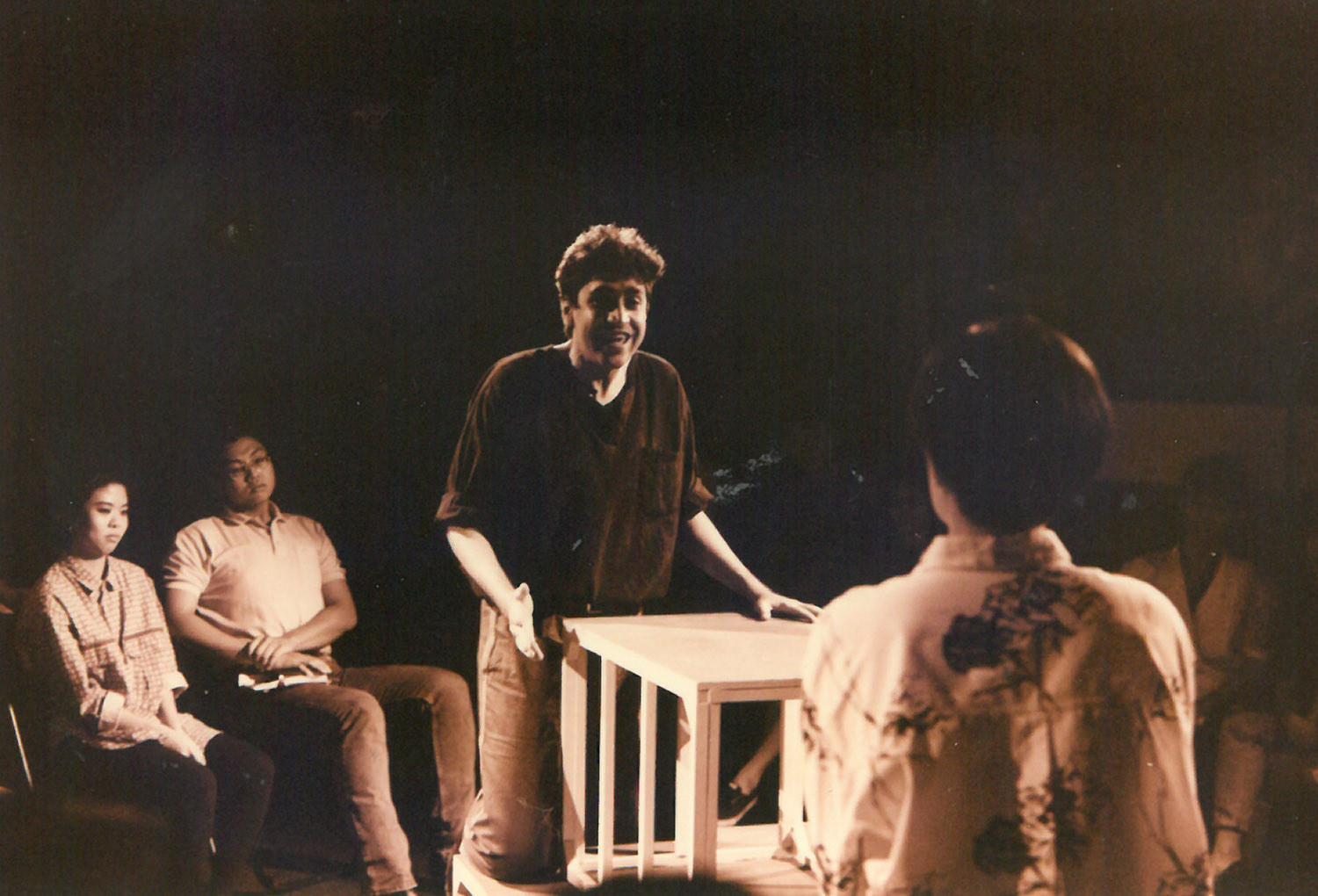
It’s also a way you have chosen? I mean, not all playwrights interact with the cast.
Yah, yah.
I can’t find a more appropriate term to describe what you do than the phrase ‘more community’, because you’re always getting others’ inputs.
Yah. That sense of knowing what’s happening around you from different types of people, from the everyday people to the, you know, the academics, I think that’s something that’s important for me.
Would it be fair to say that it would be easier for you to live and work in, say, another place where there’s more freedom?
Not necessarily, no. I feel that because I’m so used to writing in Singapore, with Singaporeans, about Singaporean issues for Singaporean audience, that if I were to be somewhere else, I would feel like I need to then go into their pulse of what makes them who they are, what are their issues, what are their concerns.
"I feel that because I'm so used to writing in Singapore, with Singaporeans, about Singaporean issues for Singaporean audience, that if I were to be somewhere else, I would feel like I need to then go into their pulse of what makes them who they are, what are their issues, what are their concerns."
Maybe when you were doing your master’s in Birmingham, you were not vested because you were there for just one year.
Yah. It’s not home.
Also because when a director leaves home to study, he may find it difficult to direct. But when a playwright leaves home to study, he can still write. So that’s the thing – you can write wherever you are.
So even when I was studying in Birmingham, I was still doing quite a bit of writing.
About Singapore?
About Singapore, for Singapore. But I also did some work in Birmingham and Glasgow.
What was Birmingham like?
It was nice. I was in London a little bit before that. London was very hectic.
So when I went to Birmingham, at first I missed the hectic pace and my friends who were in London. But then, I got used to the solitude of being in Birmingham, the quietness, the simplicity. Because we only had classes twice a week.
Not many people are aware but apart from being a creative, you are also involved in the admin side of things, such as fundraising.
Yah. I mean, I guess people don’t realise this because I brand myself as a playwright slash artist.
I’ve been with the company from the very beginning. I was the first full-time staff of the company. I was, in my first name card, the administrator. I was admin first before I became administration manager slash resident playwright.
You’ve invented your own titles.
Yah, I invented my own titles.
I’m also the director of the company. People don’t realise that the creative business is a business.
"I'm also the director of the company. People don't realise that the creative business is a business."
You have to because?
That’s my choice because I wanted to from the beginning. I didn’t at any point say, “Oh, I don’t want to do any admin”.
You could not afford to say “I only want to do creative”?
I could if I really wanted to. I could have just said, “I don’t want to be burdened by administrative stuff”.
But the thing is that it’s part of my DNA. I did well in advertising and PR and copywriting and editing. And so even now, I work with my manager and the staff looking at copy, looking at synopsis, write-ups and proposals.
So that is a part of me that a lot of people don’t know. But I don’t talk about it as well.
TNS was in Marine Parade CC for the longest time.
We were there from 2000 till 2022.
And now you are in an industry building. By choice?
No choice. Because the lease at Marine Parade ended. They were going to do something to the building. Originally, they said they were going to demolish it. Then they said they were going to refurbish it. But whatever it is, everybody had to leave.
It was still in good shape.
It was in good shape but they wanted to, I think, beautify it and connect it to the MRT.
Oh I see.
But then COVID happened and they couldn’t start work because it became a vaccination centre.
So what is it now?
It is being reconstructed and it looks 80% like the original.
William Lim, the original architect, would he be happy?
I don’t know if William would be happy about it. He might just ask “Why?”
Does it mean that if you choose to be a playwright in Singapore, you need to be prepared to struggle financially?
It depends on whether you are a full-time playwright or a freelancer.
Are you dependent on playwriting as your main source of income? You know what I mean?
If you are writing plays as a main source of income, you are not going to make anything. How many plays can you write and get paid? You will get paid but it is not going to be enough to sustain.
I am one of maybe two playwrights in Singapore who have a full-time job as a playwright and getting paid full-time.
When I was overseas to study or for conferences, and I told people that I am a playwright, they would say, “What is your play about? When is your next play going to be staged?”
I said my plays are staged all the time. I have never written a play that was not staged.
Playwrights living and working in London and New York are envious because after they have written a play, they have to beg people to stage it. They are used to getting many rejection letters.
"If you are writing plays as a main source of income, you are not going to make anything. How many plays can you write and get paid? You will get paid but it is not going to be enough to sustain."
In many ways you seem very contented, very happy.
It is because I get to write things that I want to write about. In the past almost 40 years, I have been able to also do different types of theatre.
For the past few years I have been mentoring a theatre group of migrants called Birds Migrant Theatre.
Recently I started working with disability arts and artists. For me, besides writing plays, I ask myself what I can do to make things more worthwhile.
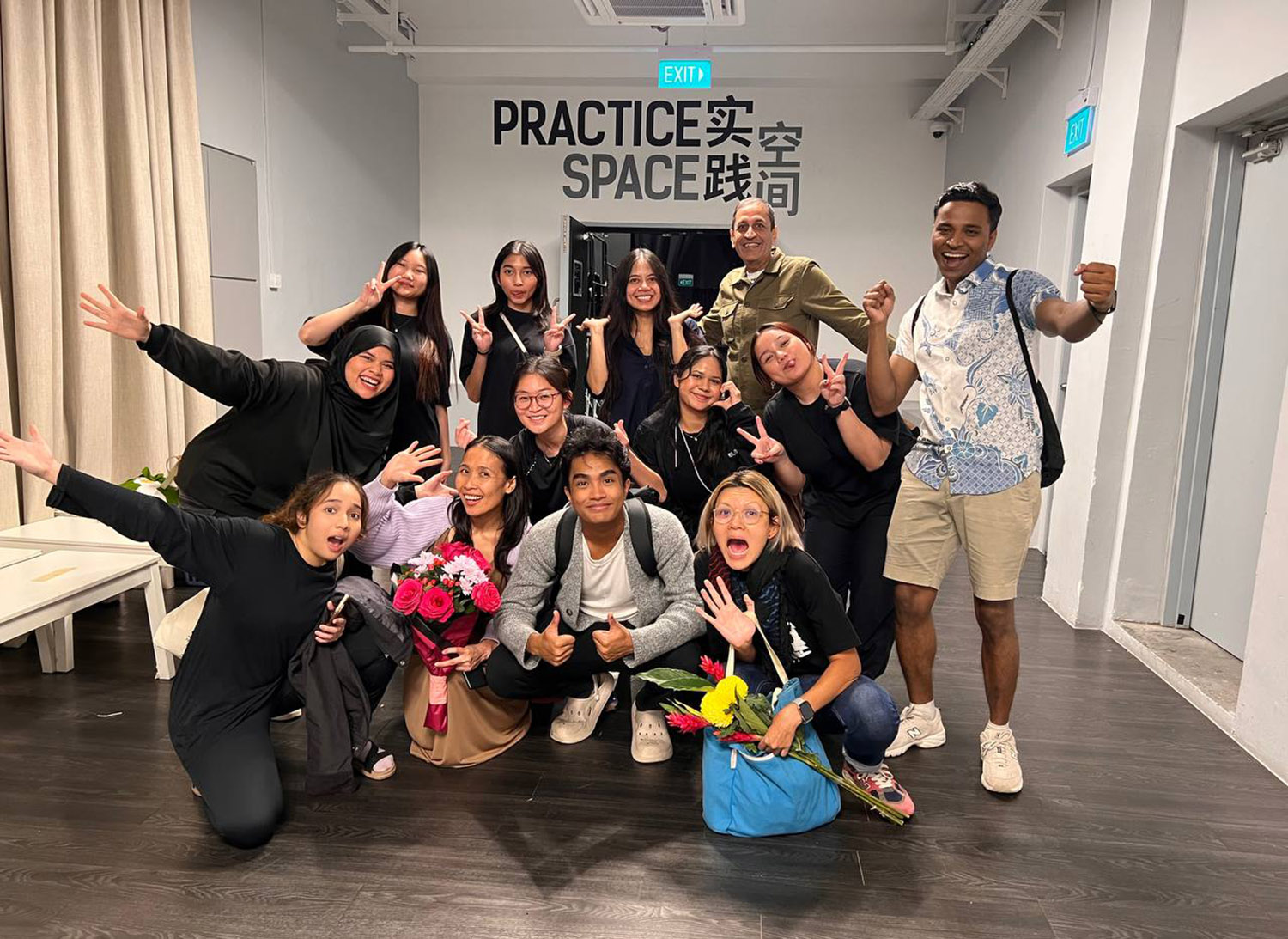
You are not restricted to one role and I mean a lot of your alumni from TNS are doing well so you must be very happy for them.
Yah.
At 61, I don’t detect any sign that you are thinking of retirement.
Not at the moment.

Still have a lot to do?
I would say so. Things I want to do.
When we turn 65 and Singapore turns 65, do you have a big play that is going to be staged?
No. I am trying to do small plays.
I want the plays to get smaller and maybe more …
Accessible?
No. More intimate.
So you don’t mind staging to 30 or 40 people?
Yah, I think that’s okay.
Do you attach any significance to the fact that we are all born in 1965?
It is just a coincidence that your country gained independence in the year that you were born.
I don’t think it makes us any better or any worse or any different from someone born in 1964 or 1966.
Maybe if you believe in these things then you have to look at the horoscope because I’m a ‘65 dragon and most people in 1965 are snakes.
So you know it’s just numbers at the end of the day. Your parents decided to have a baby that year. Whether they planned it or not, it happened. Maybe it was meant to be 1964 but it got delayed.