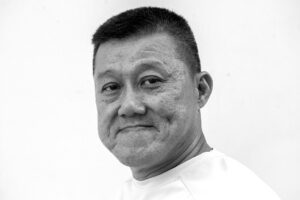
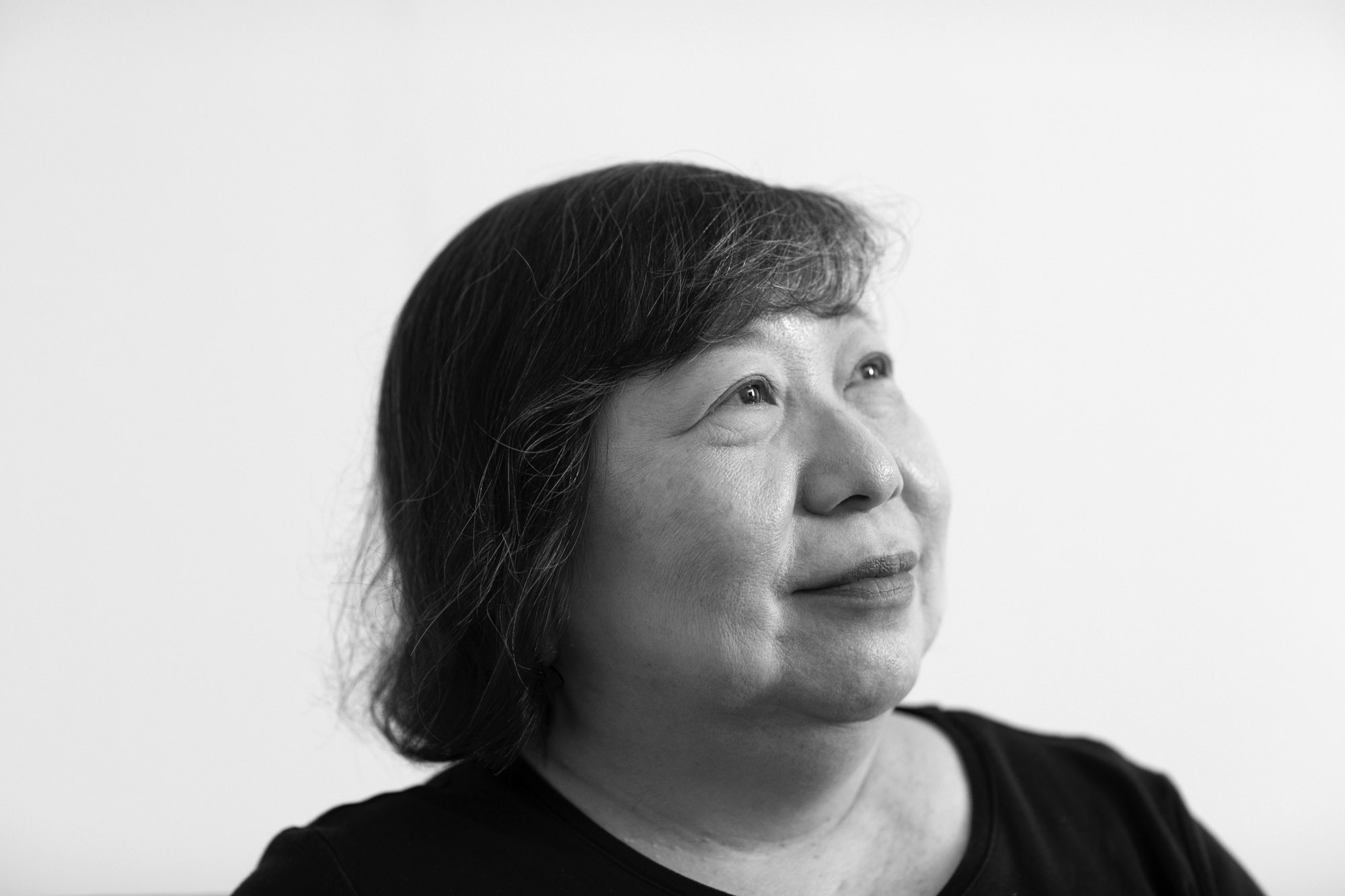
Joyce TEO started piano lessons in primary school but she never thought of a career in music until she fell in love with the traditional Indonesian art form gamelan at university in Australia. She did her master’s in ethnomusicology and now juggles between teaching at NAFA (Nanyang Academy of Fine Arts) and completing a Phd on the evolution of gamelan in Singapore and its impact on identity.
Let’s start with your birthday.
I was born on 6 October 1965.
Tell me about your parents.
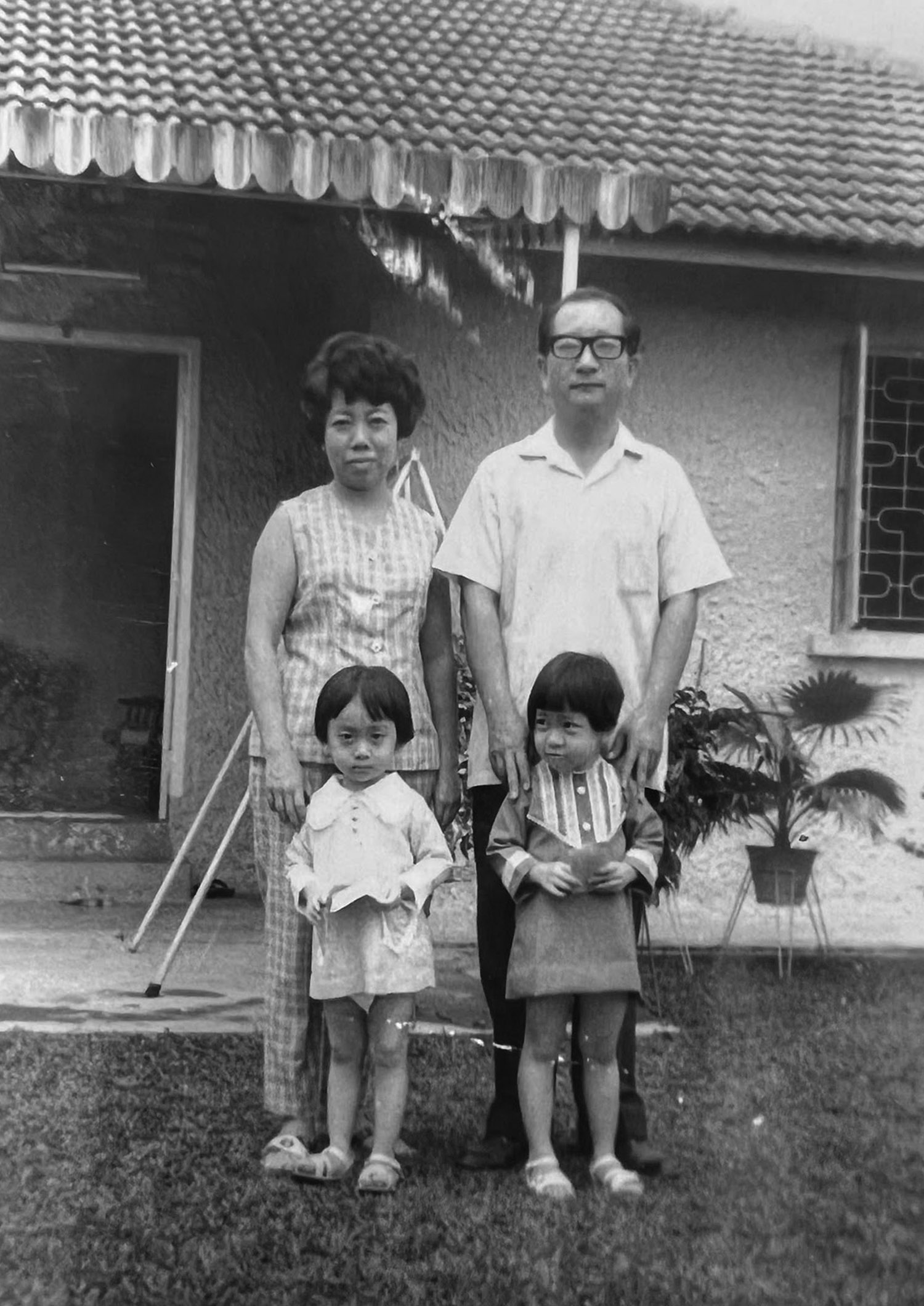
My late father was a school teacher.
My mom, who is very frail at the moment, was also a school teacher. She suffered several strokes and there are other complications. We are trying to take care of her.
Both my parents came from Johor. After working in Singapore for a while, they obtained Singapore citizenship.
Your parents grew up in the same neighbourhood in Johor?
Yes and they knew each other when they were kids in Johor. But they came to Singapore separately.
When they were working in Singapore, they met again and they hit it off.
When did they come to Singapore?
Probably in the 50s.
Are they about the same age?
My father was six years older than my mom. He was born in 1930.
"(My father) told us that he wasn't going to marry an uneducated woman. He wanted someone who was his equal and someone he could relate to."
How did they meet again?
My dad told us that as school teachers, they were mobilised during the general elections period to help out at polling stations.
They met at one of the polling stations in the early 60s.
Subsequently, they kept in touch and dated.
I must say that my father was a very pragmatic man.
He told us that he wasn’t going to marry an uneducated woman. He wanted someone who was his equal and someone he could relate to.
When were they married?
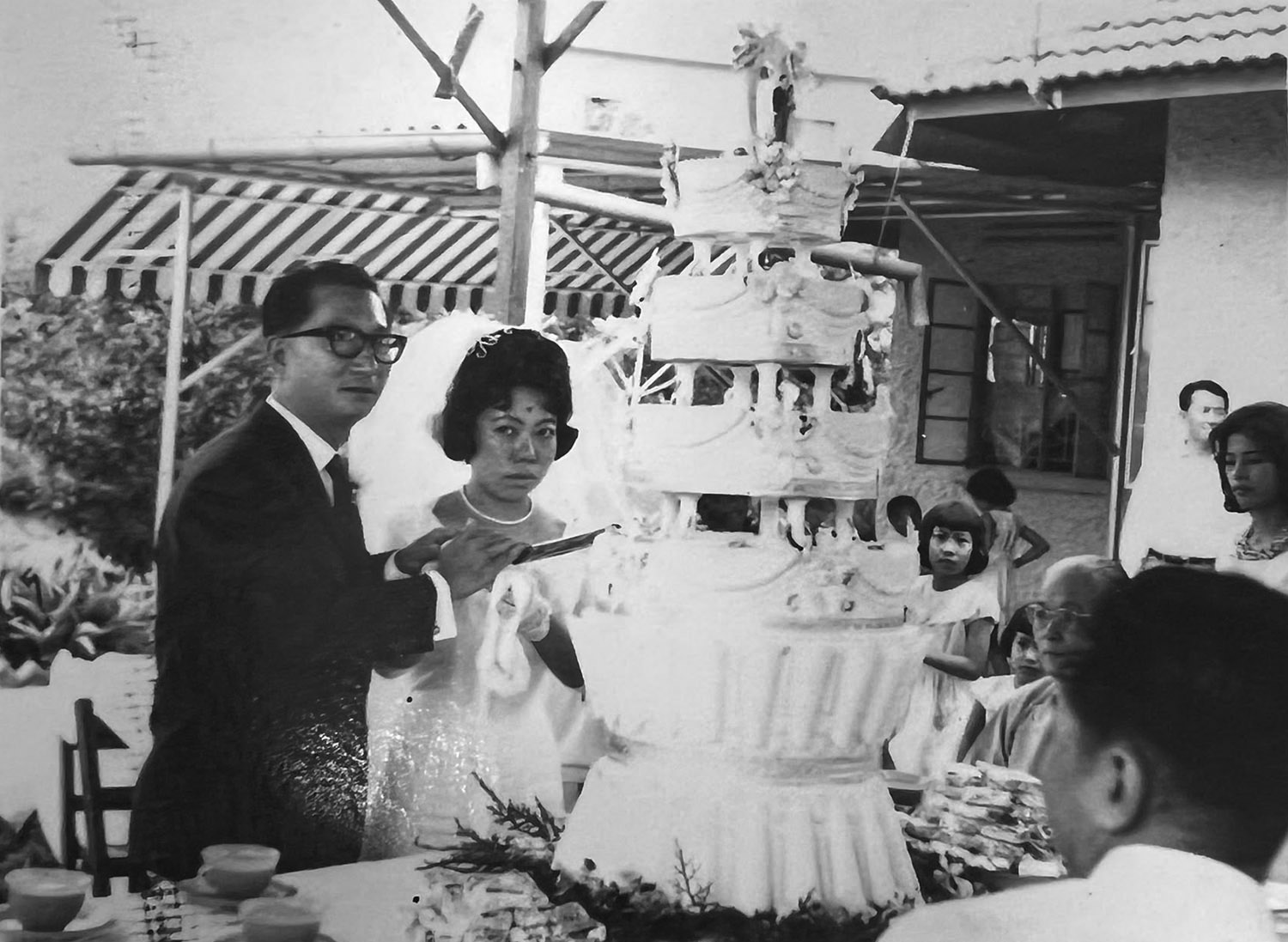
They got married in 1964.
How much education did he have?
In those days, you could qualify to be a primary school teacher with the equivalent of O-levels. That was what he had.
My mom had the same qualification.
When did your father pass on?
He passed away in 1993 at the age of 63.
How old is your mom now?
She’s 90.
Did your parents talk about why they left Johor?
They didn’t say much about their reasons. All I knew was that both of them wanted to be teachers.
I think at that time, there were more teaching opportunities in Singapore.

What did your father teach?
My dad was a primary school teacher and he taught English, math and science.
And your mom?
My mom taught the same subjects except that towards the end of her teaching career, she taught home economics at a secondary school.
Which schools did they teach at?
My father taught at several schools but the one that I remember best was Marsiling Primary. Mom’s last school was Chestnut Drive Secondary.
Where did you grow up?
I grew up in the Chestnut Drive area, in a house my dad bought soon after starting work in Singapore.
To be specific, it is in the Green Hill estate.
In those days, the road leading to Green Hill estate was really just a mud track.
Because it was quite a remote area in those days, the land and the houses there were sold at a relatively cheap price. It was the only place my dad could afford then.
I understand he bought the land first and slowly saved up to build our house.
Is the house still around?
Yes, I am still living in the same house with my mom and our helper.
Do you know how much he paid for that piece of land?
If I’m not wrong, about $30,000.
So that’s your childhood home?
Yes and that was where my parents got married. I have their wedding photos, taken on our front porch.
Tell me about your childhood.
I think my childhood was very carefree.
In those days, apart from some houses that were developed around the estate, the neighbourhood was still very much a kampong.
We had some nice neighbours and we would run around with the neighbourhood kids.
We went fishing in a stream nearby. We also played in our backyard. We would play badminton or soccer, or catch butterflies.
It was very much a happy, outdoors kind of childhood.
"In those days, apart from some houses that were developed around the estate, the neighbourhood was still very much a kampong."
Are your original neighbours still there?
No. The older neighbours on our right passed on and their children sold the house. They moved to different places. It was redeveloped by the new owners.
The neighbours on our left didn’t have kids around my age. Their daughter was an adult when we were still young and had moved away. Our old neighbour, a nice old auntie, lived there until she passed on. Her family also sold the house.
Can you describe your earliest memory of the house?
It has been and is still a single-storey house.
Apart from expanding the front porch and the back porch, we have kept it in very much the original state.
So it’s a house that has withstood about 70 to 80 years.
Still standing strong?
Of course we had to change the wiring etc but it’s still standing strong.
What I remember was before we renovated the house, we had a small front door.
Our front sitting room had the original terrazzo tiles. Subsequently when we renovated, we changed the tiles.
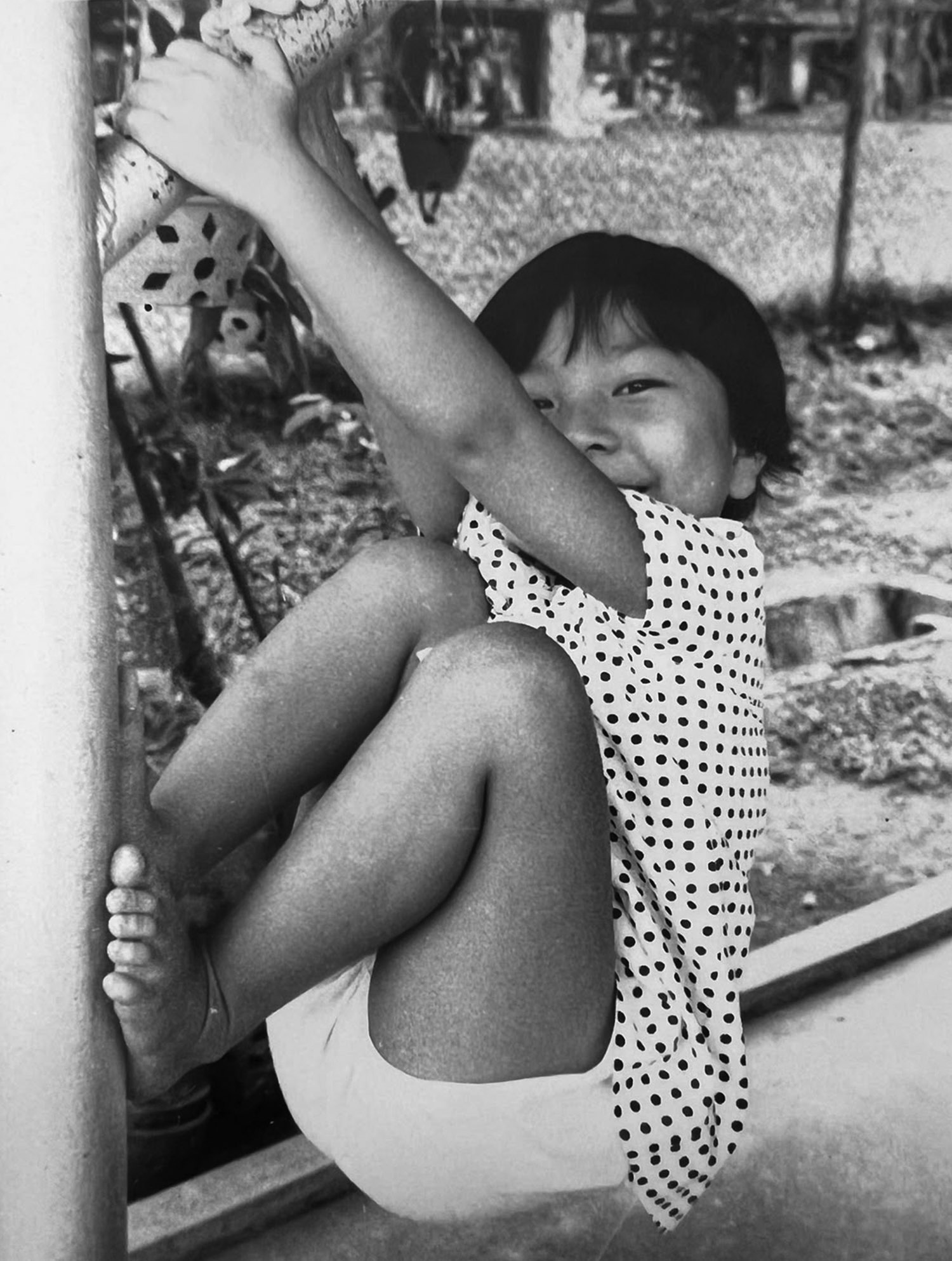
The ceiling in the porch was held up by two sturdy poles which formed a Y-shape.
As a child, I was very naughty. I would climb up the poles and hang off the Y-shaped structure. And of course my mother would panic, fearing that I would fall and hurt myself. But I loved doing that.
We had a nice garden with lots of flowers, and we would play a lot of games in the garden or just run around when it rained.
Let’s talk about your siblings.
I have one sister. She’s a year and a half younger than me.
Does she live with you?
My sister moved to a HDB flat nearby after she got married so that she can visit us regularly.
She’s married, how about you?
I’m not married. I had several boyfriends, but they never worked out.
"Maybe I was always attracted to the wrong type of people."
Why do you think that is the case?
I don’t know. Maybe I was always attracted to the wrong type of people.
Had your heart broken too many times?
Ya. I gave up and told myself, “It’s okay, I’ll just be a doting aunt to my niece.”
How many nieces do you have?
I have one niece.
But I have a god-brother who has three kids — two boys and one girl. I’m very close to them.
My god-brother is the eldest son of my father’s younger brother. Our families are very close.
Are they in Singapore?
Yes. He became my god-brother because when my father passed away, we needed a son for the Buddhist ceremonies.
Because my father and his younger brother were very close, they suggested that my parents adopt his eldest son as a godson.
They went through the usual Chinese rites.
He calls my mom ‘mother’ and we treat him like our brother.
Tell me about your schools.
My first school was the kindergarten at Salvation Army in Upper Bukit Timah.
Then I went to CHIJ (Convent of the Holy Infant Jesus) at Chestnut Drive. It’s now called CHIJ Our Lady Queen of Peace.
"Primary school was a bit of a blur. I only remember playing a lot."
What was primary school like?
Primary school was a bit of a blur. I only remember playing a lot. It was definitely a happy time.
In those days, there was no pressure. Even PSLE was no pressure. We just enjoyed going to school, making friends and playing during recess.
Despite having two parents who are teachers?
Although they were teachers, they never pressured us.
My dad told us, “we’re not going to insist that you score As. As long as you try your best, and as long as you pass, we’re not going to stress you out.”
I was quite happy to just get through.
But you also wanted to do well, right?
There was this innate sense of wanting to do well. Even though my parents didn’t pressure us too much, we still worked hard and tried to get good grades.
Did you do well?
Let’s put it this way — I did well enough to go to secondary school.
Which one?
St. Margaret’s.
Which is quite different from CHIJ?
One is Catholic, one is Anglican. The culture was quite different.
I suppose the learning environment was also different in secondary school and primary school.
Obviously in secondary school, there were more difficult subjects and there was a lot more studying required.
What were the subjects that you aced in?
English, definitely, and biology. I used to enjoy biology. I wasn’t very good at math. I also enjoyed history and geography.
What did you struggle with?
Chinese.
My parents had to get us private tutors. We are a Peranakan family, which meant that my parents were also not good in Chinese and couldn’t help us. It is not a language that we speak at home.
What do you speak at home?
We speak Teochew or English.
No Malay?
My mom’s Malay was very good and she would use some Malay words in conversations. We also spoke Malay to our helper.
You had a helper growing up?
There was a woman from the nearby kampong who washed our clothes and cooked lunch for us.
You went to Christian schools. What is your religion?
I am a Buddhist.
My parents are quite open-minded. They said that mission schools were better and that students in mission schools were better behaved.
I suppose in those days, the environment in mission schools was safer compared to some neighbourhood schools, where there were gang activities.
"My parents are quite open-minded. They said that mission schools were better and that students in mission schools were better behaved."
I guess they also wanted you to be in girls’ schools.
Yeah, that’s true too.
What about ECA?
When I was in primary school, I wanted to join the hockey team but my mother didn’t approve.
She said, “no, you cannot be out in the hot sun and running around.”
She suggested I look for another ECA that is indoors. I ended up joining the stamp club.
And in secondary school?
I wasn’t very active. I participated in some sporting events but I don’t really remember much.
You did well in secondary school?
I did okay enough to get a scholarship to go to Hwa Chong Junior College.
What kind of scholarship was that?
The scholarship was given by MOE to students who were good in English, in the hope that they would become English teachers.
We were recruited together with the Promsho (Pre-university cum Overseas Merit Scholarships for Humanities at Oxbridge) scholars and put in the same class.
Your English must be really good. At that age, your career path was kind of decided for you?
In a way, although my parents kept saying teaching was very stressful, that it was a very unappreciated job. They kept saying, “you should go and look for a better job, blah blah blah”.
But the scholarship was good. It didn’t come with a bond. So I was quite happy to accept it.
The scholarship was just for you to complete your A-levels?
Just for A-levels, nothing further than that.
What did the scholarship give you?
It paid for my tuition.
Which wasn’t a lot.
But still, it was good in the sense that we were put into the scholars class and we were given some very good expat lecturers.
Tell me about Hwa Chong. Was it a very Chinese environment as the name would suggest?
Originally, when I was told that as a scholar I had to go to Hwa Chong, I was a bit concerned.
In those days, the special expat lecturers who were teaching the scholars were all based in Hwa Chong.
So if you were a scholar, you had to go there. I didn’t have a choice.
Where would you rather go?
National Junior College.
But Hwa Chong turned out to be ok?
Because all of us in the scholarship class were taught by the expat lecturers from the UK, we didn’t feel that it was such a Chinese environment.
Of course, when I made friends with students from other courses, I found that it was actually just like any other school.
Were you active in non-academic pursuits?
I joined the AVA (Audio Visual Aids) club. We were in charge of making sure the mics were working every day for assembly. And if the speakers were not working, we learned how to fix them. If there was a concert or some event, we would help to set up the equipment.
You did well in the A-levels?
I did well for English but not Chinese.
Overall, I didn’t do so well in my first attempt. I had two A-level passes and I really couldn’t stomach the grades I got for General Paper (GP) and English Literature. I was hoping to ace those two subjects. I said, “No, no, no. That’s not me”.
So I signed up as a private candidate to retake out of principle.
Did you do better?
Yes, I did. I scored my As.
While doing that extra year, what else did you do?
I worked as an admin person at a travel agency. My friend’s mom was working at an employment agency and she got me a job at this travel agency.
I was literally just stuffing envelopes and simple things like that.
Was it difficult to work and study for the A-levels at the same time?
I think it was okay because the work was quite mindless.
Your parents were okay? Still cool about you retaking your A-levels?
Yeah, they were okay.
They didn’t think that you wasted one year?
I think that one year was not wasted because it convinced me that I needed to go and get my degree.
I told myself that I cannot live the rest of my life doing this kind of admin work.
You did not think about going to university before that?
No, because for me, I was planning to just take things as they come.
I was thinking, one option was to sign on with MOE and train to be a teacher.
So did you apply to be a teacher?
While waiting for the results of my university applications, I enrolled for a certificate course at NIE (National Institute of Education).
It was a two-year course but after one year, I got a place in a university in Australia.
I was in two minds — to get my certificate before going to Australia or should I just drop out and go to Australia?
In the end, I consulted my lecturers at NIE.
What was their advice?
They told me that since I was not bonded and that I was not getting any younger, I should get a degree and then decide what to do.
So in a way, you were ‘delayed’ by two years before starting university?
In a way, yes.
Where in Australia did you go?
University of New England (UNE) in Armidale, New South Wales.
What did you study?
I did a double major in English and history.
Did you choose the subjects?
My parents advised me to consider two teaching subjects so I have a backup.
At the end of the day, if I couldn’t get any other job, at least I could become a teacher.
That education couldn’t have been cheap? Who paid for that?
My parents agreed between them that my mom would sponsor my studies and my dad would pay for my sister’s.
Coming back to your sister, did she go to the same schools as you?
My sister did much better than me. She was in the top 10% of her cohort.
She went from CHIJ to RGS (Raffles Girls’ School) and then subsequently to RJC (Raffles Junior College).
Is she a teacher?
No. She did law at University of Warwick in the UK.
Paid for by your father?
Ya, by my dad.
What was your childhood ambition?
To be an astronaut. Until I realised I wasn’t good in science and math.
Why an astronaut?
I loved to watch television programmes on space travel.
I found them fascinating. But I also knew it was an impossible dream.
You still dream about walking in space?
I always tell my students in my professional development classes, “You might have a dream job. And you might not be able to do your dream job eventually. But it doesn’t mean that you give up on your dream.”
Even though I cannot be an astronaut, I still like to watch movies about outer space.
Star Wars is one of my favourite films. And whenever there’s any news reports about space missions or the moon, I get very excited.
"(My childhood ambition was) to be an astronaut. Until I realised I wasn’t good in science and math."
When did music come into your life?
Music has been a part of my life since I was a child.
From young, we were exposed to music and taught to appreciate music. I learned the piano and my sister learned the guitar.
I would say that it’s the middle class families who could afford music lessons for their kids in those days.
I think so.
At what age did you start?
Probably when I was in primary two.
What do you remember?
My first music teacher was very fierce and only wanted me to play classical pieces, which I hated.
Subsequently, my father got me another music teacher who was a bit younger and a bit more trendy.
Besides classical pieces, she also taught me some pop songs that you’d hear on the radio. That was something I enjoyed, so I continued my lessons.
Do you think it was something your parents wanted for themselves but couldn’t afford when they were younger?
Possibly. I heard that my late grandfather was very much a music lover. He used to play the Hawaiian slide guitar.
My father didn’t play any instrument but he had a huge collection of records.
What did he listen to?
Oldies like Doris Day and keroncong (a traditional Indonesian music genre that blends Portuguese-derived string instruments with local melodies, known for its soft rhythms and the distinctive sound of its ukulele-like instruments). My mom loved Doris Day as well.
When did music become a serious pursuit?
When I went to do my degree, I took music as a minor at university. I enjoyed my music classes.
I discovered the gamelan when I was in university.
"I had heard about gamelan when I was a child, but I had never played it or listened to the music. So it really caught my attention."
And that started your lifelong passion for gamelan music?
That opened my eyes because it was a very different form of music.
I had heard about gamelan when I was a child, but I had never played it or listened to the music. So it really caught my attention.
The university had a gamelan ensemble which I joined.
For those who are not familiar, like myself, is gamelan an instrument or is it a set of instruments?
The term gamelan refers to a set of instruments.
Every instrument in the ensemble has its own name. Put together, it’s called a gamelan.
How many different types of instruments are there in a gamelan?
It depends on which part of Indonesia. It could be anything from four pieces to 30.
Isn’t it strange to go to Australia to learn something that’s very Asian?
It is and I have been reflecting on that.
I often ask myself, “Why didn’t I get a chance to experience gamelan in Singapore?”
I think it was because in the old days in Singapore, gamelan was very much restricted to the Javanese community. If you were not Javanese, you were not part of the community and you wouldn’t have a chance to learn it.
You could not go to any music school to learn gamelan, unlike for the piano and the guitar.
Do you think it was a Western versus Asian bias?
No, I don’t think so. I think it’s just that it’s unique to that community, so you didn’t get a chance to learn it.
When I went to university in Australia, there was no cultural or racial grouping. Everyone was free to sign up for anything they wanted.
I signed up for the gamelan course and I learned.
Is music education at university level very multicultural?
In universities where music is taught, they want their students to have as many musical experiences as possible, so that as musicians, we are very open-minded.
We can’t just only do piano or guitar. The music department in UNE offered all kinds of music.
I learned not only gamelan, I also learned African music, Indian music, Hawaiian music and a bit of Chinese music.
Do you have any idea how gamelan made it into a community like Armidale?
In the 1950s, when Indonesia decided to establish diplomatic relationships with the Western world, it used gamelan instruments, just like China is using pandas at the moment.
Indonesia gave gamelan sets to universities around Europe, America, Australia, as a diplomatic gesture of friendship.
And then they followed through by sending gamelan teachers from Indonesia to go to these countries to teach gamelan.
Australia was one of the beneficiaries. Several universities in Australia have gamelans.
My lecturer, who has a PhD in ethnomusicology, taught us the basics. But we were also taught by guest lecturers from Indonesia.
Some Western musicians have incorporated gamelan.
Yes, they have.
Does that make some Indonesians upset?
No. In fact, Indonesia is very open about it.
Indonesian musicians are also trying to modernise gamelan.
So music should be global, right?
Absolutely. Everytime I go to Indonesia for a study trip, I am amazed by how open the teachers are. They always welcome us with open arms and are so keen to teach us their music.
They are also very keen to hear what we have to say about other types of music.
What happened after university?
I came back to Singapore to work.
Where did you work?
In 1993, I started working in MITA (Ministry of Information and the Arts)*, when George Yeo was the minister.
What did you do?
I was an information officer.
Unfortunately, my father was diagnosed with cancer shortly after I started work. I told my bosses that I was not in the right frame of mind to work because I had to take care of him. So I left the job.
How long did you nurse him?
From the time he was diagnosed to his death, it was only a month. It was very fast.
Before I left MITA, I was told about a job opening at a new art centre to be built. So I applied for it.
We are talking about the Esplanade?
Yes. Before it was called Esplanade, it was the Singapore Arts Centre.
Your new employer was prepared to wait for you?
They were very understanding.
They told me they would hold the position for me.
They said, “Go settle your family business. When you’re done, you can start work with us.”
What was the job at the new place?
I was a PR manager and I enjoyed that job very much.
"I was a little bit disappointed when the first designs (of Esplanade) came out. Just like many Singaporeans, I expected the Sydney Opera House."
Were you a fan of the durian (nickname for Esplanade) when the design was unveiled?
I was a little bit disappointed when the first designs came out. Just like many Singaporeans, I expected the Sydney Opera House.
However, because I worked in the Esplanade, I understood why it was designed that way. And I appreciated the fact that they wanted a really good theatre — one designed from inside out and not the other way. The sightlines and the acoustics are so important in an art centre. There is no point in having just a beautiful shell.
But from the outside perspective, it did look a bit strange. A lot of people didn’t like it.
As the PR manager, I had to respond to all the criticisms. But I think it was because people had in their mind what an art centre should look like.
But did you like it?
At first I didn’t, but I grew to like it. Just like everyone else, I wanted an art centre that is a monument.
Now that it’s built, and lit up at night, it looks really grand.
You were at Esplanade from the start, what were the dialogues like?
The dialogues were very robust.
We had advisors, an advisory committee, and we had various task forces looking into different things.
There was a very robust discussion as to what our art centre should be like, and how it should be.
When you joined, has the building taken shape, or was it still at the design stage?
It was still at the design stage. It took a couple more years for the final design to be confirmed.
I remember I had to organise the exhibition to unveil the design to the public.
You remember the complaints of Singaporeans?
Yes, yes.
There were many letters to the press, and some people wrote to us to complain.
Most of the feedback was very negative.
Were you there when Esplanade finally opened?
No, I left before it opened to pursue my master’s.
But I did return as an artist to perform there.
Were you glad to get off the teaching track that had been ‘planned’ for you?
Ya. At that point, I took whatever came my way. I just wanted to get a job and start earning money.
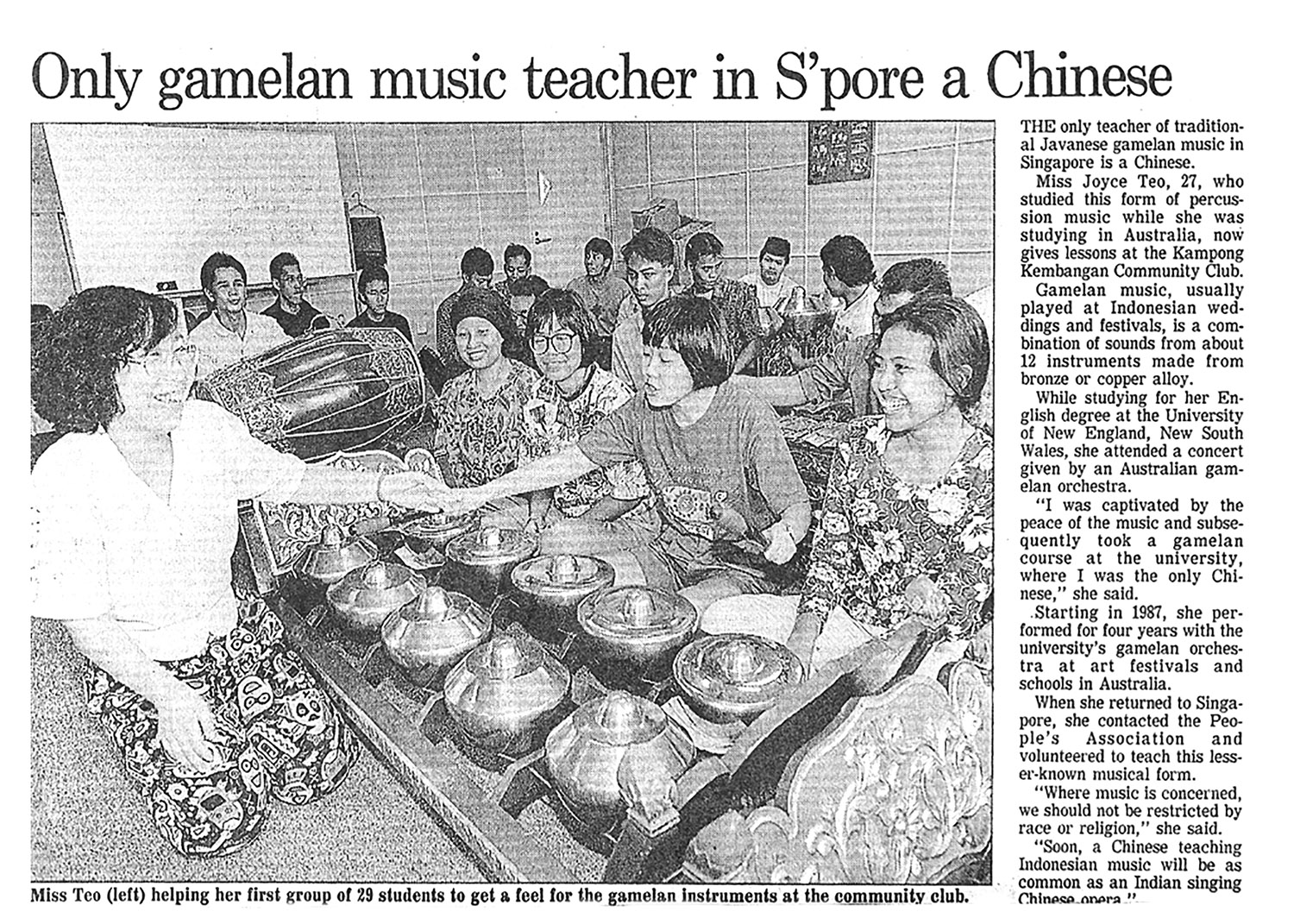
Coincidentally, when I started working at the art centre, a part-time teaching opportunity came up at a community centre. But I could manage because I taught only two hours every Saturday.
Which community centre was this and what did you teach?
It was in Kampong Kembangan and I taught the gamelan.
At that point, I was the only gamelan teacher in Singapore who had studied it at the university level.
Did you do enough music classes in the university to be officially qualified as a gamelan teacher?
I don’t know what constitutes qualification, but I knew enough of the repertoire and I knew enough of the different instruments to be able to teach.
Were you also playing the instruments?
I would sometimes play the instruments, but most of the time I’ll be coaching others.
You are also a composer?
Yes, I also compose for various things, like dance and theatre. But my composition is always linked to gamelan or Asian music.
To be more qualified as a music teacher, you would need more than a bachelor’s degree?
If I want to teach at the NAFA (Nanyang Academy of Fine Arts) School of Music, I will need to have a more specialised music degree because my training was really very much from the ethnomusicology perspective.
The classes I taught in the community centre were more like enrichment classes. The people who signed up were learning out of interest. That didn’t require more specialised qualifications.
Can you explain what is ethnomusicology?
Ethnomusicology is the study of music together with anthropology. So it’s not just music, but also society.
We study the society at the time, the type of instruments, why a society does certain things.
"It’s really important that we accept that everyone’s culture is valuable, that everyone’s practices should be respected."
Why is ethnomusicology important? What does it help us understand?
I think the fact that you study not only the music but also the society helps us to be more aware of the cultural differences and issues related to that. It is important to know that what works for one culture may not work for another.
This is especially so as a Singaporean because we are exposed to people and cultures from around the world.
It’s really important that we accept that everyone’s culture is valuable, that everyone’s practices should be respected.
Where did you do your master’s in ethnomusicology?
In the same university in Australia where I did my degree because I really enjoyed my lessons with my lecturers, and I wanted to learn more from them.
Did you get a scholarship?
No, I paid my own way. I had saved up for several years from my salary. I had worked five to six years by then.
I submitted my thesis in 2002, which means I started my master’s programme in 1998.
What was your thesis about?
It was on how the Indonesians developed or evolved a traditional art form like gamelan into something contemporary.
I had four case studies, including avant garde gamelan instruments; gamelan and theatre, and heavy metal music and gamelan.
What is the fourth one?
The fourth case study was on campursari, which translates to ‘mixing of essences’. Since the 1970s, some gamelan ensembles in Java have been fusing gamelan with western instruments such as keyboards and violins. One of the most prolific groups was Gunung Kidul.
"I don’t think I can survive as a performer in Singapore so I took the practical and pragmatic approach."
You never wanted to become a full-time performer?
I don’t think I can survive as a performer in Singapore so I took the practical and pragmatic approach. I got a full-time teaching job but continued my interest in gamelan on the side.
Seems to me that a lot of musicians and artists have gone into the teaching track. Does it mean that it is difficult to survive as an artist?
Yes. Because you have to be like the very top, a super talented artist in Singapore to be able to survive as an artist.
And for those of us who are not celebrities, I think the more practical approach is to get a full-time job or at least a part-time job to help pay the bills and then do our art.
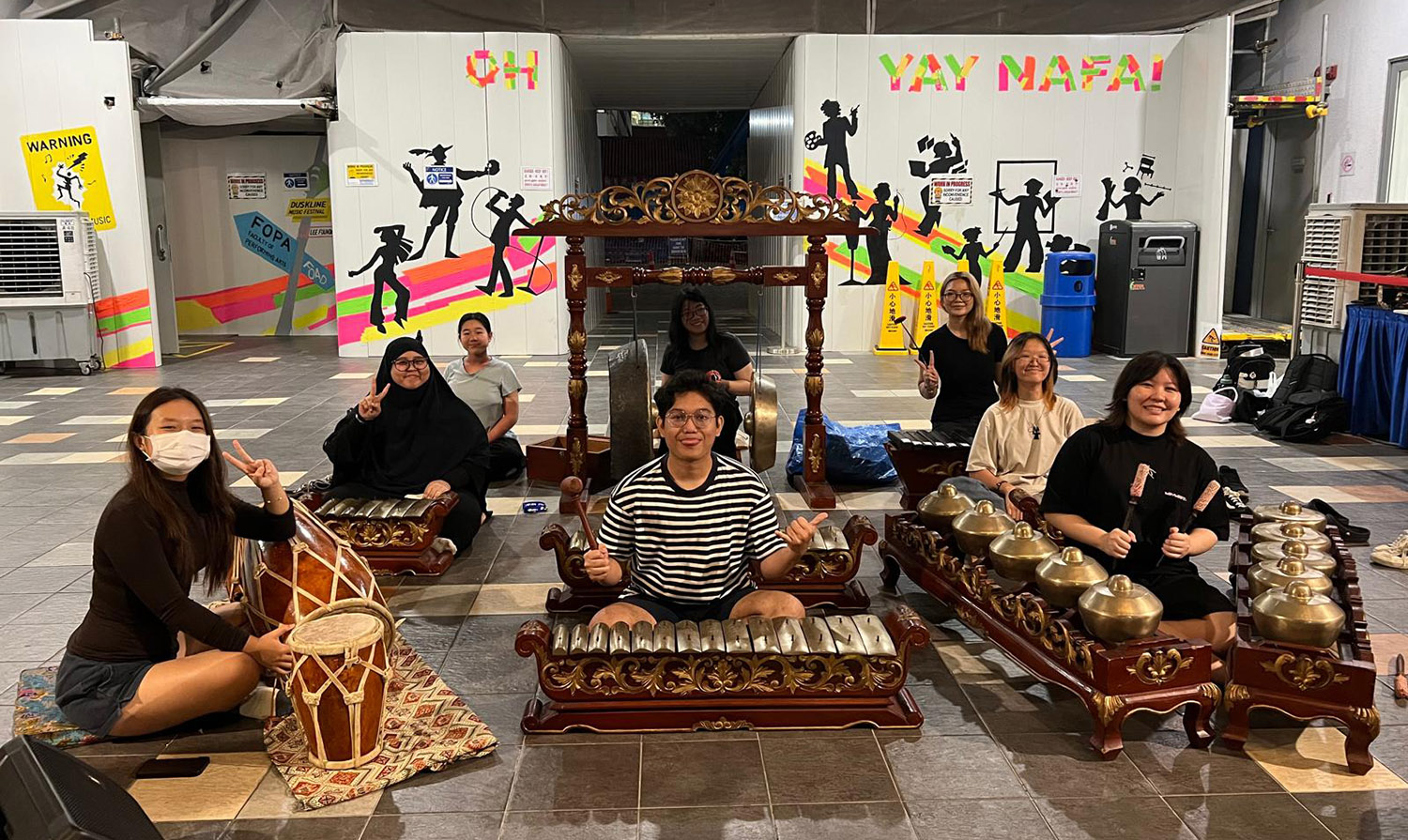
You’re now teaching in an art school. How do you say that to your students without discouraging them from aiming high?
I think NAFA itself has a lot of top artists. A lot of our fine art graduates, our theatre graduates, our music graduates are all very accomplished artists.
We use those examples of success to inspire our students.
We use that to show them that they are on the right track, that they are in a school that has produced all these great artists and that they should aim to be the best.
But if they are not able to be the best, there are many other career options for them.
How do you rate our local culture scene?
On a scale of 1 to 10, maybe a 7.
How has our culture scene changed over time?
There are more young people who are brave enough to strike out on their own. Many form their own companies and try to push forward with their art forms, which is great.
I support them and try to attend all the local shows.
But of course, all of them will tell me that they struggle to get funding, struggle to survive and all that.
I must take my hat off to them. Some of them are very brave, very strong and resilient.
At the end of the day, for an artist or for a sportsman to really excel, there has to be more support.
I’m not expecting the government to give more money but I think there needs to be a more supportive culture.
"At the end of the day, for an artist or for a sportsman to really excel, there has to be more support."
Do we have a conducive environment? Do we have the audience?
Audience, no. Singapore is too small.
But in terms of physical attributes, Singapore has all these great buildings and all the technologies. We can do so many wonderful things.
I understand that Singapore’s population is small, which means that unlike cities like London and New York, or other mature art cities, we can’t have, for example, a musical that can run for two, three months, not to mention a year because we don’t have a big enough audience.
In London, some of the musicals and theatre shows run for 10, 20 years, and they’re still going strong because the shows also attract visitors from abroad. Even when you go on a weekday, it is still fully booked.
Singapore isn’t at that level yet.
In that sense, we need to get up there so that people will come to Singapore for the arts.
Am I right to say that most of our better known artists have actually gone abroad before coming back?
Ya.
I think some of them feel that it’s important that they have that international exposure and also have the experience of performing abroad. And some of our more well-known artists don’t even come back.
Is that the only way? To become well-known abroad before coming back?
No. I believe that if you have a good business plan and you have good support, you can make it in Singapore without going abroad.
How do you grow your audience?
It is different for every art form.
One of the art forms, surprisingly, that a lot of people don’t know about is Chinese opera.
You would think that nobody likes Chinese opera. But when there’s a troupe performing at Kreta Ayer People’s Theatre, the audience will buy tickets for multiple shows, because every time they watch the show, they will notice something different and people love it.
It is challenging. The arts management students at NAFA are learning audience development because they need to know the tools and the strategies on how to develop audiences.
Another example is the Singapore Chinese Orchestra. Their concerts are often fully booked because all the musicians in the orchestra are music teachers. Whenever they perform, their students will support them.
Can we say that having arts management classes at the tertiary level is a sign of progress?
Ya, you can say that. At least the artists have some support and they’re not on their own. I feel that that’s a good thing.
There was a time when being in the arts meant you were someone who could not make it in Singapore society. Has that perception changed?
I think so. I think there are some people who have actually chosen to be in the arts when they could have been more successful doing something else.
Over the last two years in NAFA, we’ve encountered more people making career changes and joining us.
These are people from the IT, design and business sectors coming back to relearn.
What contributed to the change?
I think some people made the switch because they were not happy doing what they were doing.
Maybe some just followed their parents’ wishes and now that they are financially able, they want to follow their heart and do something artistic.
What about from the parental perspective? What has changed to make some of them say, “okay, you don’t have to be a doctor or a lawyer”?
I think younger parents these days are quite open-minded.
I mean, if a kid has a talent or a passion for something, some parents do support.
Share with me a typical profile of an art school student.
There really isn’t a typical profile. It depends on what course you’re doing.
There are students who are very creative and perhaps are very talented or have been trained since young in a particular art form. Then they would choose to come to NAFA to do diploma or degree courses in that particular art form because they want to further their career in that area.
Then we also have students, like my arts management students, who come from different walks of life.
Some of these students are either good at a particular art form but not good enough to be an artist. They want to learn a bit more about the business side of things so that they can further their career.
Tell me about your music.
I started with Javanese gamelan. Then I studied Sundanese gamelan and a bit of Balinese gamelan. The two forms of gamelan that I’m more confident in are Javanese and Sundanese.
Normally, when I play in an ensemble, I love to play the bonang.
However, as the teacher, I often up end up playing the kendang, the drums, because it is a much harder instrument to play. The kendang player controls the tempo, signals transitions and leads the rest of a gamelan ensemble.
The other popular instrument that we play is called saron, which is very much like the xylophone. The saron is very easy to learn. The only challenge is that you have to coordinate your hands.
I started out doing very classical gamelan pieces. Subsequently, when I came back to Singapore after finishing my master’s, I started thinking about what it means to be a Singaporean musician. I didn’t want to sound like an Indonesian musician.
I also experimented with Chinese music.
"I love trying out the gamelan with technology to see how technology can enhance the gamelan."
You mean incorporating gamelan into Chinese music?
Yes. Or experimenting with Malay music, folk songs and rhythms. Sometimes I would add Indian drums.
When you say experiment, do you mean you write music for those instruments?
Yes. So I try different things and see what comes out nicer or what the audience likes.
I love trying out the gamelan with technology to see how technology can enhance the gamelan.
For example, I might record a gong and then use music software to manipulate the sound waves and see how it turns out. And then create something out of that.
What else do you do?
I’ve done lots of interesting projects where I used a gamelan for different things.
You know, when you meditate, there are chakra points and each chakra point actually vibrates at a certain level. I used the gamelan to play certain notes that corresponded to the chakra points.
I did a project two years ago called Centering the Centre with my friend, S Chandrasekaran, a performance artist and La Salle academic.
He stood for a good two hours as I played these very low gong tones that resonated with the chakras. We wanted to see whether he felt the tones or they vibrated within him. He said he did.
It was very interesting to see the visceral and physical responses.
How do you balance teaching full-time and your music?
Very carefully. I have to work from nine to six. After six, I do my gamelan and I do my projects.
If the projects coincide with a NAFA event, then of course, I’m officially allowed to do my gamelan.
I think my colleagues are all very supportive.
Tell me more about your PhD.
My PhD is about the evolution of gamelan in Singapore and its impact on identity and subjectivity.
And who is this with?
University of the Arts London.
I’m fortunate to receive a scholarship from NAFA. I’m bonded but that’s okay.
Sorry to sound a bit ageist but NAFA still gave you a scholarship when you were in your late 50s?
I was quite surprised.
By the time you get your PhD, it is time to retire.
My colleague told me, “it’s not about age, it’s about what you can contribute not only to NAFA, but to the rest of Singapore.”
How far in are you?
I’m halfway through.
How do you hope to contribute after getting your PhD?
There are a couple of things.
Immediately, I feel that we need a proper documentation of gamelan practitioners and gamelan practice in Singapore. In Indonesia, there are a lot of scholars researching gamelan but not in Singapore.
Singapore was part of The Majapahit Empire, so we’re part of the archipelago. I think it’s important that I document that.
The second thing is to look at how gamelan music can be taught in Singapore.
Indonesians approach the teaching of gamelan in a particular way which works well for Indonesian students, because it’s part of their culture.
For Singapore students, who are so used to our MOE syllabus and everything, we cannot teach gamelan in a way similar to Indonesia.
What else are you interested in for your PhD?
I’m also looking at Singapore’s identity. We’re 61 years old, but how do we see ourselves? How do we identify ourselves? How does the practice of a traditional art form affect our sense of identity?
When do you hope to complete your PhD?
In about two years.
How much time do you have to spend in London for your PhD?
I’m considered a distance learning student, so I don’t have to be in London.
Coursework is online, everything is online.
Of course, my supervisors welcome me to go to London, but it’s not compulsory. I try to go as often as I can.
What are the challenges you face? Having to sit down to write at the end of the day?
Having the time.
You’ve done your fieldwork?
I’m doing it. It’s practice research, so all my gamelan rehearsals, all my gamelan performances are my fieldwork.
You mentioned an experiment you conducted with your GP.
I was very fascinated about the impact of sound on the human body, how it affects the human body.
As a musician, I wanted to understand how that worked. I did an experiment where I recorded 10 different sound excerpts.
Some excerpts were taken in Bali. I also went to hawker centres and highways in Singapore to record sounds.
What did you do with these sound bites?
I got my GP to be involved because he had an ECG machine.
Some friends volunteered to put on the headphones and to listen to these sounds.
What were you hoping to achieve with this experiment?
I wanted to test if sound affects the human body. And if it does, how. I was looking for some correlations so that I can further my research.
What did you find out?
What I found out was that when we played the sounds of nature, sounds of frogs and birds and even sounds of the river and waterfall, the subjects were quite calm at first.
But after a while, they started to show signs of stress. The blood pressure went up a bit. The heart rate went up a bit.
But interestingly, when I played familiar sounds, for example, the noise in a hawker centre, or highway noise, they actually calmed down.
That was very surprising. I did not expect that.
I thought that the sounds of nature would calm them down whilst the noisy things in Singapore would have stressed them out. But it was actually the other way around.
"I thought that the sounds of nature would calm them down whilst the noisy things in Singapore would have stressed them out. But it was actually the other way around."
This experiment group was made up of only Singaporeans?
I wish I had time to try it with people from other countries.
How big was the sample size?
I cannot remember the exact number but definitely not more than 10.
Maybe you should try playing them a clip of someone nagging.
Yes. That would definitely elevate the stress level. But I think it is not just the stress level.
What would you like to see when Singapore turns 100?
I would like to see a more inclusive arts and culture scene.
I had a student in La Salle who was blind, but he was a fantastic musician because his hearing was so keen and so acute and he was able to hear all these subtle nuances.
I hope that local audiences can be more open to different types of arts.
Just because you like K-pop, it doesn’t mean that you should degrade other music. Why not try to see how what you like can work with other forms of music?
"You know, for Joseph Schooling to win the Olympic gold, he had to drop everything, go to the United States, and just really focus on being the best."
I am a little bit surprised that you didn’t mention achieving excellence. Have you given up on that?
From the day that the Esplanade was built, we said that we wanted to be a world-class arts centre. We are a world-class arts centre, but are our artists world-class? Maybe a few, a handful.
The majority of artists have a long way to go.
It’s not their fault because they have to juggle raising money, feeding their family and their art forms. The only way that you can become excellent is to practise. A lot of artists don’t have the time to practise.
You know, for Joseph Schooling to win the Olympic gold, he had to drop everything, go to the United States, and just really focus on being the best.
A lot of people don’t see the sacrifices. They only see the success.
Correct. So in that sense, that kind of practice is important. Second is resilience.
I’m not sure how resilient our young artists are.
When I went to study gamelan in Indonesia, I stayed in the village, slept on somebody’s floor, and learned from a master. I had to put up with mosquito bites etc.
When I took students to Indonesia and some of them were bitten by mosquitoes, they complained nonstop.
If you’re not resilient, how are you going to be good?
Sounds like you’re glad not to be a parent.
Ya. But if I were a parent, I would encourage my children.
My students are like my children, I encourage them to be resilient. They really have to be tough and they have to persevere. No matter what problems they encounter, what challenges they encounter, they must not give up.
"My students are like my children, I encourage them to be resilient."
It takes someone special to rise to the top.
But that special X factor comes from practice, comes from the heart, it comes from what you want. Your mind and your heart must be focused.
So encouragement is not enough?
Not enough.
There’s no such thing as you’re born with the talent?
Yes, some people may be born with some talent, but they can never make it if they don’t practise.
For some people who are maybe not as talented, but have a passion for their art form and are willing to practise and practise, they have a chance.
You would rather see that hardworking person succeed.
There are talented people who succeed, but they will still tell you that it is not easy.
Talent is one thing, you also need to have business acumen.
What’s one thing you like about Singapore?
Safety and security.
One thing you dislike?
I think Singaporeans tend to complain a lot.
Do you complain?
I do sometimes.
"I think Singaporeans tend to complain a lot. When we go overseas, I often hear Singaporeans complaining about things that are unfair."
What about?
Well, silly things like, “aiyah, why LTA must impose this and that lah. Aiyah, why SP must increase prices of this and that lah?” We hear that all the time.
When we go overseas, I often hear Singaporeans complaining about things that are unfair. Some countries are just poorer and their public transportation may not be so good. So we have to understand lah.
You mean we have to be more gracious when we go abroad?
Correct.
It’s a national hobby to complain. I don’t like it.
A lot of Singaporeans complain and expect someone else to solve their problems. A lot of people will complain nonstop. Write to their MP, write to whoever. They don’t think about what they can do to improve things.
Okay, I’m going to pin you down on that. Are you the kind who will do something?
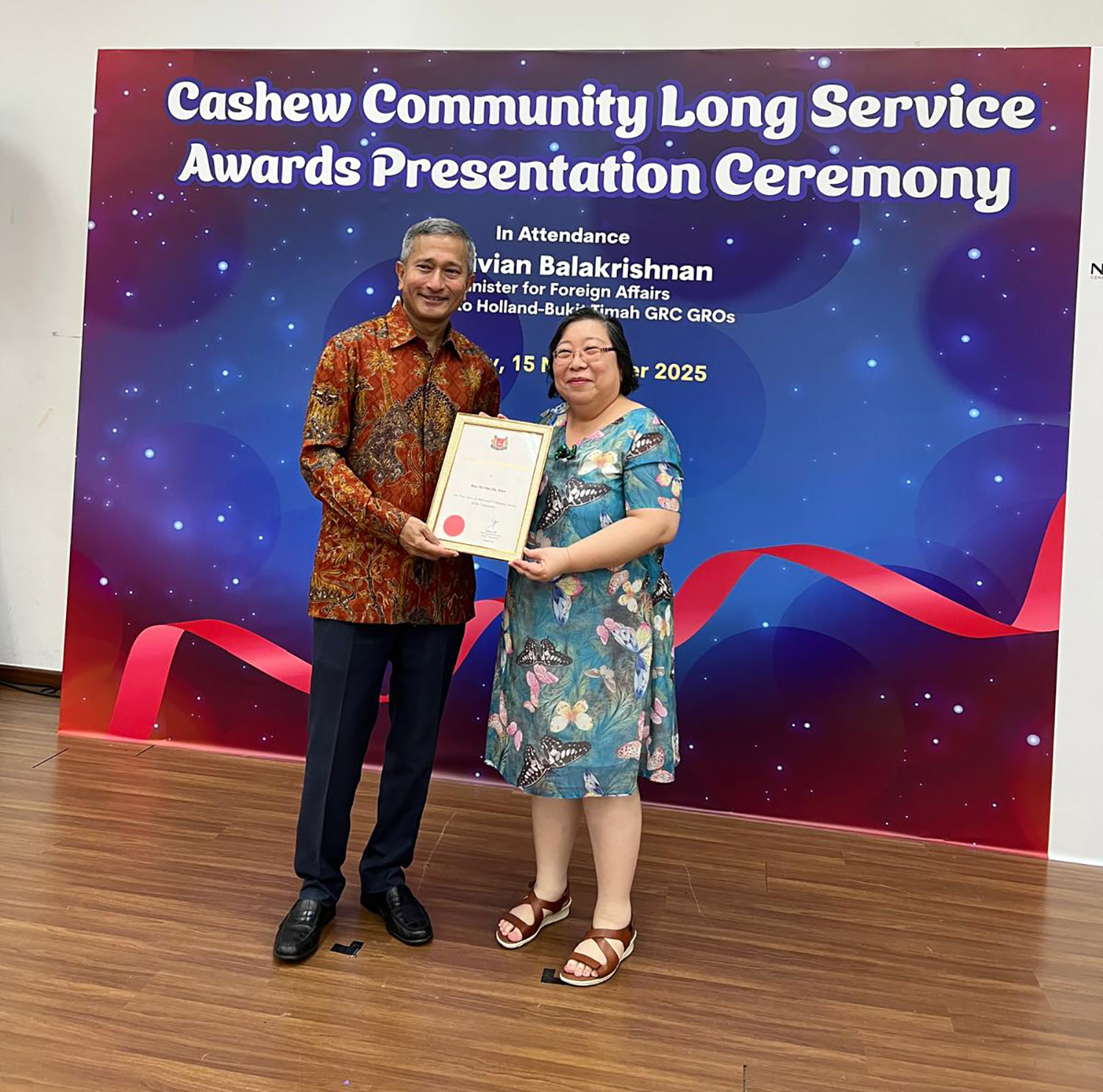
Yes, that’s why I’m a grassroots leader.
In which constituency?
I’m a grassroots leader on the Chestnut Neighbourhood Committee, which is under Senja Cashew, a division within the Holland–Bukit Timah GRC (Group Representation Constituency).
Do you attach any significance to the fact that you were born in the same year that Singapore gained independence?
It never occurred to me that there is any significance. I always joke that when I get too old to remember how old I am, I can just look at the National Day Parade and I’ll know how old I am.
Growing up, was there any significance?
No, not really. I was just a kid growing up in Singapore. It didn’t really occur to me that there was any significance.