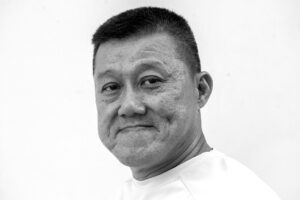

Mohamad Maliki OSMAN, better known as Dr Maliki, grew up poor in a squatter kampong. Eighth in a family of nine children, he is the only one among his siblings to go to university, capping his extraordinary academic journey with a PhD in social work. Recently retired after 25 years in politics, he has taken on new roles which allow him to continue contributing to Singapore, while spending more time with his loved ones.
I usually start by asking about childhood.
I was born in this place called Coronation Road West. It was a squatter kampong where many new migrants from Malaysia lived.
My granduncle was already living in the area, so when he brought my father and my mom to Singapore, he got them a place there.
Which state were they from?
Both my parents were from Johor.
My mom was Javanese, my dad was Malay. My dad had links all the way to Kelantan.
And the reasons for the move?
My dad was working in Johor at that time and my parents already had their first two kids.
My granduncle, who had been working in Singapore for a while, said to him, “If you want to make a living, come to Singapore. There are many opportunities here.”
I think my granduncle brought him over and promised to help him find a job.
Were there other reasons?
I recall my father telling me that he had one sibling and many step-siblings.
My grandparents owned land and my father said that he didn’t want to squabble over the division of the land when my grandparents passed on. With so many step brothers and step sisters, things were quite messy.
He also said that he wanted to make a living in Singapore and go back to buy his own land one day.
What did he work as in Johor?
I think he was a warden of sorts. A blue-collar job.
When he came to Singapore, he struggled initially to look for a job.
And then he came down with tuberculosis (TB) and could not work for several years.
Mom became the sole breadwinner, working as a seamstress. At some point, she was also an amah who cleaned houses.
"Mom was from Batu Pahat, Dad was from Pontian."
How did your parents meet?
They were match-made by a granduncle or a grandauntie. I’m not too sure.
Your parents were from the same kampong?
Different kampongs.
Mom was from Batu Pahat, Dad was from Pontian.
When they came to Singapore, they brought along my eldest brother and my eldest sister.
And they had more kids later?
They had two more kids but both were also born in Malaysia. So they were Malaysians.
Wait, why did your mom go back to Malaysia to give birth?
Because my paternal grandmother was a midwife. So they felt that it was easier to give birth in Malaysia.

I see. And you are child number …?
Number eight.
So, including the four you have mentioned, there are three more before you?
Yup, the next three and me were born in Singapore.
My paternal grandmother had passed on. So no more midwife.
So four of you were born in Singapore in your kampong house in Coronation Road?
That’s correct.
"My dream of buying a house there will remain a dream because it's impossible to afford a house in Coronation Road West now."
Now if you tell people you live in Coronation Road, they will say “very rich”.
When I had kids, I told my children “You know, one day I want to buy a house in Coronation Road West.”
We’ll occasionally drive down to Coronation Road West to look for that particular spot where I was born.
Do you remember the house number?
I can’t remember. It was maybe 365 or something.
My dream of buying a house there will remain a dream because it’s impossible to afford a house in Coronation Road West now.
I remember there’s this water pipe which is still there.
I went to Duchess Primary School which was in the neighbourhood.
It was a kampong school and all the kids in the kampong went there.
What are your fondest memories?
All the classrooms were one floor, stretching from one end of the school to the other end.
In primary one, we had to carry a black board, or more like a green board, and chalk, to learn the ABCs.
In fact we had to carry that little board everywhere we went.
When I was in primary one, we moved to a HDB flat because of what became known as ‘rural urban migration’.
Our attap house was torn down to make way for new developments. They had to move all the squatters out of the area.
We had a chicken barn next to my house where my dad reared chickens. The toilets were not flush toilets.

"In primary one, we had to carry a black board, or more like a green board, and chalk, to learn the ABCs."
Your family must have been very poor.
My sisters told me that we were the poorest.
We didn’t have anything. To watch television, we had to walk a long distance to Ulu Pandan CC.
Some richer people lived up on a hill nearby and sometimes, we watched TV from outside their windows.
So where did you move to?
A one-room HDB rental flat in Toa Payoh.
I continued to attend Duchess Primary.
That must be a very long ride from Toa Payoh.
Very long ride and no aircon.
Not just no aircon. We had to run after the bus every morning.
To board the bus, we had to go to the bus terminal and we could not tell which bus would be leaving first.
Because it was a long journey, we wanted to be among the first to board the bus so that we could get a seat.
So we’d be at the bus terminal at 5.30 or 6 in the morning.
The terminal was in Toa Payoh?
Yes, and we would wait for the supervisor to put the license plate on the bus that was going to move next.
Quite often, I found myself on the wrong bus. That meant having to get down and run after another one.
"Quite often, I found myself on the wrong bus. That meant having to get down and run after another one."
Did the terminal become the interchange?
That became the interchange. It is where Toa Payoh Hub is now.
The 11 of you squeezed into a one-room flat?
But we managed as some of us slept in the corridor.
How did your name come about?
My eldest brother is called Hassan.
I was told, although I don’t know whether it’s true, that my father had always wanted four more boys so he could name them after the four Islam schools of thought known as madhhabs: namely Shafi’i, Hanafi, Maliki, Hambali.
So I have two more older brothers, one named Shafi’i, the other Hanafi.
When I came along, my father named me Maliki. But he always felt, “Eh, not complete.”
So my younger brother, Hambali, completed the four schools of thought.
"I was told, although I don't know whether it's true, that my father had always wanted four more boys so he could name them after the four Islam schools of thought known as madhhabs: namely Shafi'i, Hanafi, Maliki, Hambali."
Before we forget, what are your sisters’ names?
Rokiah, Zainah, Ruaini, Rahmah. I think my father wanted all their names to start with R, but the register made a mistake with my second sister’s name.
Was your dad religious?
My dad was and we all try to be good Muslims.
Your mom is incredible. I mean, your dad had TB for several years and she ran the household.
Yeah. Incredible woman.
When my dad recovered, he worked as a bus conductor for many years.
And my mom continued being a seamstress.
Are they still around?
My dad passed on when he was 91, and my mom passed on when she was 94.

Wow. What was the secret to their longevity?
I think it was their diet. Kampong people eat a lot of ulam (a salad of fresh, raw herbs and vegetables, often eaten with rice and sambal).
The common thinking is that Malays don’t follow a healthy diet. That they tend to overcook their veggies.
That’s true.
They tend to have lots of oil and coconut in their cooking.
And my dad was a chain smoker. He didn’t stop smoking until on the last day of his life.
On top of that, he ate, without fail, two half-boiled eggs every morning.
So his cholesterol level and all must have been very worrying?
Amazingly, he didn’t have his first heart problem until he was 80.
Apart from the early bout of TB, he had no other significant health issues.
He had his first heart bypass at the age of 80 and lived on for another 10 plus years.
My dad really believed in the power of the herbs he collected in the kampong.
You mean he was like a medicine man?
Not a medicine man. He collected the herbs for himself.
Now I remember, they call it obat periuk (herbs in a pot).
He boiled them in a claypot and drank it every day.
When I grew up, he gave it to me. It tasted terrible. Very bitter.
It is supposed to give you immunity?
It does.
People were more resilient then.
They slept very little, but life was quite simple. No Internet, no pressure.
I guess the only pressure was having to raise nine children, but my parents’ KPI wasn’t that difficult to meet.
"I guess the only pressure was having to raise nine children, but my parents’ KPI wasn't that difficult to meet."
I read somewhere that some of you slept in the corridor.
All the boys slept in the corridor.
The flat was barely the size of my current office.
My parents and my sisters slept in the flat.
Every night, we had to wait for our neighbours to sleep first before we could roll out our straw sleeping mats. And then we had to wake up very early to keep the straw mats away.
Did you have good neighbours?
We had very good neighbours. They were very nice.
Multicultural?
Multicultural. I had Chinese neighbours, Indian neighbours.
I remember it’s like the slogan for 7-Eleven, “Always close, never closed”. Our doors were always open, never closed.
Back then we could just go in and out of one another’s flats. We were all equals in the sense that our flats were similar — all rental one-room flats.
"Every night, we had to wait for our neighbours to sleep first before we could roll out our straw sleeping mats. And then we had to wake up very early to keep the straw mats away."
There was nothing to steal.
We “borrowed” phones though.
We didn’t have a phone and I had to ask my neighbours whether I could give their phone number to people who wanted to contact me.
But I was very paiseh (embarrassed) sometimes, because some friends called so often.
How long did you live in the flat?
About seven years, until I was 14.
We then moved to a three-room HDB flat across the road, still in Toa Payoh.
Was it a rental?
No, my dad purchased the flat with his bus conductor salary. We still own the flat.
By the time we moved to the three-room flat, three of my siblings had gotten married.
Who stays there now?
My younger brother Hambali.
He’s not well. He’s suffering from very severe psoriasis and arthritis.

He lives alone?
He lives there with a domestic helper whom I hired to look after him.
My elder sister lives next door. She had bought the next-door flat and with that, our family had a bit more room to breathe then.
How many nieces and nephews do you have?
Oh my god. I can’t remember how many. Too many to count. Yeah, I think easily 15 not counting grandnieces and grandnephews.
"We didn't have a phone and I had to ask my neighbours whether I could give their phone number to people who wanted to contact me."
You went to Dunearn Secondary Technical School?
Yes.
The reason was very simple — most of my elder siblings went there.
And my father’s KPI was very simple — no red marks in your report card.
Come PSLE, I just had to do my best. Back then, there was no score. Just pass or fail.
I had no aspirations to apply to any of the branded schools.
Did you do well at Dunearn?
Academically, I managed lah. Cukup makan (enough to eat) lah.
I was also a prefect and class monitor.
What was your ECA?
I played the trombone in the band. I had a few leadership roles in the band too.
The school was also quite well-known for athletics because C. Kunalan, our former national sprinter, was a teacher there.
The school was also very good in rugby. We played against the likes of ACS, RI and St. Andrew’s.
And your O-level results?
I tried my best but couldn’t make it to any JC.
My first five siblings left school after O-levels. Number six went to Victoria School Pre-U Centre and number seven went to First Toa Payoh Pre-U Centre.
I didn’t want to do poly because I knew by then that doing the A-levels was the route to university.
"I had no aspirations to apply to any of the branded schools."
By then, you had aspirations?
Junior college was out of the question because my two older siblings managed only to get into pre-u centres. I had to manage my expectations.
But I harboured this hope that I could be the first in the family to go to university.
Not just the first, but also the only one to go to university?
Yeah, the only one. Not just university, but to get a PhD!
It is so important to have role models. Because of your two older siblings, you started dreaming of going to university.
We didn’t qualify for JC but we had hoped to do well in the A-levels and get into university.
There was a pecking order — JC higher, pre-u centres lower.
I was glad that the systems provided space for some of us to take our time to get to university.
So, I went to First Toa Payoh and told myself, “Okay, let’s just try.”

And you did well enough to get a place in NUS.
Yes on my first attempt but I took the A-levels again because I wasn’t satisfied with my results.
I got into arts and social science but I really wanted to get into accountancy.
I wanted to just prove myself.
You re-took the A-levels as a private candidate?
As a private candidate while I was in NS (National Service).
"I harboured this hope that I could be the first in the family to go to university."
Coming to that, what did you do in NS?
I was a medic. That gave me time to study.
Did you get into accountancy on your second attempt?
No, I didn’t although my grades were far better than my grades in the first attempt.
In the end, I got a Bachelor of Arts, majoring in social work and sociology. Then I did a one-year honours in social work.
And they offered me a job as a senior tutor and I was earmarked by my lecturers to do my master’s.
Hang on here, no pressure to start work?
I applied for jobs and one of them was to be a medical social worker at NUH (National University Hospital).
But I was told I was over-qualified.
"When I saw the social work prospectus, the idea of helping and counselling people appealed to me."
Why social worker?
Because that was my major.
When I applied to NUS, I had no idea what university life was all about.
When I saw the social work prospectus, the idea of helping and counselling people appealed to me.
I came from this background, I made it so far despite the odds, when many of my peers didn’t.
So I thought if I could acquire some skills, I could help others.
So you have this “giving back” mentality when you were that young? It wasn’t about making more money?
I looked at the Malay community and back then, only 3% of us made it to university.
Looking at my peers, my friends, very few made it.
So I figured it’s time for me to do something.
I figured it would be more meaningful to work in a profession that could give me the tools to help others, and still make a decent living.
Let’s go back to the part about your job application.
So I applied to NUH to be a medical social worker because at that time, the job paid better than everybody else.
Mrs Winnie Poon, then the Chief Medical Social Worker, said to me, “Maliki, you’re very qualified. We would have taken you in, but we think you are made for bigger things.”
She added, “Why don’t you consider other things first before you come to us?”
It was not a way of rejecting you, right?
I don’t know. But at that time, I felt it was a way of rejecting me.
I was the top student in my honours year.
Interestingly, Mrs Poon wrote to me recently upon my retirement and reminded me of what she had told me back then.
By then you already had the offer from NUS.
Yes, NUS offered me a position as a senior tutor while doing my master’s.
How did the PhD happen?
When I was a second year undergraduate, there was a visiting professor from University of Illinois at Urbana-Champaign. Professor Pallassana Balgopal taught us for one semester or so.
He told my lecturers, “Watch this boy. You must make sure that he does his PhD.”
He said to me, “Maliki, finish your undergrad studies and then come to University of Illinois and do your PhD.”
I said, “Prof, no lah.”
I never imagined something like that would happen to me.
Was it because Illinois was far away?
Too far away, in terms of the physical distance as well as my own belief in how far I could go.
When I was in fourth year, he came back again.
He told me again, “You better be prepared and get your application ready.”
By then, I was a bit more confident because in the third year, I had topped the class.
That was when I told myself, “Maybe a PhD is possible.”
You could have done your master’s in Illinois too?
I could have done my master’s there. But I had just graduated and I needed to support my family. I wanted my parents to enjoy my earnings.
I want to ask before I forget. Who financed your university education?
I financed myself. I started working from a very young age.
When I was doing my A-levels, I worked every weekend at Singapore Turf Club selling drinks, transporting ice.
The ice blocks were really big and heavy.
After a while, I stopped that and started tutoring kids from low-income families.
At that time fees for Malay students in universities were fully subsidized by the government.
"When I was doing my A-levels, I worked every weekend at Singapore Turf Club selling drinks, transporting ice."
Did the family say, “no need to study so much” or the opposite?
No, they didn’t discourage me. I think they just couldn’t believe I had made it to university.
But honestly, they didn’t know anything about university.
There was nobody to guide you?
No, no one.
When I was an undergrad, I would come home at 11 pm, after studying in the library, and see my dad coming home very late from work.
From his bus conductor job?
By then he had been forced into retirement because SBS didn’t need conductors anymore.
They were doing the OMO (One-Man Operated) bus system.
But they offered him a job as a security guard.
I felt that I could not allow him to continue like that. I wanted to start working and support my parents and allow them to retire.
Prof Balgopal must be one of your greatest benefactors.
He kind of saw my potential and insisted that I apply. I said, “Let me do my master’s in Singapore first.”
Then you finally applied.
I finally applied. And I applied to only one university because Prof Balgopal said, “I will make sure you get in.”
We are still in touch. I visited him last year.
"At that time, there were certain things that I was very concerned about and drug use was one of them."
Did you like Urbana-Champaign?
Very nice.
It’s a quaint university town.
So you did your PhD on a NUS scholarship?
NUS gave me paid study leave. They gave me my salary throughout the period I was in Illinois. And then Illinois paid for my fees as well as a stipend.
Yeah, it was a combination.
That worked out because it guaranteed a job.
Yes. When I came back, I had to serve a six-year bond.
Which you did.
I received my PhD and returned to Singapore in 1998.
I stood for election in 2001, won, and like other MPs, I had a full-time job at NUS (National University of Singapore).
So I taught all the way till 2004 and just when I finished my six-year bond, I was asked to join the government as Parliamentary Secretary for National Development in 2004.
What was your PhD thesis?
It’s on substance abuse.
At that time, there were certain things that I was very concerned about and drug use was one of them.
From my honors thesis all the way to my PhD, the running theme in my thesis work has been lower-income Malay families.
For my honours thesis, I looked at the position of the men in the Malay family because I felt that there was something that needed to be studied in terms of Malay families not being strong.
For my master’s, I did a comparative study of rental flat dwellers who were able to move out and those who weren’t and their social networks.
And for my PhD, I looked at drug abuse in Singapore and factors that contributed to successful rehabilitation.

Were there any close relatives or someone that you knew who did drugs?
Not relatives. Just good friends from Toa Payoh.
Your family must have been over the moon when you got your PhD.
They didn’t understand much. They also didn’t understand when I told them I was going to go overseas to study. They asked why did I have to go overseas.
I told them not to worry and that I would still support them because I was drawing a salary.
But my parents and a couple of my siblings went to the US to witness my graduation.
You were married by then?
I was already married when I was teaching at NUS and doing my master’s.
How long were you there?
About four years.
I did my research in Singapore. Then I went back there to write.
I knew that if I had stayed in Singapore to write, I would not have finished because I would have been distracted.

How did you meet your wife?
Sadiah was my best friend in university. She was in social sciences, majored in political science, and then worked at Mediacorp as a current affairs producer and presenter after graduating.
Our love story is unique.
Before we started dating, she was after other guys and I would tell her those guys were not worth going after. And she would introduce her girlfriends to me.
One day I plucked up the courage to ask her why she did not consider me as a boyfriend. She was initially hesitant as she did not want to lose a best friend if things didn’t work out. Fortunately things worked out well.
"Sadiah was my best friend in university."
Did she follow you to Illinois?
She stayed the whole time.
Our first kid was born there.
I didn’t want to take her away from her career too long. So I promised her that I would finish my PhD as soon as I could.
Your daughter is 30 this year and she has just gotten married?
She got married last year.
And she’s also with the government?
Yes. Lidia is a lawyer.
She was practising for a while, then she became a legal policy officer with the Syariah Court. Recently she was appointed deputy registrar in the Syariah Court.
And your son-in-law?
He is a software engineer.
Obviously, he got your approval.
Yes. Well, they also have a very interesting story.
My daughter saw how close my wife and I are and how respectful we are of each other.
I believe our relationship is a model for them.
She took a while to find someone suitable.
They were in the same cohort at Anderson JC but they didn’t hit it off until after they finished their undergraduate studies.
Apparently he came to our house on several occasions when they were in school together.

Did you grill your son-in-law before you gave your approval?
No lah. Instead of meeting in a formal setting, we met him at a bowling alley.
So he might have been intimidated because of who you are?
I don’t know whether he was but I wouldn’t be surprised if he was.
Her friends told her many guys were afraid to get to know her because of me.
Are you concerned that your kids will have this baggage?
That has always been my concern.
What’s Lidia like?
My daughter is a self-driven person and a perfectionist.
She thinks, “My father is doing so well so I better live up to expectations.”
Do you try to make the pressure go away?
All the time. By reassuring her.
I remember close to her A-levels, she almost had a panic attack and she came to our room crying uncontrollably.
We have told our children that whenever they need time with us, they could come into our room.
We keep a spare mattress below our bed so we’ll pull up the mattress, sleep there, and we often end up chit-chatting.
She was so anxious the day before her prelims. We said, “It’s okay. When you wake up tomorrow morning and feel that you are not ready, don’t take the exam. It’s not the end of the world. It’s just a prelim.”
"We have told our children that whenever they need time with us, they could come into our room. We keep a spare mattress below our bed so we’ll pull up the mattress, sleep there, and we often end up chit-chatting."
And your son?
Adli likes to joke around but has a kind heart. Because of that he decided to study nursing at Ngee Ann Poly.
He’s a medic in the navy and he has just finished his second diploma in social service.
He said he wants to be a social worker like me.
He went to an all-boys school and probably had some challenges because boys can be mean to one another without knowing.
You share your experiences with them?
As a MP, I had to deal with all kinds of cases. Sometimes I shared what I learned with them.
I also got them involved in some community work.
When my daughter graduated, I asked her to help a low-income family with six kids.
She tutored them every week.
What if your kids want to be a PAP (People’s Action Party) politician?
I would want them to understand where the road will take them because it’s not easy.
They’ve seen what I have gone through and they know how tough it can be.
What was their reaction when you told them you were retiring from politics?
Everybody heaved a sigh of relief, my wife especially.
My daughter said, “Enough dad, you have given so much.” She reminded me I was going to be 60 very soon.

How did you become involved with the PAP?
Dr S Vasoo, who was my head of department at the time, first spoke to me about entering politics.
I guess when Dr Balgopal spoke to him about me, he started tracking me.
My other mentor was Mr Zainul Abidin Rasheed. He was a community leader.
I had also applied to Mendaki, where he was CEO then, but he also felt that I was destined for bigger things.
So you are a very good example of how meritocracy can work.
Yeah, because I had no connections, my siblings had no connections. My parents were lower income working class Singaporeans who worked hard to raise their children.
When I first reflected on it, I knew the PAP was the party that created a system that allowed me to become who I am.
You just have to work hard. You help yourself.
Then I asked myself, “But what about the others?”
Because as a social worker, I studied the parts of society that were at the fringe, where policies didn’t actually fit well.
The message conveyed to me was, “Why don’t you join us? We can work from within.”
"When I first reflected on it, I knew the PAP was the party that created a system that allowed me to become who I am."
But you didn’t just want to be a Malay MP, you wanted to be a good Singapore MP.
Because you’re a minority, the expectation will always be “You must look after your own”.
Did that trouble you?
Not really. I knew what it would be like. But it did not mean you could not serve beyond your own community.
It meant that I have to convince the Malay community that I am also an MP for all others.
But some of them must have said “You’re different, Dr Maliki, you’re not like us.”
And this was what I told them, “I’m only different now. I was just like you before.”
So when I met low-income families, I always told them, “I was like you. Your children were like me. So let’s work together to make sure that we can have a better future. If I can do it, you can.”

What was your wife’s reaction when you told her you were entering politics?
She was a political reporter, so she knew.
She didn’t say, “That’s why I married you”?
No lah.
She said, “Part of me said no.”
But the other part of her said, “If I object to you doing this, I would be self-centred.”
So she said, “Let’s do this together.”
No words can ever express how much I appreciate her sacrifice to ensure I succeed in my career as she raised our children singlehandedly and later looked after my ageing parents until they passed on. She is a remarkable woman.
"No words can ever express how much I appreciated her sacrifice to ensure I succeed in my career as she raised our children singlehandedly and later looked after my aging parents until they passed on. She is a remarkable woman."
Your proudest moment as a politician?
I think it was when I managed to change a policy.
Which one was it?
I advocated for the policy to consider prison records spent.
All my research shows that when previously incarcerated individuals want to start life anew, they always say that finding employment is an issue.
So you want the prison records to be purged?
I worked very hard. The first question I asked in Parliament was, “How many ex-offenders are employed by the civil service?”
The number was very, very small.
I asked, “Why?”
The response was, “We leave it to the agencies and ministries to decide.”
I said, “Yeah, but if there is no policy from the civil service, then agencies will not know how to navigate, right?”
Would that be 10 years ago?
No, that was 25 years ago when I started.
So in the end, they changed it?
Yes. They changed it.
If you commit less serious offences, and you remain offence-free for a certain period, your record would be considered spent.
Not purged, but spent. Spent means that you don’t have to declare that you had a record.
That happened in my early days as a politician.
And that was what drove me to become a politician anyway, to make changes from within.
You were up against Prof Ho Peng Kee?
Prof Ho was Senior Minister of State for Home Affairs. I was a backbencher.
I reasoned with him that we wanted to build a more compassionate society. So why don’t we start doing this?
Do political discussions happen at home?
Yes, all the time.
We talk about politics and different things.
When my kids were older, we discussed even sensitive issues like LGBTQ.

Do you have a view on LGBTQ?
We need to create space to allow individuals to be respected for who they are.
Every individual has his or her own values, and society has to be open enough to accept diversity as we aspire to be inclusive and compassionate.
How would your children describe your parenting style?
Um, I would think it’s nurturing, loving, and always listening.
We have a very close relationship.
Although I was not there most of the time and my wife did all the heavy lifting, we remain connected emotionally.
My wife and I agreed that we would not allow our children to pit us against each other.
If mommy decides, daddy will agree, regardless. At the back end, we try to find ways to negotiate and my kids know that.
We value individuality. We try very hard to find a balance between the focus on academic success and their strengths.
"Every individual has his or her own values, and society has to be open enough to accept diversity as we aspire to be inclusive and compassionate."
Your wife was happy when you finally retired and now you have four new jobs.
That’s right. Besides being appointed Senior Advisor (ASEAN & Flagship Programmes) in the President’s Office, and also adjunct professor at the College of Humanities, Arts & Social Sciences at NTU, there are two that are philanthropic, social work related.
So has your wife given you a deadline to really retire? Five more years perhaps?
No, no.
We always journey together.
So every appointment that comes my way, before I make a decision, I will talk to her.
I think as we grow older, as long as you can keep yourself healthy, you should keep going and take advantage of all the experiences you have for the next phase of your life.
Would it be right to say that now as a private individual, there are things that you can do that you couldn’t do easily before?
I’m freer. Politics comes with restrictions.
Now I can go out and drink coffee at 10 am without worrying too much.
When I was a politician, I was always travelling, doing community work, grassroots work, connecting with residents almost daily, even on weekends.
I know you like traveling and one of the first places you went to after retirement was Korea.
We’re going to China next month.
And then we plan to go back to Korea.
I’ve been playing badminton over the last couple of years and I’m enjoying it so much.
You have a SBA (Singapore Badminton Association) appointment?
Yes. I’m patron-in-chief of SBA.
We recently went to the Jakarta Open, and enjoyed ourselves tremendously.
And we got to play with some of the Indonesian legends.
And then we hope to go to Seoul to watch the badminton open there and play with the Korean badminton legends.
So it’s not just about K-drama?
No, no. It used to be K-drama but it has gone beyond.
I’m not an addict, but both of us are K-drama gilas (fanatics).
We have gone on a K-drama theme trip.
We visited the filming sites of our favourite dramas.
"I’m not an addict, but both of us are K-drama gilas (fanatics)."
How many did you pick?
Many. We went to my wife’s favorite, which was Hometown Cha Cha Cha.
We went to that site where they had all the different marketplaces in that series. And up on the hill where we saw the ship.
That was filmed in Pohang, right?
Correct, correct.
You are more of an addict than I am!
What’s your favourite K-drama?
My favourite is The Red Sleeve, a period drama. Very nice.
We watched them film the last episode.
And I took pictures with the lead Lee Jun-ho, who was in his costume.

You’re that fanatical?
Can say that lah – I’m very fanatical.
My wife prefers the modern dramas, I go for the historical dramas.
She loves the reality shows too.
I don’t watch the reality shows so much.
Why do you like to watch period dramas?
Because it’s always about politics. It’s always about people scheming against one another. But while most of it is fictional, I also learn something about the history of Korea.
If you were a K-drama character, what would you be? The scheming guy or the nice guy?
Hard to say lah.
I wish I could say I am the emperor.
The handsome one?
Yeah, I must be the handsome one lah.
"I must be the handsome one lah."
Do you miss anything about leaving politics?
I miss the connection with residents.
Although I am still there for them, it’s different in the sense that for 25 years of my life, I was helping people solve their problems.
Do they still call you?
Till today, they ask why I retired.
And not just my residents, interestingly.
So you didn’t tell them you’re going to act in a K-drama?
I did! Did you see me in a Korean variety show? I’ll send you a link.
It was a talk show called Hello Counselor.

Please send me the link.
My wife loved that show and I wanted to give her an anniversary surprise. I asked a friend for help and he made it happen.
I thought that we’re just going to be in the audience.
They put us up right at the center of the audience and interviewed us during the show.
What do you not miss about being a politician?
The busy schedule. I’m a little more relaxed now that I have time.
I spend a lot more time with my wife. We’ll go for meals. We watched the F1 movie last night.
We try to synchronise our exercise days.
She can’t play badminton because she had injured her knees.
So she plays pickleball and I play badminton on the same night.
My son is getting married next year so I can be more involved with the preparations compared to when my daughter got married last year.

"I miss the connection with residents."
How old is he?
27 this year. I jokingly told him that he’s not ready, but he said, “Daddy, you got married at 27.”
I told him that after one generation, you should add another two or three years. Therefore you have to wait. Hahahaha.
What still keeps you awake?
Interestingly, all these years, I have had very peaceful and restful sleep.
Very few things keep me awake because I’ve always been clear about what I can do and what I cannot do.
I do not lose sleep. There’s always tomorrow.
What do you think about the changes that Singapore has gone through?
Honestly, I’m a little bit worried.
When I see what Singapore has become, the pace of change is far too fast.
I’ve seen factories ‘disappear’ before my eyes.
My sister worked in some of these factories. I remember twice a month, I had to accompany her on her pay day. She was paid in cash and was worried about being robbed.
Within less than, what, 40, 50 years, we’ve transformed dramatically and things have changed so fast that I’m not sure how we can cope.
And governing has become harder.
Even harder because you face the challenge of meeting aspirations.
The government’s role is to meet aspirations and to fulfill hopes.
Because things change so fast, I’m not sure how fast we can respond to changing aspirations.
"The government’s role is to meet aspirations and to fulfill hopes. Because things change so fast, I’m not sure how fast we can respond to changing aspirations."
So do you worry for your children as well?
Yeah, I worry about how they will cope. I hope that I have given them enough grounding to be able to manage.
You have interacted with so many fellow 1965ers. What are some of the commonalities?
I think we are a very, very resilient batch of people.
I’ve not met a 1965er who says, “I should have done this, I could have done that.”
All of us went through the 70s, 80s, 90s, 2000s, and we have been able to adapt along the way.
AI (artificial intelligence) must worry you.
I hope it doesn’t take away individuality and creativity. That’s my greatest worry.
I met some students who proudly showed me their digital designs, based on AI.
I asked them “Apart from the keywords that you’ve put in, what’s originally yours?”
They don’t understand, right?

I see your point very clearly. It irritates me too.
My wife paints. I can see her pencil marks and the paint colors on the canvas. You see her imagination, the creativity at work. And these things take time but what comes out is yours.
"You need to take advantage of what you have been given. You need to work hard and know how to use what you have been given."
What kind of a Singaporean are you?
I would say a true blue Singaporean who believes in the core values: meritocracy, hard work, equality.
You need to take advantage of what you have been given. You need to work hard and know how to use what you have been given.
Do you attach any significance to the fact that we are born in the same year as Singapore’s birth as an independent country?
I think the greatest significance is that if we want to measure Singapore’s success, all we have to do is to look at ourselves.
We started out living in slums and have arrived at where we are today.
We should be proud being 1965ers because most of us would say that we have contributed in one way or the other to the transformation of Singapore.